
Why Sri Lanka Had Been on Our List for a Decade
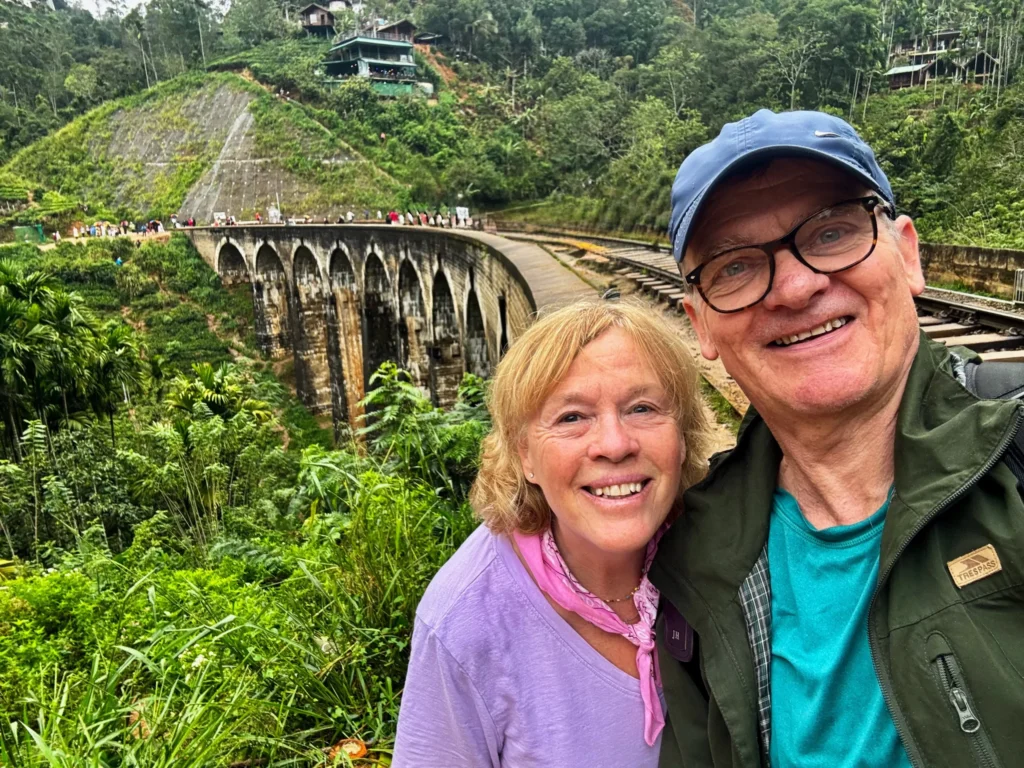
Sri Lanka as an adventure itinerary had been on our radar for over a decade. Friends and family kept coming back from Sri Lanka tours with the same wide-eyed verdict: brilliant place with lovely people. Furthermore, with beaches, tea plantations, elephants, that iconic railway journey up through the hill country to Ella: there was so much to see and we kept finding reasons to put it off.
In the meantime, my eldest son and his partner had visited and absolutely loved the place – and implored us to visit before it changed for good.
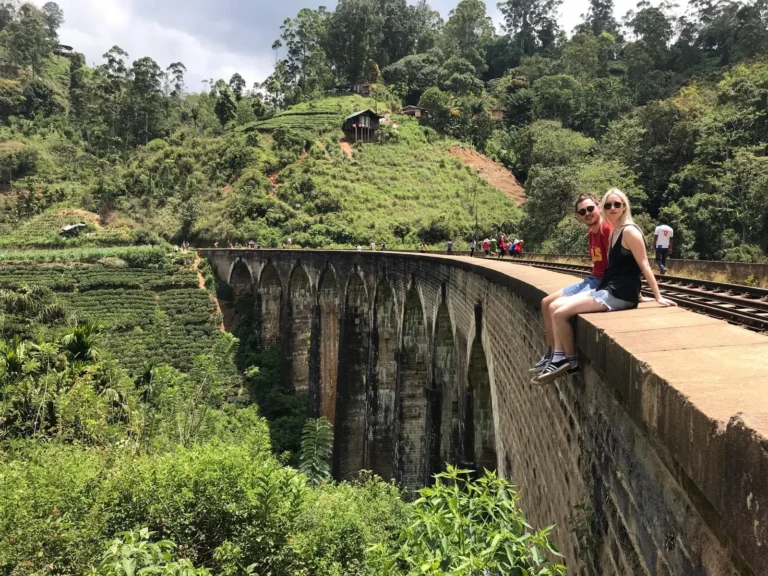
Despite this personal recommendation, the gods were against us. First came the Easter bombings, then the economic crisis, lack of petrol to get around and the political unrest that followed. Plenty of justification to keep deferring.
Notwithstanding these events, the pull never went away. ‘, It’s India Lite.’, ‘Those safaris.’, ‘The food.’ Eventually, the reasons to go outweighed the reasons not to.
The catalyst, as it often is for us, was Avios. Searching how to make use of a substantial pile of British Airways miles, we found a Business Class routing via Doha with Qatar Airways and a return via Riyadh with Sri Lankan Airlines — all in for around £1,000 each. Based on the limited available dates, we were now committed to a 35-day itinerary. Time to start planning.
Top Tip: Read our Guide to Business Class Travel using Avios
If you’re curious as to how we managed to bag these flights, read this post.
Forget the Standard Itinerary: Here’s What We Did Instead
In particular, practically no travel company offers an off-the-shelf 35-day Sri Lanka itinerary. Audley and Trailfinders could build one, but the cost would have been eye-watering. So, I started pulling together every itinerary I could find, including those used by friends and family, blog recommendations, forum threads.
In summary, the pattern was immediately obvious. Everyone was doing the same thing. A few days in the Cultural Triangle, then the train to Ella, then either Yala or Udawalawe for a quick safari fix, then a few days on the beach.
For many travellers, that works perfectly well. For us, it wasn’t enough.
Using AI to Build a Better Sri Lanka Tour Itinerary
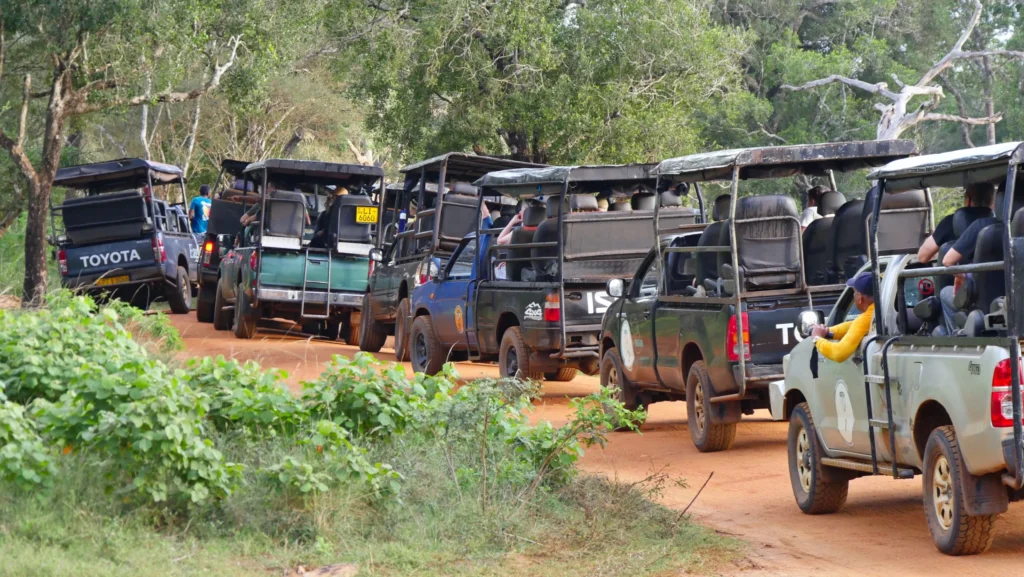
As a result, I did what more and more people are doing: I used AI to help. Starting with ChatGPT, then iterating through Gemini, Kimi and Claude. In summary, with each pass, the dream itinerary took shape. What we were clear on from the outset: we didn’t want the extended standard route. We wanted to avoid the crowds, especially as our social media feeds were already showing queues of safari jeeps bumper-to-bumper at Yala.
Having spent nearly two years building HindlesWorld through these tools, I’ve developed a working shorthand with them, and they understand what we’re looking for in terms of boutique experiences, authentic encounters and avoiding the tourist conveyor belt.
Very quickly, I had not just a route but a shortlist of hotels. Given we were heading into peak season with two months to spare, I needed to move fast: several of our first-choice properties were already selling out.
HindlesWorld Tip
Above all, use AI wisely to generate the structure, then validate every hotel suggestion independently on Booking.com and TripAdvisor. AI occasionally hallucinates property details or misses recent closures. and often distances and creates impractical suggestions. Always cross-check before booking.
When Cyclone Ditwah Changed Everything
However, less than a week after booking our flights, something caught my eye on the Met Office weekly forecast: Sri Lanka was about to be hit by a slow-moving cyclone with potential rainfall of up to a metre. Consequently, between 26th and 30th November, the resulting floods and landslides caused terrible loss of life and devastation across much of the country — including the hill country regions we’d planned to visit.
Specifically, the famous Kandy-to-Ella train line was washed away in multiple sections. In the weeks that followed, I genuinely considered unwinding our bookings. Subsequently, it quickly became clear that Sri Lanka needed visitor support more than ever, and we pressed on.
Ultimately, the practical upshot: we restructured. Indeed, and with herculean effort, Sri Lankan Railways restored the line from Ambewela (just outside Nuwara Eliya) south to Ella and Badulla — and we updated our reservation via 12go.asia accordingly. The loss of the Kandy section was genuinely disappointing, but even the Ambewela-to-Ella stretch proved extraordinary.
Because we’d booked all hotels on Booking.com and Agoda using the Free Cancellation option — always worth the small premium in our experience — unwinding the Kandy hotels and replacing them with The Grand Hotel in Nuwara Eliya was painless.
Key Lesson
Always book with free cancellation, even where it costs slightly more. Sri Lanka is prone to various disruptions, especially with the energy crisis in full swing. The flexibility is genuinely priceless.
Our 35-Day Sri Lanka Adventure Itinerary
Here is the itinerary we ultimately followed, post-cyclone adjustments included. A few notes before you scan it: this isn’t a template to copy wholesale. Accordingly, it reflects what matters to us — boutique accommodation, genuine wildlife encounters, hill country depth and coastal decompression at the end. In short: your priorities will differ. Above all, use it as a framework and interrogate each stop against what you actually want.
The Sri Lanka Tour Itinerary
| Date | Location | Hotel | Activities |
| Day 1 | Depart UK | BA / Qatar via Doha | — |
| Day 2 | Chilaw | Twin Waters Resort | Bird Watching |
| Day 3 | Chilaw | Twin Waters Resort | Dawn Bird Watching; whale-watching boat |
| Day 4 | Wilpattu | Leopard Trails | Evening safari, Wilpattu NP |
| Day 5 | Wilpattu | Leopard Trails | Dawn & evening safari |
| Day 6 | Anuradhapura | Aryana Boutique Hotel | Dawn safari; depart for Anuradhapura |
| Day 7 | Anuradhapura | Aryana Boutique Hotel | Sri Maha Bodhi; cycle tours |
| Day 8 | Habarana | Cinnamon Lodge | Ritigala Monastery en route |
| Day 9 | Habarana | Cinnamon Lodge | Sigiriya Lion Rock (dawn); Pidurangala (sunset) |
| Day 10 | Sigiriya | Jetwing Vil Uyana | Resort & paddy fields |
| Day 11 | Sigiriya | Jetwing Vil Uyana | Paddy fields; Loris night tour |
| Day 12 | Madulkelle | Madulkelle Tea & Eco Lodge | Dambulla Cave Temple en route |
| Day 13 | Madulkelle | Madulkelle Tea & Eco Lodge | Knuckles Mountain; Riverston Peak |
| Day 14 | Nuwara Eliya | The Grand Hotel | Hill country drive; Gregory Lake; High Tea |
| Day 15 | Nuwara Eliya | The Grand Hotel | Pedro Estate tea tour |
| Day 16 | Ella | Ravana Heights | Train: Ambewela → Ella; change driver |
| Day 17 | Ella | Ravana Heights | Nine Arches Bridge; Ella town |
| Day 18 | Ella | Ravana Heights | Adams Peak / Mini-Adams Peak |
| Day 19 | Haputale | Villa Vista Haputale | Lipton’s Seat; hiking |
| Day 20 | Haputale | Villa Vista Haputale | Tea factory tour |
| Day 21 | Haputale | Villa Vista Haputale | Horton Plains NP; World’s End |
| Day 22 | Pottuvil | Jetwing Surf & Safari | East coast drive; surf & chill |
| Day 23 | Pottuvil | Jetwing Surf & Safari | Swim; relax |
| Day 24 | Gal Oya | Gal Oya Lodge | Transfer; afternoon safari |
| Day 25 | Gal Oya | Gal Oya Lodge | Boat tours; crocodiles & elephants |
| Day 26 | Gal Oya | Gal Oya Lodge | Morning & evening safari; Veddah tribe walk |
| Day 27-Day 29 | Kalametiya | Villa Blu Kalametiya | Pool / beach / chill (3 nights) |
| Day 30-31 | Galle | The Fort Printers / Taru Villas | Galle Fort; shopping; sunset rampart walks |
| Day 32 | Galle | Taru Villas | Day trip: Mirissa / beach towns |
| Day 33 | Bentota | Jetwing Saman Villas | Chill (3 nights) |
| Day 34 | Colombo → Riyadh | Transit | Evening flight home (BA via Riyadh) |
| Day 35 | Heathrow | — | Arrive home |
Worth Knowing
Incidentally, we dropped our tour driver after 12 days, once the train journey was complete. For the second half of the trip, we used a mix of local drivers arranged in situ, PickMe (Sri Lanka’s ride-hailing app) and waving down a TukTuk. More on this below.
Private Driver vs Self-Drive: The Honest Answer
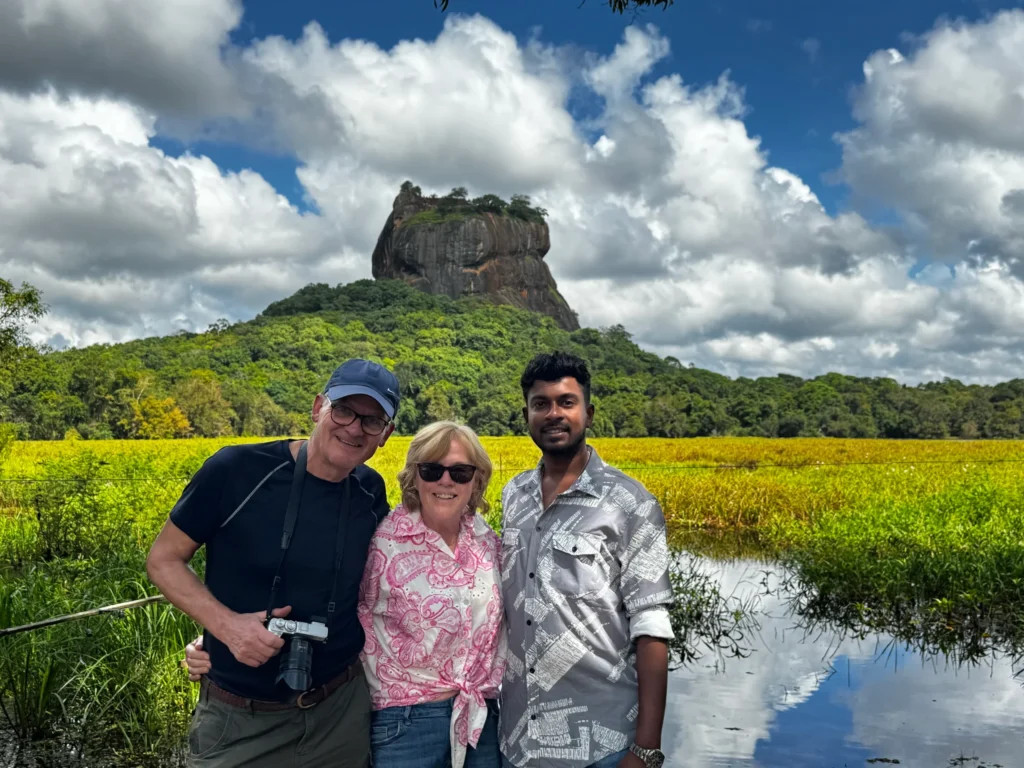
This is the question we agonised over most. We’ve driven across Europe and managed roads in Costa Rica, Thailand and the Philippines. How different could a Sri Lanka tour be? On the other hand, would renting a car be prohibitively expensive? Would we miss out on local knowledge? Who would handle our luggage while we were on the train?
After months on Facebook groups and in conversations with other travellers, the consensus was clear: for a first Sri Lanka trip, a local driver provides more benefits than the flexibility of self-driving, particularly if you’re covering the hill country and changing elevations frequently. The key is finding the right driver.
What a Good Sri Lanka Driver Adds
Specifically, a good driver brings several advantages that genuinely change the experience for the better.
- Safe navigation through unpredictable traffic (wildlife on roads, tuk-tuks, tractors)
- Luggage logistics — especially invaluable during train legs
- Flexibility to stop, wait, reroute without negotiating with a taxi
- Cultural context and local recommendations — when the driver knows their region
- Freedom to drink a Lion beer at lunch without worrying about driving 🦁🍺
For us, we only had two bad experiences in driving over 1,500km around Sri Lanka. One was a driver who had 3 phones, was constantly on one of them while driving, while the others were continually pinging WhatsApp notifications. Despite this, the driver kept asking if everything was OK!
Similarly, the other was a driver with terrible body odour! We couldn’t wait to arrive.
Our Experience with My Driver in Sri Lanka
After many weeks of emails and WhatsApp exchanges, we agreed to engage My Driver in Sri Lanka at €60 per day, inclusive of fuel, tolls and driver accommodation. That’s not the cheapest option available — and notably, priced in Euros rather than the more competitive USD rates you’ll find with local operators.
Our driver was Shan. We’ve written a review on TripAdvisor (see link) but we’ll be more direct here: Shan was a safe, reliable driver who was always on time and genuinely happy to stop and take our photos. Those qualities have real value.
However, at this price point, we expected more than transport and photography. Where we’d hoped for rich local knowledge – the kind of spontaneous recommendation, cultural context and insider insight that elevates a driver from chauffeur to guide – Shan’s offering was limited as he’d only been doing it for a while. Some of the local drivers we hired independently at specific locations, particularly for safari transfers and coastal transfers, were considerably more engaged and knowledgeable about their patch. Shan was super kind and trustworthy and no doubt he’ll make an amazing informed guide soon.
Our Recommendation Framework
Short trip (under 10 days), first time in Sri Lanka: In this case, pay for a reputable driver from day one. No debate. The peace of mind alone is worth it.
Longer stays (2+ weeks) planning to use trains: Instead, start with a driver for the first phase. Once the train leg is complete and you’ve built confidence, consider transitioning to local drivers arranged in situ — far better value and often better knowledge.
Multiple long stays in one place: Above all, don’t pay a driver to sit idle while you’re on safari or poolside. Arrange local transfers or use PickMe for short hops.
The Perfect Route Doesn’t Exist, But This Philosophy Helps
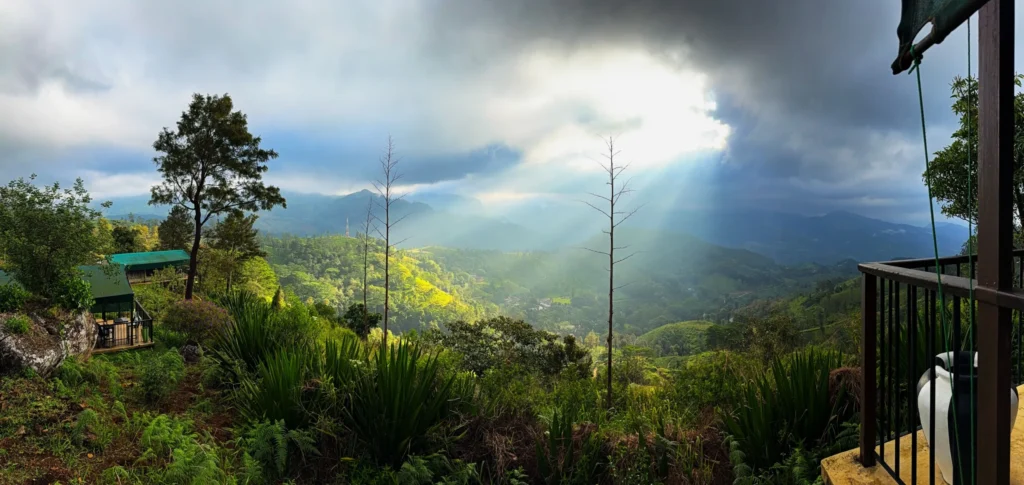
The Perfect Route is the one that gives you the most pleasure by letting you spend genuine time in the places that matter to you. And yet, time and again, we see people attempting to cover the entire island in 10 days.
That said, Sri Lanka is a small island — but your speed is dictated by the vehicle in front, and that vehicle is frequently a tractor, a tuk-tuk or a nervous driver in an underpowered SUV. For example, your 5km trip to a local town will not take 10 minutes. A 100km drive through the hill country can take the better part of a full day.
Indeed, the exception is the Southern Expressway, which makes the Galle-to-Colombo-Airport run (around 150km) feasible in roughly two hours. But that’s the exception, not the rule.
Above all, our single strongest piece of advice for anyone planning a Sri Lanka adventure: Pick three or four things you absolutely must see. Plan to spend at least two nights in each destination. Anything less and you’ll spend your trip permanently in transit.
Consequently, the travellers we met who were happiest were never the ones who’d ‘done’ the most places. They were the ones who’d sat long enough in Gal Oya to watch elephants swimming at dawn, or climbed Pidurangala at dusk and had the view to themselves.
Sri Lanka FAQs: Everything You Need to Know Before You Go
A: Notably, Sri Lanka has two monsoon seasons affecting different coasts. For example, the west and south coasts (including Colombo, Galle and Mirissa) are generally best from November to April. By contrast, the east coast peaks from May to September. Furthermore, the hill country is typically driest from January to March, but in practice, for us, it rained nearly every day for 2 weeks!
In practice, there is no single ‘perfect’ time — it depends entirely on which regions you’re prioritising. Essentially, we visited January to March 2026 and encountered predominantly dry conditions only for the last 3 weeks out of 8, which was really annoying. Obviously, Cyclone Ditwah was uncharacteristic of normal November weather, which is statistically unusual.
A: In general, most standard tour packages suggest 10 to 14 days. We’d argue that this is the minimum to do the island any justice — and only if you’re disciplined about not over-stretching. We spent 35 days and still didn’t see everything on our list. Our recommendation: if you have two weeks, pick four or five destinations and plan two to three nights at each. You’ll experience more than someone racing through ten stops in ten days.
A: Firstly, most nationalities require an Electronic Travel Authorisation (ETA) before arrival. As of early 2026, the standard tourist ETA costs around USD 50 and permits a 30-day stay. Extensions are possible in-country at the Department of Immigration in Colombo [budget a half-day for this as queues can be substantial]. We applied online, which was challenging, but doable although the USD 100 fee was heavy!u003cbru003eIf you’re planning a longer trip as we did, factor in the extension process early.
A: Basically, for travel during peak season (December to March), book three to six months ahead for the best properties. Boutique lodges and safari camps — Leopard Trails Wilpattu, Gal Oya Lodge, Jetwing Vil Uyana — sell out months in advance. Indeed, we booked two months ahead and found several first-choice hotels already full. Accordingly, always use free cancellation where available; conditions in Sri Lanka can change quickly.
Getting Around FAQs
A: Above all, for most first-time visitors, we’d recommend a private driver — at least for the first phase of your trip. Roads are unpredictable, traffic can be chaotic and driving through the hill country demands full concentration. Moreover, a good driver frees you to watch the scenery, manage luggage logistics across train legs and stop spontaneously. That said, not all drivers are equal. Probe hard on their regional knowledge, particularly if you’re heading off the standard tourist trail. Specifically, our detailed breakdown is in the main article above.
A: Generally speaking, budget operators typically start around $30 to $40 USD per day. Mid-range sits at $50 to $70 USD per day inclusive of fuel and driver accommodation. Indeed, premium operators, including My Driver in Sri Lanka, charge more — our rate was €60 per day. Above all, be aware that on days spent on safari or relaxing at a resort, you’re effectively paying for a driver doing very little. Factor this into your calculation and consider transitioning to local drivers or PickMe for static periods.
A: Absolutely. The hill country train — particularly the Kandy-to-Ella route passing through Nanu Oya, Ambewela and Haputale — is considered one of the world’s great rail journeys. We took the section from Ambewela to Ella after Cyclone Ditwah closed the northern portion of the line, and even this partial stretch was genuinely spectacular. Book second-class observation carriage seats in advance via 12go.asia or the Sri Lanka Railways website. Don’t book the first-class observation car — it’s glassed in and kills the atmosphere. And don’t expect European punctuality.
A: Very feasibly. Trains cover the major hill country and coastal routes. PickMe (Sri Lanka’s equivalent of Uber) works well within and between towns. Tuk-tuks handle short local hops. Inter-city bus networks are extensive, if slow. Self-driving is technically possible on an international licence, but we’d caution that road conditions, driving conventions and the frequency of livestock, cyclists and tuk-tuks on roads makes it genuinely demanding for the uninitiated.
Budget & Money FAQs
A: Sri Lanka offers extraordinary range. Budget backpackers can manage on $30 to $50 per day. Mid-range travellers using boutique guesthouses, private transfers and decent restaurants can expect to spend $150 to $300 per day. Our trip, which included luxury safari lodges and Business Class flights on Avios, was considerably more — though a significant portion of the flight cost was offset by miles. Note: Sri Lanka’s 2022 economic crisis has stabilised and the rupee has recovered, making it considerably better value now than a few years ago.
A: In practice, yes, particularly in tourist areas, hotels and larger restaurants. However, carry cash rupees (LKR) for TukTuks, local markets, smaller guesthouses and national park entry fees. ATMs are widely available in towns, but banks like Hatton National Bank charge LKR 800 for the service. Bank of Ceylon don’t charge withdrawal fees. Visa is accepted broadly; Amex less reliably. Avoid exchanging money at the airport — rates are significantly worse than in-town exchange bureaux.
A: It’s worth noting that National Park entry fees for foreigners are substantially higher than for locals — budget $40 to $60 per person per visit for entry fees, plus jeep hire at $30 to $60. However, Wilpattu and Gal Oya are considerably less commercialised than Yala and offer comparable, sometimes superior, wildlife experiences at lower cost and without the queues of jeeps. Gal Oya’s boat safaris in particular are extraordinary value for the experience, although our hotel charged $60 each, when the park ticket I know is only $12++
Accommodation FAQs
A: Specifically, we used Booking.com and Agoda for the majority of our trip, almost always selecting the free cancellation option even where it carried a small premium. This proved invaluable when Cyclone Ditwah forced us to rearrange. Furthermore, for some smaller boutique properties and safari lodges, it’s worth emailing directly to check rates. Indeed, you’ll often find the same price with more flexibility, and the human connection helps with special arrangements.
A: Sri Lanka genuinely punches above its weight for boutique accommodation. Standouts from our trip: Leopard Trails Wilpattu (immersive tented safari camp), Gal Oya Lodge (exceptional wildlife and cultural experience with the Veddah people), Jetwing Vil Uyana in Sigiriya (set in working paddy fields), and Madulkelle Tea and Eco Lodge (breathtaking hill country views and genuine eco credentials).
Contrarily, we found the bigger hotels (like Jetwing Blue in Negombo) soulless and the beach was really nothing special either.
Health, Safety & Practicalities FAQs
Q: Is Sri Lanka safe for tourists?
A: Yes — Sri Lanka is generally very safe for tourists. The political situation has stabilised significantly since the 2022 protests and the 2019 Easter bombings were a tragic anomaly in an otherwise secure tourism environment. Standard precautions apply: don’t display valuables openly, use reputable transport providers, drink bottled or filtered water. We felt safe throughout our entire 35-day stay.
A: During our visit, we were lucky to meet many solo travellers, quite a few of whom were women too, which was great to see. Furthermore, all of those we spoke to said that Sri Lanka was the least hassle place they had travelled to and easy to find company when they wanted it.
A: Consult a travel health clinic or your GP six to eight weeks before departure. Commonly recommended vaccinations include Hepatitis A, Typhoid and ensuring routine vaccinations are current. Depending on your itinerary, Rabies and Japanese Encephalitis vaccinations may be advised if you’re spending extended time in rural or jungle areas — relevant for safari-heavy itineraries like ours. Malaria prophylaxis is sometimes recommended for certain regions; check current NHS or CDC guidance for up-to-date advice.
A: Unquestionably, pick up a local SIM on arrival at the airport — Dialog and Mobitel are the main networks – if you haven’t arranged an eSIM beforehand. A tourist SIM with 10 to 15GB data typically costs around $5 to $8 USD and is available at the airport, convenience stores and phone shops. Incidentally, coverage is excellent in tourist areas and surprisingly reliable even in remote hill country. In fact, we never struggled for data throughout the trip, although we had to add data several times as we took so many photos and iCloud was constantly backing up!
A: Overall, lightweight, breathable clothing for the coast is best. Ultimately, Sri Lanka is hot and humid at sea level. Bring a light layer or fleece for the hill country: Nuwara Eliya in particular can be cold in the evenings. Cover shoulders and knees for temple visits (most temples will lend sarongs but it’s easier to carry your own) and most locals will be wearing white clothing. Moreover, good walking shoes or trail runners for hikes. Importantly, high-factor sunscreen, mosquito repellent and a compact rain jacket round out the essentials.
Wildlife & Experiences FAQs
A: It depends what you’re after. Yala gets the headlines for leopard sightings but is heavily visited — we watched with dismay as social media filled with queues of jeeps gridlocked in the park. We chose Wilpattu (less crowded, more immersive, excellent leopard habitat) and Gal Oya (extraordinary boat safaris for elephants, plus rare cultural access with the indigenous Veddah people). Udawalawe is reliably excellent for elephant sightings if that’s your primary goal. Our strong recommendation: prioritise the less-visited parks. We saw all the elephants you can take photos of in 90 minutes in Hurulu Eco-Park, near Habarana.
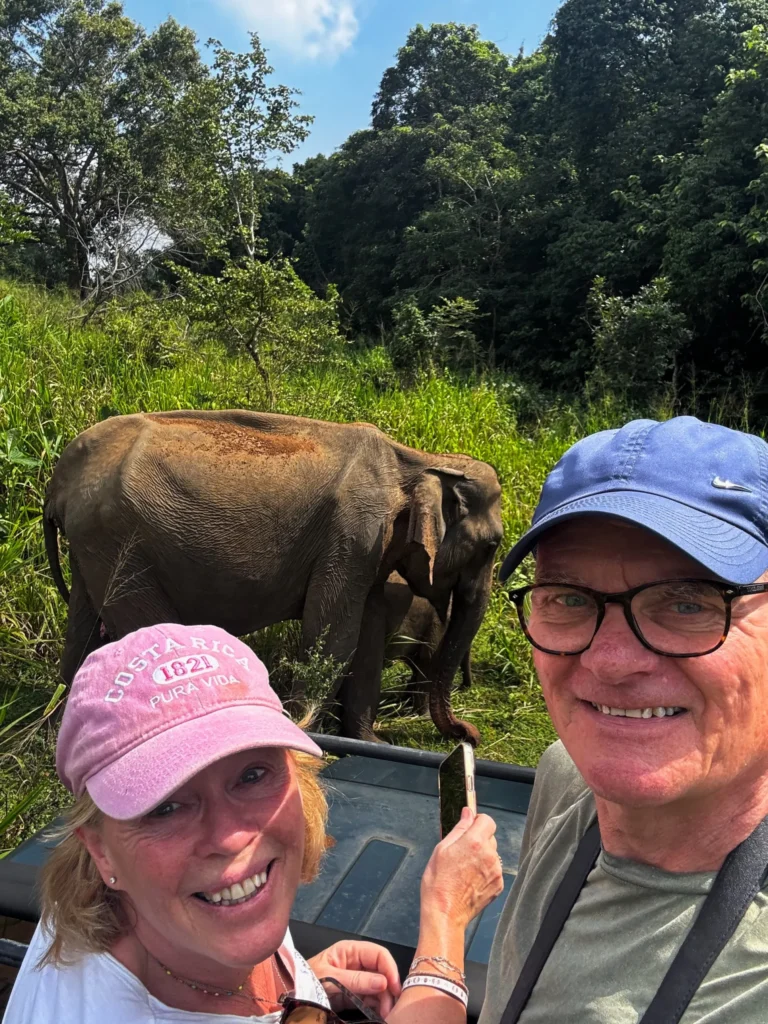
A: Notably, Sri Lanka has one of the highest densities of Asian elephants in the world and wild sightings are genuinely common — we encountered elephants on multiple occasions across Wilpattu and Gal Oya without any special effort. Unlike some African safari destinations, you don’t need to spend a fortune to have remarkable wildlife encounters here.
A: The hill country train from Kandy to Ella — stopping at Nanu Oya (for Nuwara Eliya), Ambewela, Haputale and Demodara — is widely considered one of the world’s great rail journeys. The train winds through tea estates, across viaducts and through mist-draped valleys. Book second-class observation carriage seats in advance: 12go.asia makes this straightforward. We took the Ambewela-to-Ella section after Cyclone Ditwah had closed the northern portion of the route and even this partial journey was among the trip’s highlights.
Food & Culture FAQs
A: In a word: Bold, richly spiced and deeply satisfying, but not as spicy as we’re used to in the UK! Rice and curry is the centrepiece — often served as a spread of small dishes with dal, sambols, chutneys and curried vegetables or meat. Hoppers (bowl-shaped pancakes, often with an egg cracked into them) are a breakfast highlight. Seafood on the coast is exceptional and excellent value. Sri Lanka is very well set up for vegetarians — many traditional dishes are plant-based by default. We found the food to be fresher and cheaper than almost anywhere we’ve travelled in Southeast Asia.
A: Widely, yes — particularly in tourist areas, hotels and among younger generations. English is an official language alongside Sinhala and Tamil, a legacy of British colonial history. In rural and remote areas, some basic Sinhala phrases are warmly received but never strictly necessary. We never found ourselves in a situation where language was a genuine barrier.u003cbru003eInterestingly, not many people read Sinhalese, so don’t rely on showing them Google Translate – but they can understand the audio playback.
Final Thoughts: Depth Over Distance
If this post has one overriding message, it’s this: Sri Lanka rewards depth over distance. The travellers we met who were most fulfilled were never the ones who’d ticked off the most sights. They were the ones who’d watched the sun set from Pidurangala with no one else around, or spent three nights listening to the jungle from a Gal Oya veranda.
Pick fewer places. Stay longer. Let Sri Lanka surprise you.
Jez | HindlesWorld
Key Takeaways
- Sri Lanka adventure itinerary planned over a decade due to positive reviews and compelling sights like beaches and tea plantations.
- Challenges like the Easter bombings and Cyclone Ditwah almost deterred travel, but the need for visitor support urged continuation.
- AI tools helped craft a unique itinerary, avoiding conventional tourist routes and focusing on boutique experiences and authentic encounters.
- Prioritising free cancellation while booking accommodations proved invaluable during unforeseen disruptions.
- Final advice: Spend more time in fewer locations for a richer experience in Sri Lanka.

💬 Share Your Thoughts
We love hearing from fellow travellers. Whether you have a question, a tip, or your own story to add, please jump in! We reply to every comment personally.