
Here is our honest 3-day Bohol Panglao Island Guide: Singapore to Cebu ferry logistics, why hiring a car changed everything, Tarsier Sanctuary timing, Chocolate Hills, and finding authentic Philippines moments on Panglao Beach.
Bohol & Panglao Island Guide: Our First Impressions of the Philippines
Unfortunately, our first view of the Philippines didn’t arrive bathed in tropical sunshine. Instead, it came with grey skies, rain-soaked ferry decks, and a resort that, while perfectly pleasant, failed to deliver the sense of arrival we’d hoped for on our first visit to the country.
And yet, by the end of our short stay on Bohol and Panglao Island, we’d experienced moments that reminded us exactly why we travel the way we do. Not through rigid tours or polished itineraries, but by making simple, often last-minute decisions that give us freedom.
This is our honest experience of Bohol & Panglao Island.
Interestingly, we almost skipped hiring a car in Bohol. Looking back now, scrolling through our drone footage of the Chocolate Hills and remembering that spontaneous lunch cruise on the Loboc River, that would have been the worst decision of our Philippines trip.
But let me be honest from the start: Bohol and Panglao Island weren’t flawless. The weather fought us. Our resort disappointed. Alona Beach, turns out to be a lively tourist spot on the southwest tip of Panglao Island. Moreover, it was far more commercial than we’d imagined. Yet somehow, those imperfections led us to one of our most authentic travel experiences – standing barefoot in the sand at a beach BBQ, negotiating with a local vendor over which red snapper looked freshest, plastic chairs waiting behind us as the sun set over Alona Beach.
This is our complete guide to 3 days in Bohol and Panglao, including everything that worked, what didn’t, and the last-minute decisions that saved our trip.
Bohol Panglao Island Guide FAQ’s
Singapore to Cebu (3 hours): Multiple daily flights on Singapore Airlines, SilkAir, Cebu Pacific, and budget carriers. We flew mid-morning to allow for customs delays on arrival, and traffic to get to the ferry connection at Cebu Port.
Cebu to Tagbilaran (2 hours): This is where it gets interesting. From Cebu Airport, you need to reach Cebu Port for the OceanJet ferry service. We booked a Grab taxi – our first Philippine Grab experience – and the timing was tight to catch one of the last ferries of the day.
The 17:30 OceanJet departure from Cebu to Tagbilaran City Port is crucial if you’re arriving on an afternoon flight. Miss this and you’re looking at overnight in Cebu or a very late arrival.
Tagbilaran Port to Panglao Hotels (30-45 minutes): Pre-book your tuktuk or van transfer. We arranged ours through the hotel, which meant someone was waiting with our name on a sign – worth the peace of mind after a long travel day.
Pro tip: Book your ferry tickets online in advance through the OceanJet website. The top deck might seem appealing, but we learned the hard way in the rain – covered seating is worth it.
This was our game-changer decision, and I wish we’d planned it from the start instead of booking late one afternoon.
Why car hire won for us:
– Timing control: We reached the Tarsier Sanctuary when it opened, before the tour buses arrived
– Spontaneous discoveries: We found the Loboc River Cruise by accident, never would have been on a fixed tour
– Comfortable vehicle: Our Ford Explorer was spacious, air-conditioned, and perfect for the winding mountain roads
– Full day usage: Picking up the vehicle late afternoon/evening meant we had the entire next day without worrying about rental hours
Cost comparison:
Organized tour: PHP 5,000 ($85) per couple for Tarsier + Chocolate Hills + Loboc River tours (extra for the cruise itself)
Car hire: PHP 4,000 ($65) for full day, in a 4X4 SUV. (Much less if you wanted smaller).
For couples or small groups willing to self-drive (roads are good, signage decent, GPS works), car hire provides better value and flexibility.
Important: International driving permits are technically required. We had ours but were never asked to show it.
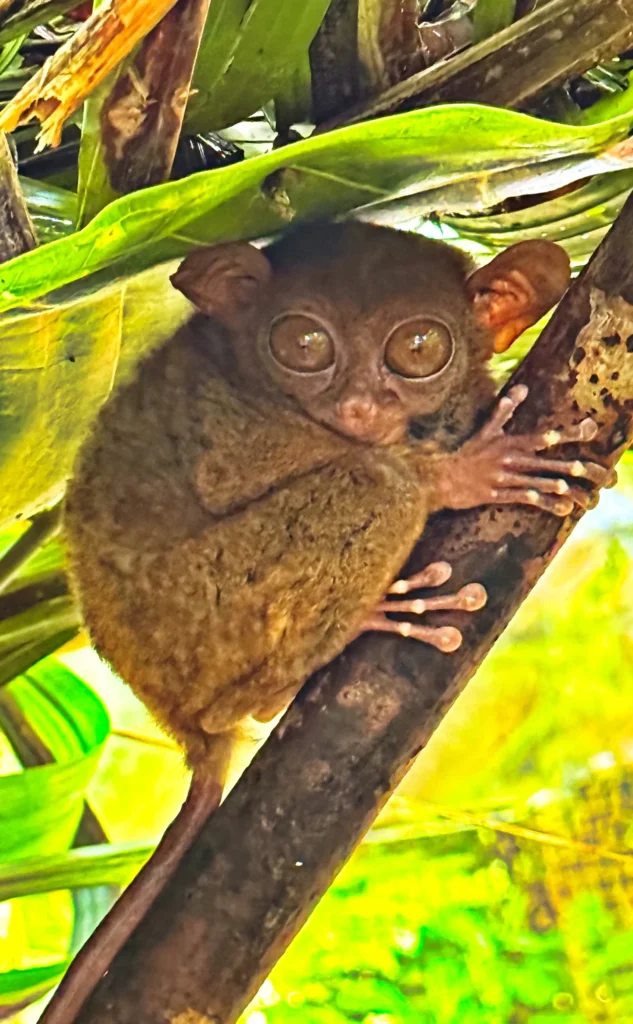
We arrived at the Philippine Tarsier Sanctuary in Corella around 8:30 AM and had the place nearly to ourselves for the first 30 minutes. The sanctuary is in natural forest where tarsiers sleep during the day, and early morning offers:
Cooler temperatures: Tarsiers are more visible when it’s not too hot
Better light: Morning light filters through the forest canopy beautifully
No crowds: Tour buses typically arrive 9:30-10:00 AM
Calmer animals: Less disturbance means better viewing
The entrance fee is minimal (around 100 PHP per person), and guides are included. They know exactly where the tarsiers are sleeping and will quietly point them out.
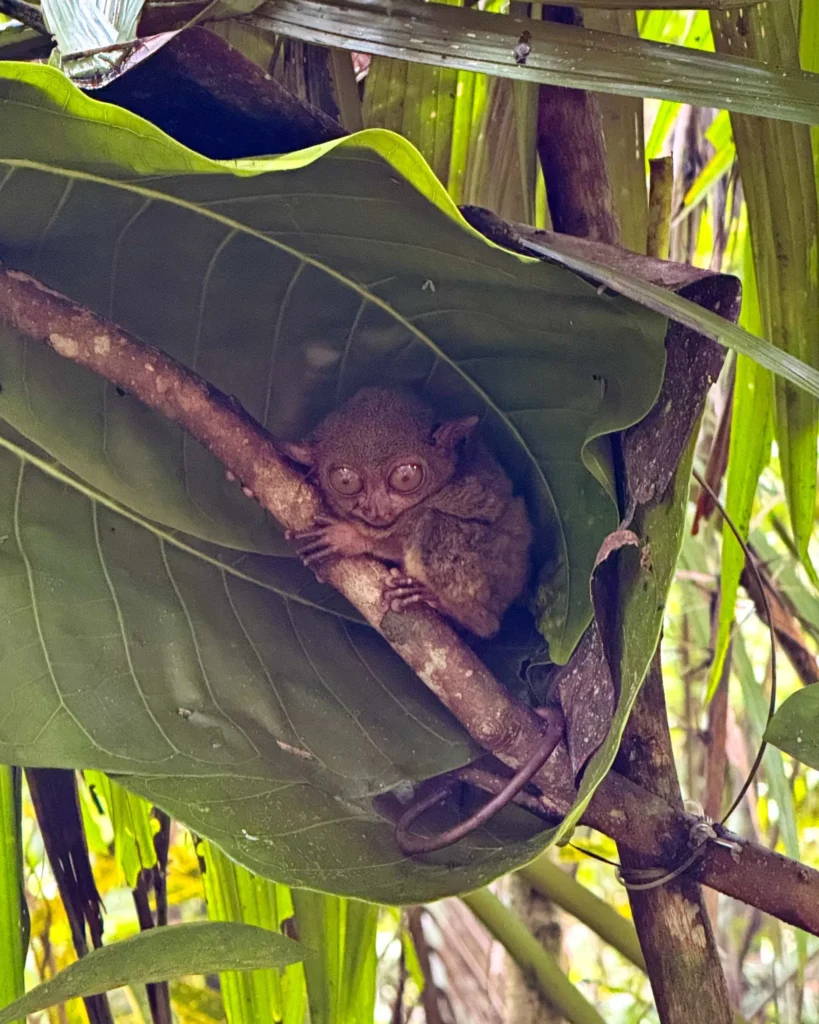
Photography note: No selfie sticks, monopods or flash photography is allowed (it harms the tarsiers’ sensitive eyes). Bring a camera that handles low light well. It was REALLY difficult to get a good zoomed in shot.
2-3 hours minimum, depending on what you want to experience.
The main viewing area at the Chocolate Hills Complex has a 214-step climb to the observation deck. Factor in:
15-20 minutes climbing and taking photos at the top (you will have to queue for the Hershey Kisses shot!
30-45 minutes exploring the grounds, gift shops, and local vendors
Drone flying is forbidden in this area (and it’s very busy too). HOWEVER, as we had a car, we drove 500m down the road and were able to film beautiful shots of several “Hills” without anybody around. If you’re capturing footage (we spent 20 minutes), you need to allow extra time.
Potential ATV tours if you want to explore the hills more extensively
Best time to visit: Early morning (7-9 AM) or late afternoon (4-6 PM) for:
Better light for photography
Fewer crowds
Cooler temperatures for the climb
We arrived around 10:30 AM and it was already getting warm and busy.
From Tarsier Sanctuary: About a 45-minute drive. Combine both in a single morning circuit from Panglao.
The honest answer: It’s not the undiscovered paradise you might imagine, but it’s authentic in its own way.
What to expect:
Very touristy: Especially popular with South Korean tourists – many signs are in Hangul
Long, accessible beach: Easy to walk, good for morning strolls
Commercial strip: Dive shops, restaurants, massage huts, tour operators
Busy: Even in February (off-peak), it felt crowded
The beach: Dominated by the huge Henann Resort Complex
Where Panglao Beach excels:
Beach BBQ restaurants: This is where you find the real Philippines. Fresh fish displayed on ice, you choose your catch, and they grill it for you while you sit on plastic chairs with your feet in the sand
Local food markets: We watched whole lechon pigs being carved and served at street food stalls
Sunset atmosphere: Despite the crowds, watching the sun go down while eating grilled red snapper was magical
Dive access: If you’re a diver, this is a major hub for excellent dive sites
Better for: Divers, people who enjoy bustling beach scenes, food explorers Not ideal for: Those seeking quiet, secluded beaches or luxury beach clubs
Try Dumaluan or White Beach, which is just a short distance up the coast.
We didn’t have time to investigate, but spoke to people who visited who confirmed they were amazing. It’s only a 10-minute tuktuk ride out of town.
We stumbled onto this completely by accident driving back from the Chocolate Hills, and it became one of our favourite experiences.
What it is: A 2-hour lunch cruise up the Loboc River on floating restaurant boats. The boats are essentially floating bamboo platforms with tables, a live band playing Filipino music, and a buffet-style lunch setup.
What made it special:
Spontaneous: We weren’t planning it, which made it feel like a discovery
Local atmosphere: Mostly Filipino families and groups, not just tourists
Beautiful scenery: Lush river banks, small villages, children waving from the shore
Live entertainment: The band was genuinely talented and created a festive vibe
Good value: Around $10-12 per person including buffet lunch
Should you pre-book? Not necessarily. We literally walked up and bought tickets for the next departure. However, on weekends or Philippine holidays, booking ahead might be smart.
Finding it: It’s on the main road between Chocolate Hills and Tagbilaran. Easy to spot with the boats and signage.
Panglao Island is the better base for first-time visitors because:
Close to Tagbilaran Port (ferry arrival point)
Beach access at Alona Beach
More restaurant and nightlife options
Still easy day trip access to Bohol Island attractions
Better variety of accommodation from budget to high-end
Bohol mainland makes sense if:
You’re primarily interested in inland attractions (Chocolate Hills, Tarsiers, Loboc)
You prefer quieter, less touristy areas
You’re staying longer and want to explore beyond the standard circuit
We stayed at Amorita Resort on Panglao (more on that below) with a view overlooking Alona Beach, which gave us the best of both worlds – quiet resort setting but walking distance to the beach action.

Getting there: We arrived from Singapore
Our Bohol adventure began at Singapore Changi Airport with a mid-afternoon flight to Cebu. The 3-hour flight was uneventful – time to download offline maps and finalize our loose plans for the days ahead.
Landing in Cebu is when the real journey starts. We’d booked the 17:30 OceanJet ferry to Tagbilaran, which seemed generous when planning from Singapore. In reality, with immigration, baggage claim, and the Grab taxi ride to Cebu Port, we were cutting it closer than comfortable.
The Grab Experience
This was our first Grab ride in the Philippines, and I’ll admit to some anxiety. The app worked flawlessly, our driver arrived promptly, and he knew exactly where “OceanJet Terminal” meant. The drive through Cebu’s traffic was chaotic but efficient, and we reached the port with 40 minutes to spare – just enough to buy some snacks and find our boarding gate.
The Ferry in the Rain
Here’s where I’ll admit to a rookie mistake: booking top deck seats because “we’ll want the view.” What we got was rain. Heavy, tropical rain that started 20 minutes into the crossing. The top deck does have a covered section, and we scrambled for those seats along with a dozen other optimistic passengers who’d made the same error.
The 2-hour crossing passed in darkness – we’d left at 17:30 and sunset came fast. Through the rain-streaked windows, we caught occasional glimpses of lights from other vessels and distant islands. Not scenic, but atmospheric in its own way.
Arrival at Tagbilaran
Our pre-booked tuktuk driver was waiting as promised, name card held high in the small crowd of meeters and greeters. The 30-minute ride to Amorita Resort on Panglao gave us our first real impressions of the Philippines outside an airport – narrow roads, warm humid air, the smell of cooking fires, and strings of lights marking small shops and restaurants along the way.
We reached the resort tired, hungry, and ready for our first proper experience of Philippine hospitality. What we found… well, that’s where expectations and reality began their negotiation.
The Amorita Reality Check
Let me be direct: Amorita Resort wasn’t what we hoped for as our introduction to the Philippines.
Notwithstanding the fact that the resort sits on a clifftop with arguably one of the best views of Alona Beach, the beach itself is dominated by the huge Henann Resort hotel, which is a massive complex, full of people and loud music. Looking down at the long sweep of sand and turquoise water from the Amorita hotel terrace was genuinely stunning, especially at sunrise when I captured some of our best drone footage. But the view was the highlight, and a view alone doesn’t make a great resort experience.
What disappointed:
- The room: Functional but dated, nothing special for the price point
- Service: Polite but not particularly warm or attentive
- Food: Resort restaurant was average – we quickly learned we’d eat better at the beach BBQ spots
- Value proposition: Felt overpriced for what was delivered
I captured a quick room tour and some food shots for documentation, but there wasn’t much to film that excited us. After our first morning exploring the resort, we knew we’d be spending most of our time elsewhere.
What worked:
- The clifftop location meant we avoided the beach-level crowds while still having easy access
- The view really was spectacular – those sunrise drone shots from the balcony didn’t lie
- Quiet at night – unlike beachfront hotels, we had peace
Would I stay there again? Probably not. Would I recommend it? Only if the clifftop view and proximity to Alona Beach matter more to you than the actual resort experience.
But here’s the interesting thing: the disappointment with our accommodation pushed us to explore more aggressively. We weren’t tempted to laze around a mediocre resort, which meant we got out and found the real Bohol.
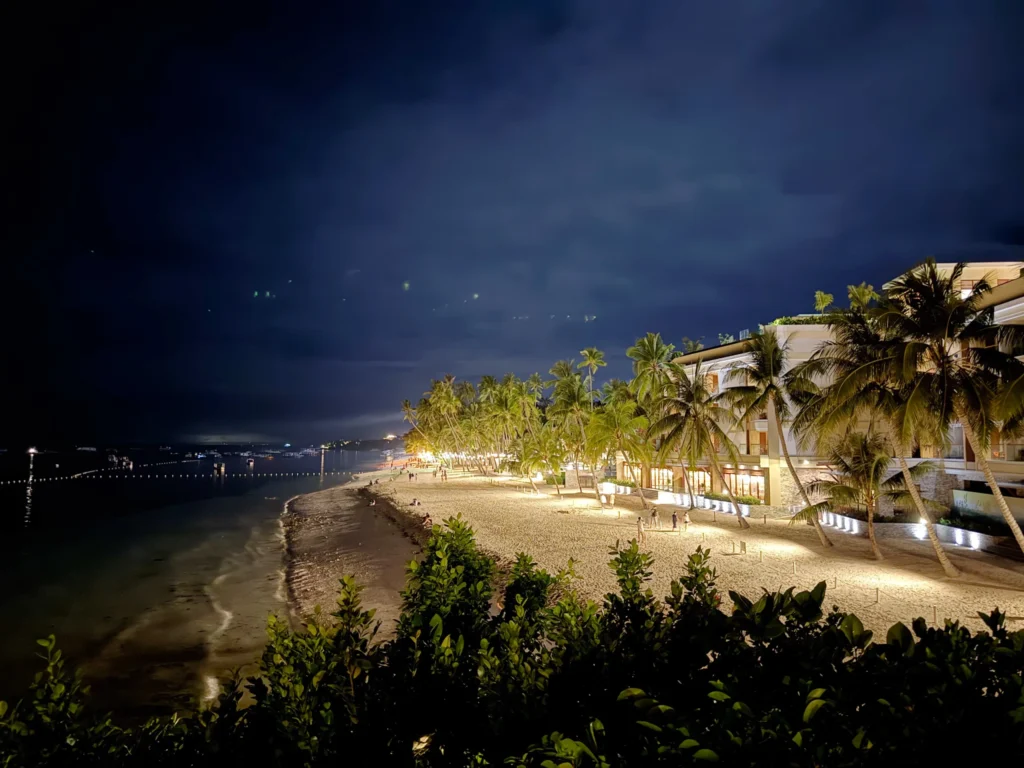
The Game-Changer: Hiring a Car
Late on our first afternoon, sitting on the hotel terrace, watching the sun drop toward the horizon, Mel said: “We should get a car.”
We’d been debating this since Singapore: should we join an organised tours or DIY with a rental? The tours seemed easier, the logistics clearer. But sitting there, thinking about being on someone else’s schedule, stopping where and when they decided, it just felt… limiting. And then we checked the cost from the hotel. It was going to be a minimum of PHP 5,000 ($85) and would take a full day out.
I pulled up my phone and searched for car rentals in Panglao. Within an hour, I’d found a place just up the road that we decided to check out the following morning. The timing was perfect: if you book later afternoon for 24 hours, we could head off as early as we wanted in the morning. We wouldn’t want the car in the evening anyway. So, I trundled up the road, picked up the car and off we went.
Why this mattered more than we realized:
The ability to leave our hotel at 7:00 AM the next morning meant we could be at the Tarsier Sanctuary when it opened at 8:00 AM. Tour groups don’t leave that early [they’re collecting passengers from multiple hotels], starting around 8:30-9:00 AM, reaching the sanctuary mid-morning when it’s already warming up and getting crowded.
The Toyota Fortuner itself was a pleasant surprise – spacious, well-maintained, air conditioning that actually worked (critical in tropical heat), and comfortable for the sometimes bumpy roads.
Unquestionably, hiring a car made all the difference. Previously, we’d done the same thing in Costa Rica. Read about that story here.

Cost breakdown:
- Full-day rental: 3,500 PHP (approximately $65 USD)
- Fuel for the day: 1,000 PHP ($20 USD)
- Total: $85 for unlimited flexibility
Compare that to organized tours:
- Tarsier & Chocolate Hills tour: 2,500 PHP per person = 5,000 PHP for two ($90 USD)
- Fixed schedule, fixed stops, no spontaneity
Certainly, the math worked. But more than the money, it was the freedom that transformed our day. That spontaneous Loboc River Cruise? Never would have happened on a tour schedule. The extra 20 minutes we spent flying the drone at the Chocolate Hills? Not an option when you’re on someone else’s timeline.
Hiring that car late afternoon was the best decision we made in Bohol.
The Perfect Bohol Day
Dawn Departure
Notably, we left the resort as the sky was turning from deep blue to soft pink. The roads were quiet – just a few early workers on motorbikes and the occasional jeepney heading toward Tagbilaran. I’d pre-loaded Google Maps offline (unnecessary as it turned out – signal was fine throughout), and we had coffee and snacks in the car.
The drive from Panglao to the Tarsier Sanctuary takes about 40 minutes, crossing back over to Bohol Island proper and winding inland through small villages and rice paddies. Early morning meant we saw rural Philippines waking up – smoke from cooking fires, children in school uniforms walking along the roads, farmers already in the fields.
Philippine Tarsier Sanctuary
Ultimately, we were about the second car in the parking lot. Perfect. We had the place completely to ourselves.
The sanctuary entrance fee is minimal – around 100 PHP per person – and includes a guide who walked with us along the forest trail. The tarsiers sleep during the day, clinging to tree branches and leaves, and the guides know exactly where they are. Our guide quietly pointed them out, sometimes barely 2 meters from the path.
These tiny primates are extraordinary – huge eyes relative to their body size, barely bigger than a human fist, clinging to vertical branches with specialized fingers. No flash photography is allowed (it damages their sensitive eyes), but in the morning light filtering through the canopy, I managed some decent shots with my iPhone, but regretted not bringing my zoom DSLR camera.
We spent 45 minutes in the sanctuary, moving slowly, speaking in whispers. By the time we left around 8:45 AM, three tour buses had arrived and the parking lot was filling up. Timing vindicated.
Chocolate Hills Complex
Surprisingly, the drive from the sanctuary to the Chocolate Hills only took 45 minutes, taking us deeper into Bohol’s interior, climbing gradually into more mountainous terrain. The landscape became increasingly dramatic – the characteristic conical hills that give the area its name starting to appear like geometry exercises scattered across the countryside.
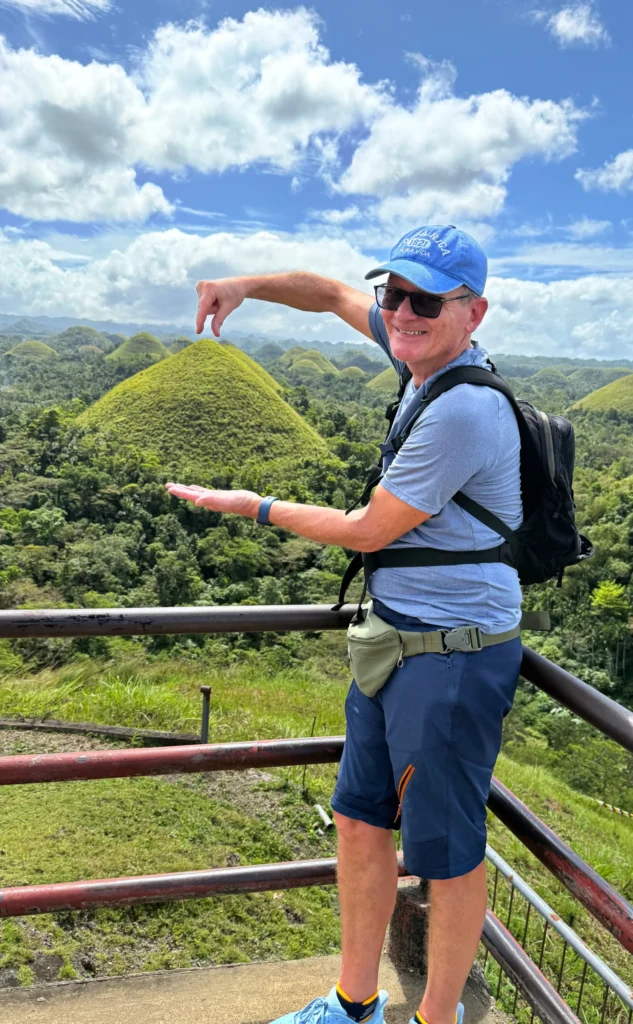
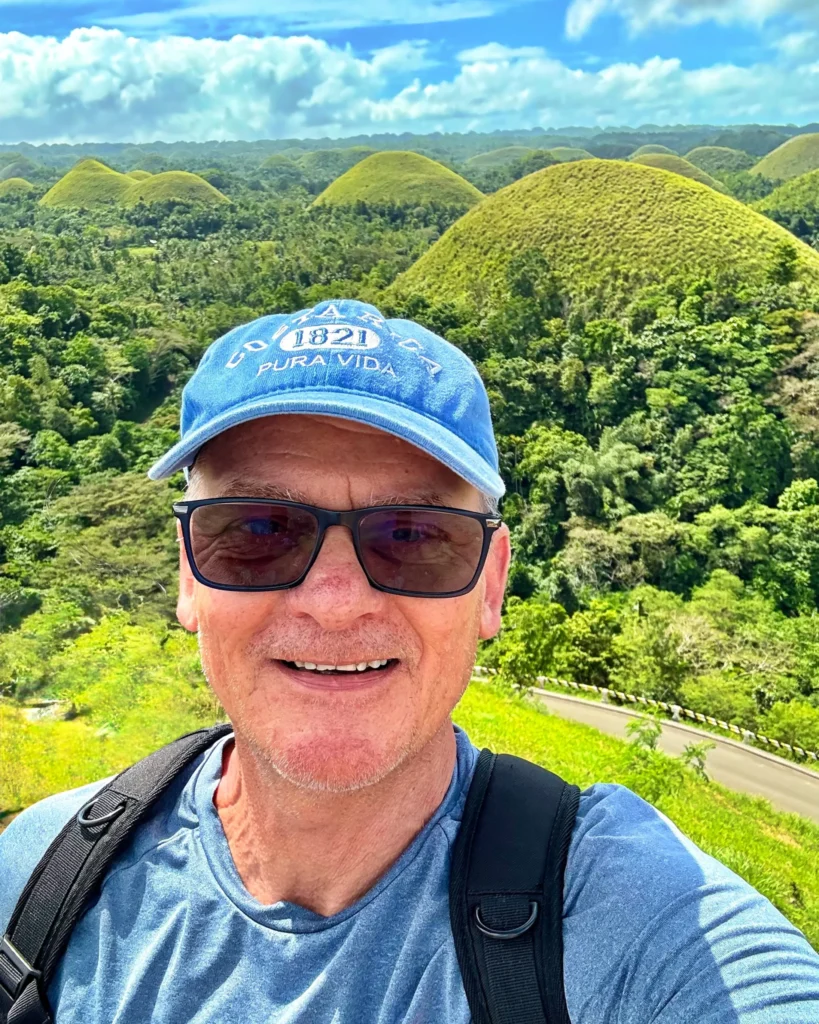
Fortunately, the Chocolate Hills Complex has a large parking area, souvenir shops, and the iconic 214-step climb to the main viewing platform. We climbed in the building heat (already warm by 10:00 AM), reaching the platform to see hundreds of these perfectly conical hills stretching to the horizon in every direction.
Of course, I wanted to take my drone out, but there are signs prohibiting this. As it turns out, it was quite windy too.
HOWEVER, as we had a car, we drove 500m down the road and were able to film beautiful shots of several “Hills” without anybody around. If you’re capturing footage (we spent 20 minutes), you need to allow extra time.
From the viewing platform, the hills are impressive. From 100 meters up? They’re otherworldly. The morning light created shadows that emphasized their conical shapes, and the patchwork of green vegetation and brown (chocolate-colored) dry season grass created natural patterns that you simply can’t appreciate from ground level.
I flew for about 20 minutes, capturing different angles, heights, and approaches. No tour group would allow this kind of time. This is why we hired the car.
The Loboc River Discovery
Driving back toward Panglao, hungry and ready for lunch, we spotted boats on a river and a cluster of restaurants and parking area. Neither of us had heard of the Loboc River Cruise – it simply wasn’t on our radar. But there it was, and there were boats departing every 30 minutes.
“Should we?” Mel asked.
Indeed, we absolutely should.
In short. the cruise is magnificently low-key – floating restaurants that are essentially large bamboo platforms with tables, a buffet setup, and a live band playing Filipino music. We bought tickets (around 600 PHP per person including buffet lunch), walked aboard the next departing boat, and found a table near the edge.
What you do on the cruise
For two hours, we drifted up the Loboc River through lush jungle scenery, past small villages where children waved from the banks, under bridges where locals sold fresh fruits, and alongside other cruise boats where the bands competed with cheerful songs. The buffet wasn’t gourmet, but it was plentiful and surprisingly good – grilled meats, rice, local vegetables, fresh fruits.
Meanwhile, the band played constantly, encouraging passengers to get up and dance (some did, enthusiastically). The atmosphere was joyful, relaxed, and very Filipino. We were among the few Western tourists aboard – mostly local families out for a celebration, or South Koreans on holiday.
Notably, I’d captured drone footage before we boarded – boats moving up the river from the dock area, the lush green banks, the afternoon light on the water. Those external shots, combined with the experience of being aboard, gave us material that felt genuine rather than just touristy.
Importantly, would we have found this on a standard tour? Maybe, but probably not. It would have been scheduled, brief, and rushed. This was spontaneous, leisurely, and exactly what we needed after a morning of active exploring.
Return Journey
Eventually, we drove back to Panglao tired, satisfied, and with memory cards full of footage. The car rental had given us complete freedom to create our own perfect day – early start at the tarsiers, extended time at the Chocolate Hills, and a lunch experience we never planned for.
No doubt: this is what travel should feel like.
Panglao Beach: Finding Authenticity
Essentially, Alona Beach is Panglao’s main tourist strip, and I won’t pretend it’s undiscovered paradise. First thing to remember: t’s busy, commercial, and thoroughly geared toward tourism – particularly South Korean tourism, which has exploded in recent years. Signs in Hangul, Korean restaurants, and Korean-speaking staff are everywhere.
But here’s what we learned: authenticity isn’t about finding empty beaches or escaping all tourists. Sometimes it’s about finding the real moments within the touristy places.
Morning Beach Walks
Undoubtably, the best time on Alona Beach is early morning before 8:00 AM. We walked down from our resort (about a 10-minute walk down the hillside steps) and had the beach almost to ourselves – just a few locals cleaning up from the previous night and fishermen bringing in small catches.
Indeed, this is when I captured the best drone footage of the beach – sweeping shots of the long crescent of white sand, turquoise water, and the limestone cliffs at either end. Morning light is magical here, turning the water from dark blue offshore to crystalline turquoise near the beach.
The BBQ Beach Restaurant Discovery
On our second evening, we walked the beach strip looking for dinner. The resort restaurant had proven uninspiring, and we wanted something more… real.
What we found was a strip of beach BBQ restaurants – simple operations with plastic tables and chairs set up directly on the sand, fresh fish and seafood displayed on ice, and charcoal grills smoking away. This was it.
Ultimately, having wandered up and down the beach a few times, we chose a restaurant called [I didn’t catch the name] based purely on how busy it was with locals and how fresh the fish looked.
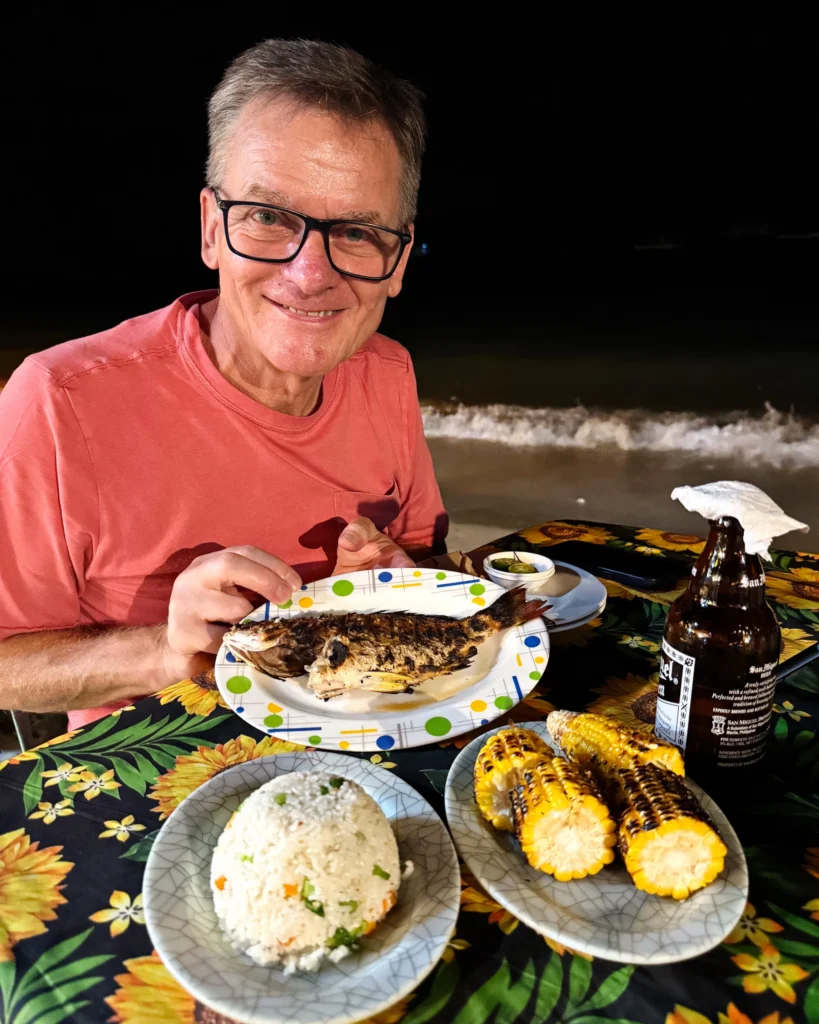
A vendor brought over a tray with that day’s catch – red snapper, grouper, prawns, squid. Mel negotiated – “This one is fresh?” “Very fresh, ma’am, this morning!” – and selected a good-sized red snapper.
“How you want?” the vendor asked. Grilled with garlic and pepper, we decided.
Twenty minutes later, we were sitting with our feet in the sand, the sun setting over the water, a perfectly grilled red snapper between us with rice and Filipino-style vegetables on the side. The bill? About 900 PHP ($16 USD) for both of us, including San Miguel beers.
Why it’s worth it
Above all, this was the authentic Philippines we’d been hoping for – not at an expensive resort, not on an organised tour, but at a plastic table with sand between our toes and locals at the tables around us doing exactly the same thing.
Likewise, we watched whole lechon pigs being carved at nearby stalls, locals buying portions for family dinners. Visiting the open fish markets, where morning catches were sold directly off the boats, was amazing. In summary, we experienced Panglao not as a postcard but as a working beach town that happens to attract tourists because it’s figured out how to be genuinely welcoming while still being itself.
Practical Information & Tips
Best Time to Visit Bohol & Panglao
Dry season: November to May (best weather, warmest) Shoulder months: October, June (fewer crowds, slightly more rain risk) Wet season: July to September (avoid if possible – heavy rain, rough seas)
We visited in February which is technically peak dry season, but still experienced some rain (hence the ferry crossing experience). Weather in the tropics is never guaranteed.
Budget Expectations (February 2025 prices)
Accommodation:
- Budget: 1,500-3,000 PHP ($27-54) per night
- Mid-range: 3,500-6,500 PHP ($63-117) per night
- High-end: 7,000+ PHP ($125+) per night
Food:
- Beach BBQ meals: 400-600 PHP ($7-11) per person
- Mid-range restaurants: 800-1,200 PHP ($14-22) per person
- Resort dining: 1,500+ PHP ($27+) per person
Activities:
- Tarsier Sanctuary: 100 PHP ($1.80) per person
- Chocolate Hills entrance: 50 PHP ($0.90) per person
- Loboc River Cruise: 500-700 PHP ($9-13) per person with lunch
- Car hire: 3,000-4,000 PHP ($54-72) per day
Transportation:
- Ferry Cebu-Tagbilaran: 700-1,000 PHP ($13-18) per person
- Tuktuk transfers: 300-500 PHP ($5-9) depending on distance
What to Pack
- Sun protection: It’s relentless – reef-safe sunscreen, hat, sunglasses
- Light rain jacket: Even in dry season, quick showers happen
- Good walking shoes: For the Chocolate Hills climb and Tarsier Sanctuary trails
- International driving permit: If planning to hire a car (technically required)
- Cash: Many places don’t accept cards, especially in rural areas
- Underwater camera: If you’re diving or snorkeling
- Mosquito repellent: Especially for early morning/evening
Booking in Advance vs. On the Ground
Book ahead:
- Accommodation (especially December-April)
- Ferry tickets Cebu-Tagbilaran (particularly last ferries of the day)
- Car hire (to guarantee availability and vehicle type)
Fine to book on the ground:
- Loboc River Cruise (unless weekend/holidays)
- Beach BBQ restaurants (never need reservations)
- Tarsier Sanctuary (no advance booking needed)
- Chocolate Hills entrance (just show up)
Mobile Connectivity
Surprisingly, 4G coverage is excellent throughout Panglao and Bohol including rural areas. Specifically, we used JetPack Global eSIM cards purchased before we left London – data packages are cheap and reliable. Google Maps worked perfectly throughout our drive. Maybe not the cheapest option, but we wanted full SE Asia compatibility, and our eSIM covered all the countries we were visiting during our 6-week stay.
Final Thoughts: Beyond the Guidebook
Bohol and Panglao taught us something valuable: imperfect trips often create the best stories. In summary, our resort disappointed, the weather wasn’t ideal, and we fumbled our way through ferry timing and last-minute car hire decisions. But those imperfections forced us to be flexible, to explore rather than retreat, and to find authentic experiences in unexpected places.
Ultimately, the car hire decision transformed everything – arriving at the Tarsier Sanctuary early, spending unrushed time with the drone at Chocolate Hills, stumbling onto the Loboc River Cruise, all of it happened because we had freedom and flexibility.
Overall, that beach BBQ moment – Mel choosing fish while the vendor praised his catch, sitting with sand between our toes as the sun set, locals at nearby tables doing the same thing – that was more valuable than any luxury resort experience could have been.
This was our introduction to the Philippines, three days that set the tone for understanding this country: chaotic, commercial in places, but ultimately warm, welcoming, and authentic when you scratch beneath the surface.
Next up: Siquijor Island and the stunning Coconut Grove, where our Philippines adventure continued with entirely different experiences. But that’s a story for the next guide.
For now, Bohol and Panglao remain exactly what we needed – the perfect imperfect beginning.

💬 Share Your Thoughts
We love hearing from fellow travellers. Whether you have a question, a tip, or your own story to add, please jump in! We reply to every comment personally.