
Fifty people, one tiny frog, and a guide’s monopod. That was our 7:30am in Manuel Antonio National Park. Radios crackled as guides tipped each other off, and the crowd shuffled from one sighting to the next for a turn at the eyepiece.
An hour later, outside the park gates, a troop of capuchins and two sloths went about their business a few feet from us. Nobody else was watching. We hadn’t paid anyone to show us.
Over 16 nights we spent $788 on tours and park tickets, about £606 for the two of us, plus a few extras at our lodges. Some of it was the best money of the trip. Some of it we’d keep in our pocket next time. This post covers every experience we did, from Poás Volcano to the mangroves of Golfo Dulce, and answers three questions for each one: did a guide earn their fee, what did it cost, and would we do it again?
If you want the route, it’s in our Costa Rica self-drive itinerary. If you’re wondering whether to book it all yourself, read travel agent or DIY? first.
Planning the whole trip? Our Costa Rica hub has the route, when to go, every stay we scored and all three films.
At a glance
A guide earned their fee wherever the wildlife was hiding: in rain, in cloud forest, or at night. Where the sights were big and obvious, we were better off on our own. Prices are what we paid per person in January 2024, in US dollars.
| Experience | Where | Cost per person | Time needed | Guide or DIY? | Booked through | Our verdict |
|---|---|---|---|---|---|---|
| Poás Volcano | Central Valley | $15 | 2 hours | DIY | SINAC | Go, if it’s open |
| La Paz Waterfall Gardens | Central Valley | $91 | 2+ hours | DIY | At the gate | Loved it, overpaid |
| Sloth tour | La Fortuna | $42 | 2 hours | Guide | Tripadvisor | Guide essential |
| La Fortuna Waterfall | La Fortuna | $19 | 2 hours | DIY | Viator | Go, and swim |
| Chocolate and night tour | La Fortuna | $48 | 2 hours | Guide | Direct | Chocolate yes, night walk thin |
| The Springs hot springs | Arenal | Included in our stay ($125 day pass) | All day | DIY | Hotel | The reason to stay there |
| Mistico Hanging Bridges | Arenal | $50 | 3 hours | Guide | Viator | The guide made it |
| Río Celeste | Tenorio Volcano NP | $12 | 90 mins to 3+ hours | DIY | SINAC | Worth the detour |
| Monteverde Cloud Forest | Monteverde | $55 ($26 guide + $29 entry) | 2+ hours | Guide | Viator + gate | Guide found the quetzal |
| Tárcoles crocodile bridge | Pacific coast road | Free | 10 mins | DIY | n/a | Quick look, watch your car |
| Manuel Antonio National Park | Manuel Antonio | $63 ($47 guide + $16 entry) | Half a day | Guide | Viator + SINAC | Skip the guide, go for the beaches |
| Dominical | South Pacific coast | Free | 45 mins | DIY | n/a | A coffee stop |
| Bosque del Cabo trails and tours | Osa Peninsula | Included in our stay | 1 to 3+ hours | Both | Lodge | Highlight of the trip |
| Puerto Jiménez | Osa Peninsula | Free | A coffee or a beer | DIY | n/a | Only if you’re waiting for a boat |
| Mangrove and kayak tour | Golfo Dulce | $143 ($285 per suite) | 3 hours | Guide | Golfo Dulce Retreat | Pricey, thrilling |
Our tours and park tickets from Poás to Manuel Antonio came to $788 for two, about £606 at the $1.30 rate we paid. The mangrove tour at Golfo Dulce was another $285.
Poás Volcano and La Paz Waterfall Gardens
Poás Volcano: our first live crater
Our first morning in Costa Rica was sunny and the drive up was easy. We kept saying how like Switzerland it looked: meadows, cows and impossibly green hills. We were 45 minutes early for our slot, and nobody minded.
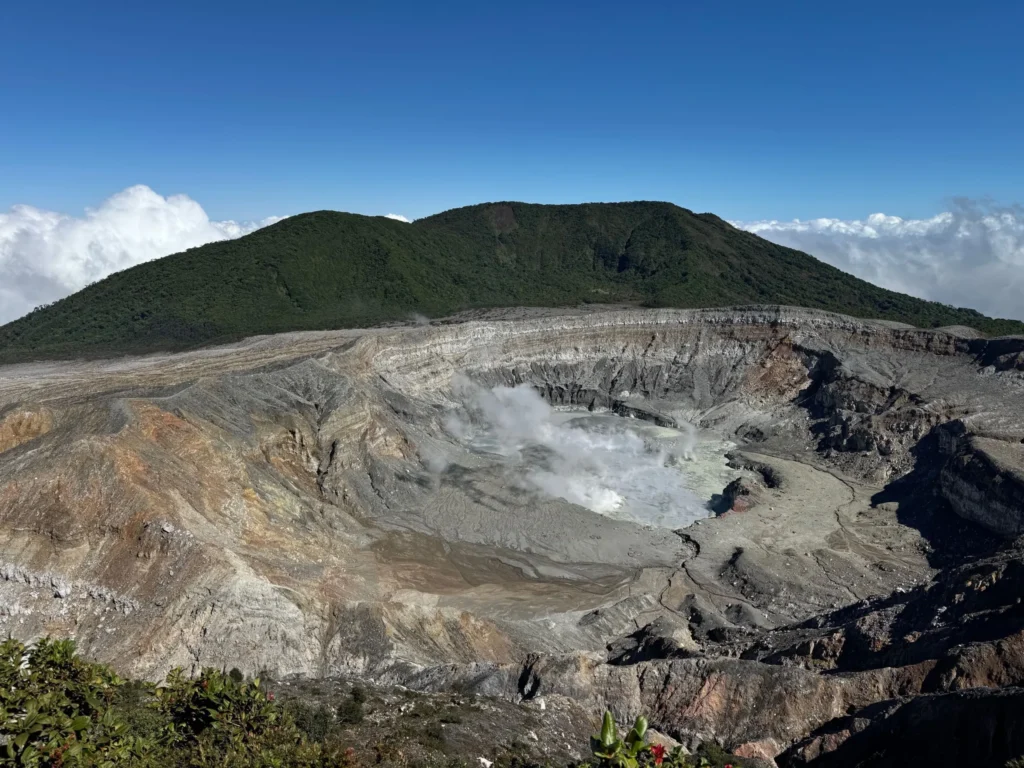
From the visitor centre it’s a long walk up a paved path, with shelters and information boards along the way. You don’t see the crater until the last few steps, because it sits far below the viewpoint. Then it opens up beneath you, steaming. We only had 40 minutes at the top, with a long drive ahead, but seeing a live volcano that close was a thrill.
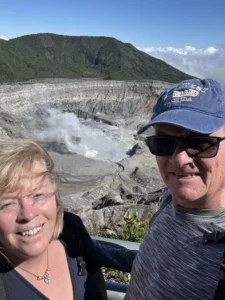
We didn’t realise quite how active it was. A few months after our visit, the park closed because of eruptions, and it has closed several times since. When we last checked, in November 2026, it was open again. Rangers may limit your time at the rim when gas levels rise.
- Cost: $15 each, booked on the SINAC national parks website
- Time: about 2 hours including the walk
- Guide? Not needed. The path is paved and the boards explain everything.
- Tip: check the SINAC website for opening times and closures the day before you go.
La Paz Waterfall Gardens: an expensive impulse
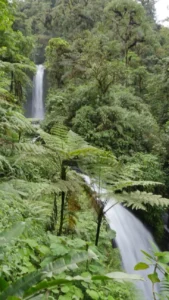
After our first lunch at a Costa Rican soda cafe, we passed the entrance to La Paz Waterfall Gardens and pulled in on a whim. It’s a curated park with paths down past wildlife enclosures and a series of big waterfalls.
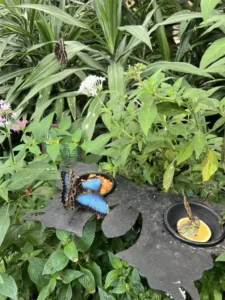
We have mixed feelings about zoos, but the animals looked well cared for: jungle cats, snakes, monkeys and sloths. The star was the butterfly observatory, where you see the whole life cycle of the blue morpho and owl butterflies. Huge ones landed on us as they flew around. It felt like walking into a Disney film.
The catch was the price. Tickets are advertised at $57 plus tax, yet somehow we paid $91 each. First day, a foreign language and a spur-of-the-moment decision: we just went for it. It became the most expensive ticket of the trip.
- Cost: $91 each (advertised from $57 plus tax), paid at the gate
- Time: 2 hours or more
- Guide? Not needed.
- Tip: buy online at waterfallgardens.com and check what’s included before you pay at the gate.
La Fortuna and Arenal
La Fortuna has tours for every level of fitness. We had two goals: see sloths in the wild and visit the famous waterfall. We also hoped to see Arenal Volcano itself. It hid behind low cloud for three days. With the weather so wet, we skipped the Arenal Volcano hike, which we’d otherwise have enjoyed.
Sloth tour: you’d see nothing without the guide
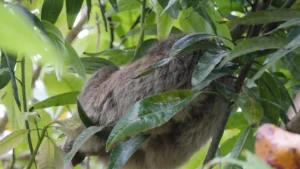
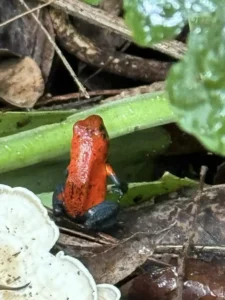
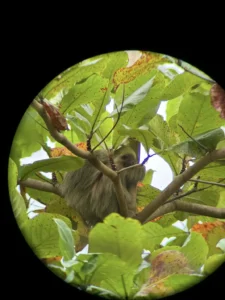
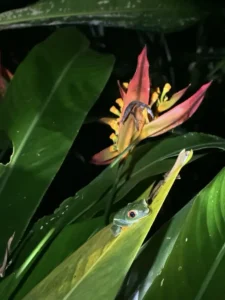
We joined about 10 people following our guide, Daniela, through the rain at Sloth’s Territory. She spotted everything: blue jeans poison dart frogs (red body, blue legs), a handful of sloths, squirrels and trails of leafcutter ants. We crossed a few hanging bridges too.
There’s no doubt we’d have seen nothing without her. She earned her fee and her tip. We booked through Tripadvisor and paid £64 for the two of us, about $42 each. That’s a touch less than the $45 Sloth’s Territory charges direct today, so the platform cost us nothing extra.
- Cost: $42 each through Tripadvisor (from $45 direct today)
- Time: about 2 hours. Eight departures a day from 7:50am.
- Guide? Essential.
- Tip: Arrive early and grab a coffee at the on-site Sloffee.
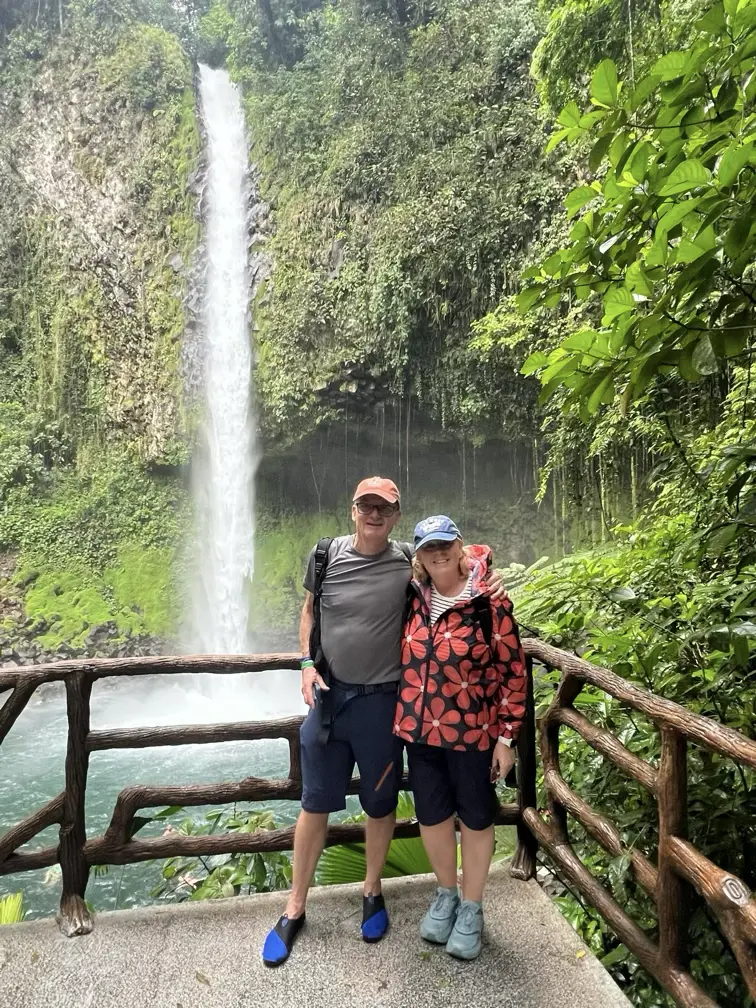
La Fortuna Waterfall: 500 steps each way
It’s a daunting 500 steps down to the viewing platform, where the 70m waterfall towers above you. I swam in the pool beneath it. It was gloriously refreshing in the heat, but the force of the water makes it hard to swim anywhere near the falls. A little further down, a gentler stream has fish swimming around your feet.
The climb back up is brutal. There are plenty of places to catch your breath, and fellow visitors were cheering on anyone who was struggling.
- Cost: $19 each for skip-the-line tickets through Viator
- Time: about 2 hours
- Guide? Not needed.
- Tip: wear non-slip shoes for the steps and bring water shoes for the pool. Tickets are sold direct at cataratalafortuna.com.
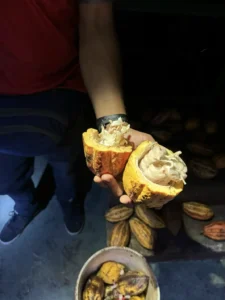
Chocolate making and night tour: one hit, one miss
We spotted Don Juan Tours while driving around and booked on the spot for an evening chocolate workshop combined with a short night walk, guided by Alex. That’s the joy of having your own car.
The chocolate was fascinating. We followed the whole process from cacao pod to grinding, made our own and took it home. The night walk was creepy in a good way, because you expect a snake at every step. In the end we saw a few frogs and the odd sloth, and not much else.
- Cost: $48 each, booked direct
- Time: about 2 hours
- Guide? Included, and needed after dark.
- Tip: wear long trousers against mosquitoes and proper walking shoes.
Costa Rica makes independent travel easy. It’s compact, safe, and packed with diversity. Drive just a few hours and you’ll swap white-sand beaches for steaming volcanoes or drift from sunny dry forest into lush cloud forest. In addition, you will find:
The Springs: hot springs until our fingers wrinkled
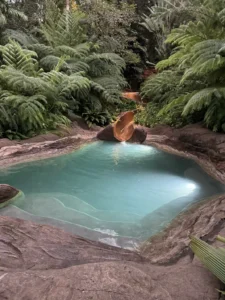
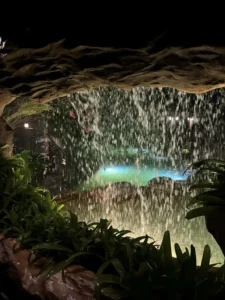
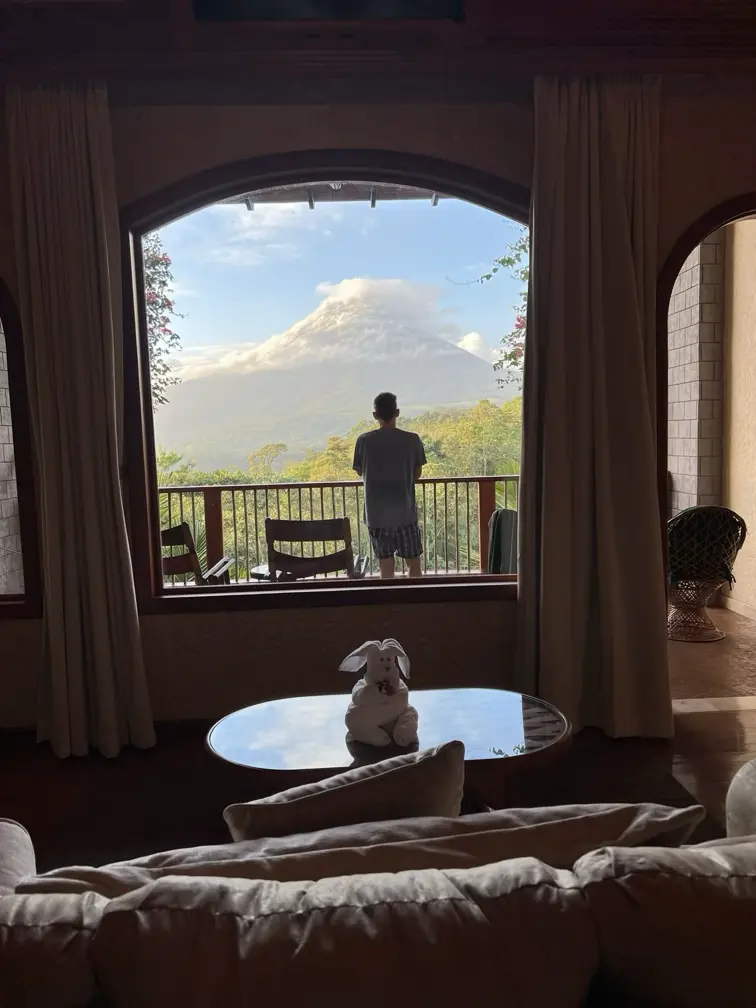
We splashed out on The Springs Resort for two reasons: the views of Arenal and its extraordinary collection of hot springs, pools and waterfalls. The natural springs run from 83°F to 104°F (28–40°C).
Las Lagunas is the most outrageous swim-up pool you can imagine, with eight natural hot springs and four chlorinated pools. Our favourite was Perdido, the “Lost Springs”, reached by a forest trail below the hotel, with a thrilling Monkey Slide that was rather fun. At the bottom of the ravine, Club Rio has more hot pools above the river and a shuttle bus down. It also offers river tubing, kayaking, riding, climbing and fishing.
We spent hours walking between pools and lounging in them until our fingers looked like prunes. The food disappointed us, but the price buys you something rare. Many resorts in the area sell thousands of day tickets, while at The Springs you get the place almost to yourself.
- Cost: included in our stay. A day pass is $125 per person.
- Time: all day, if you want it
- Guide? No.
Mistico Hanging Bridges: the professor on his day off
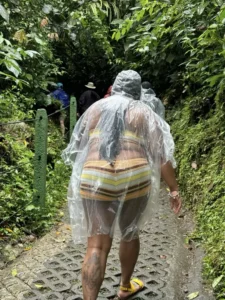
We booked through Viator, though you can buy tickets on the day. Be warned: it’s popular, and the visitor centre was heaving with coach parties. Our start was delayed while latecomers turned up and others sorted out proper footwear. You need closed-toe shoes, and those who didn’t have them had to wait behind where the paths got steep. It was hot, raining hard and misty.
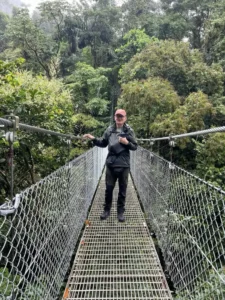
Then we got lucky. Our guide, Will, turned out to be a professor of biology at the local university, guiding on what was essentially his day off. He was immensely patient. At every turn he explained what we were seeing, and why plants, flowers and animals behave the way they do. He turned a walk in the rain with little to see into a proper education.
The views from the canopy were still impressive in the mist. We barely saw any animals, because most are nocturnal and the rest were sheltering from the rain. Will kindly emailed us his own photos afterwards to show us what we’d missed.
- Cost: $50 each through Viator
- Time: allow a good 3 hours
- Guide? 100% worth it. Without one, it’s a walk in the rain across some scarily high bridges that sway in the breeze.
- Tip: wear closed-toe shoes and go early, before the coaches arrive.
And then Arenal appeared
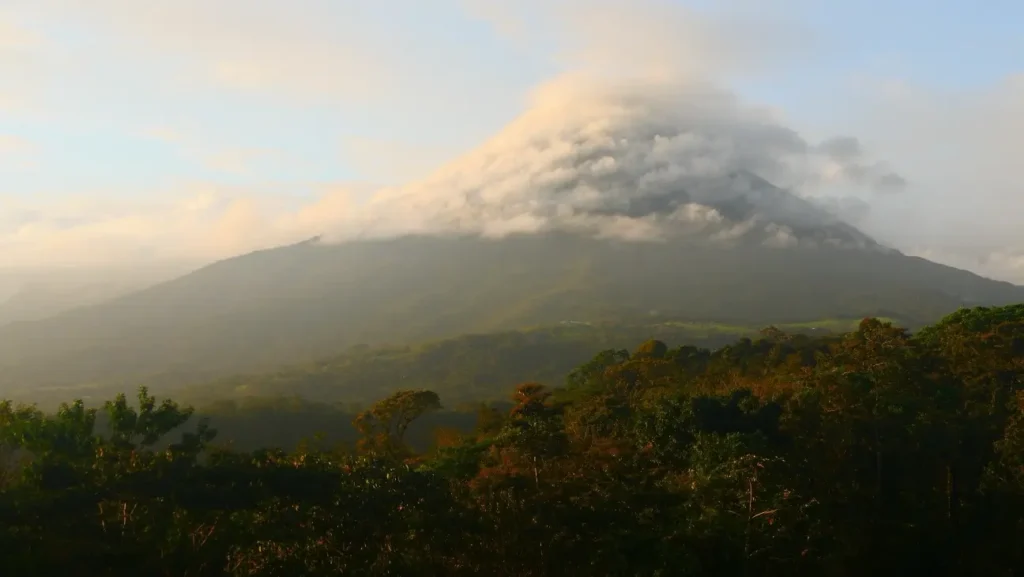
On our last morning, just as we were about to check out, the cloud lifted. For about five minutes Arenal stood there in full, a near-perfect cone above the forest. Then it was gone again. Three days of waiting for five minutes of volcano, and worth every one of them.
Río Celeste and the drive to Monteverde
Río Celeste: a river that shouldn’t be that colour
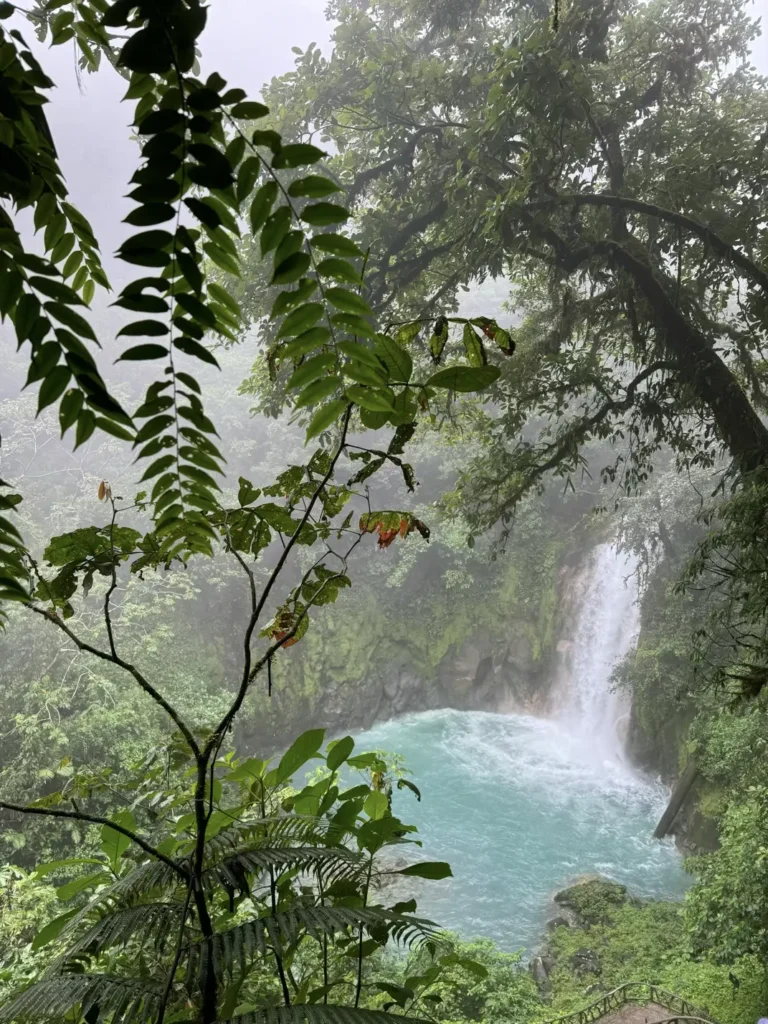
Confusingly, Río Celeste sits inside Tenorio Volcano National Park. The main waterfall is about 1.5km in, along a semi-paved track that drops roughly 150m. The fall itself is 30m high and an extraordinary shade of blue.
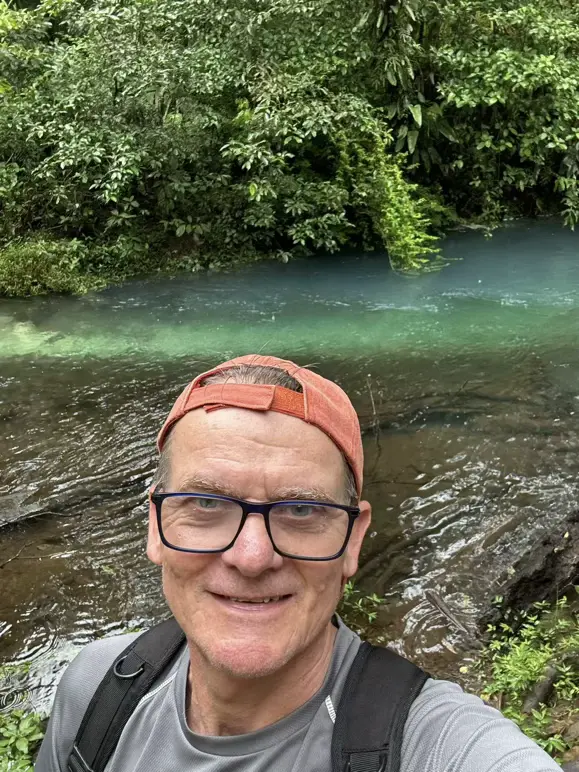
The blue is an optical effect. The Quebrada Agria stream passes hydrothermal vents and turns highly acidic, around pH 3.1 (hence the sulphur smell). When it meets the Buenavista River, which carries aluminosilicate minerals from Tenorio Volcano, tiny particles form in the water. Sunlight scattering off those particles makes the water look blue.
Video: Río Celeste in our film.
It was raining and the path was very slippery. Mel couldn’t manage the climb down to the waterfall or the extra walk to where the rivers meet. We wished we’d brought her walking poles.
- Cost: $12 each, booked on SINAC
- Time: about 90 minutes for the waterfall and the confluence (around 2.5km). The full loop, including the Blue Lagoon, is 6–7km and could take 3 hours or more.
- Guide? Not needed.
- Tip: entry is by timed slot, so book ahead, and bring poles if the trail is wet. It’s about 90 minutes (75km) from La Fortuna, so we made it a stop on the way to Monteverde.
The road to Monteverde
The usual drive from La Fortuna to Monteverde runs around Lake Arenal and takes about 3 hours without stops. On an organised trip you can save some time with a combined transfer that crosses the lake by boat. Several companies offer it door to door for around $50 per person.
Because we added Río Celeste, we drove further inland and never saw the lake. The final climb up to Monteverde was twisty and steep, with huge potholes and incredible views. We tucked in behind a local van and copied every swerve.
Monteverde Cloud Forest: the guide found the quetzal
We pre-booked a guided walk through Viator and paid park entry on the day at the Monteverde Cloud Forest Reserve visitor centre. We went at lunchtime, which was probably a mistake. Much of the wildlife is nocturnal, so an early morning or late afternoon slot would be better.
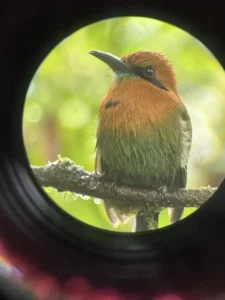
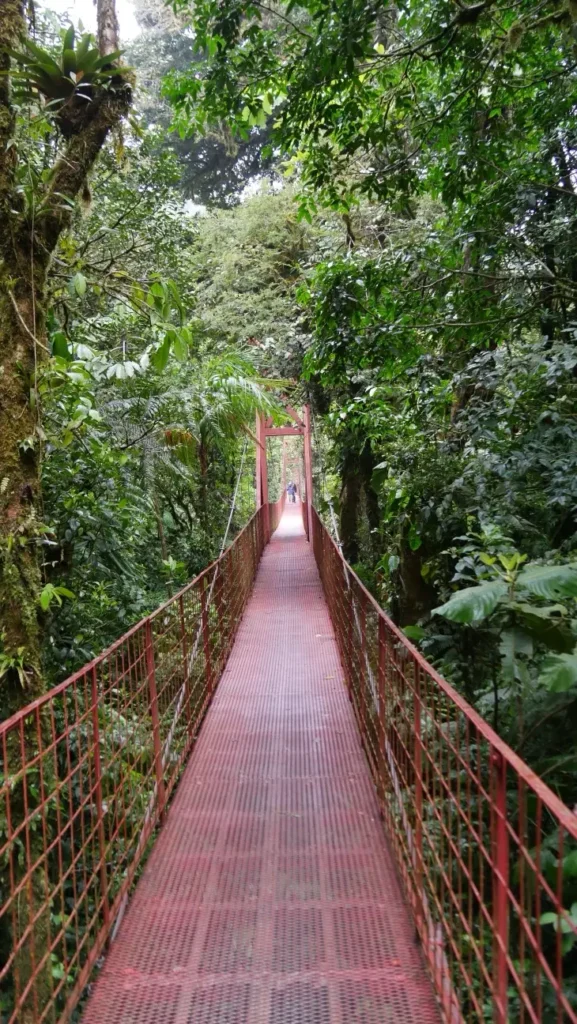
Even so, howler monkeys moved through the canopy above us, and our guide found a rare resplendent quetzal. (It’s also Guatemala’s national bird.) After the tour we wandered the trails on our own. They’re clearly marked, and we wished we’d gone in earlier, because we had plenty of time to spare.
- Cost: $55 each ($26 for the guide, $29 entry)
- Time: we spent about 2 hours on the guided walk plus a short loop alone. You could spend all day here.
- Guide? Yes, for the first couple of hours. We’d never have seen the quetzal without one. After that, explore on your own.
- Tip: go early or late, not at lunchtime, and keep time to walk the trails after the tour.
Tárcoles and Manuel Antonio
Tárcoles crocodile bridge: a quick peek
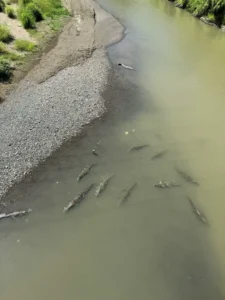
The coast road to Manuel Antonio crosses the Tárcoles River, where groups of crocodiles bask on the sandbanks below. It’s a well-known stop, and that brings some risk. Our 4×4 held everything we owned for the trip, the parking was random, and plenty of locals were offering to “watch” cars. We stayed alert and only stopped for a quick peek over the bridge.
- Cost: free
- Time: 10 minutes
- Guide? No.
- Tip: keep someone with the car and valuables out of sight. We had a calmer crocodile stop in Sri Lanka, near Arugam Bay.
Manuel Antonio: the wildlife came to us
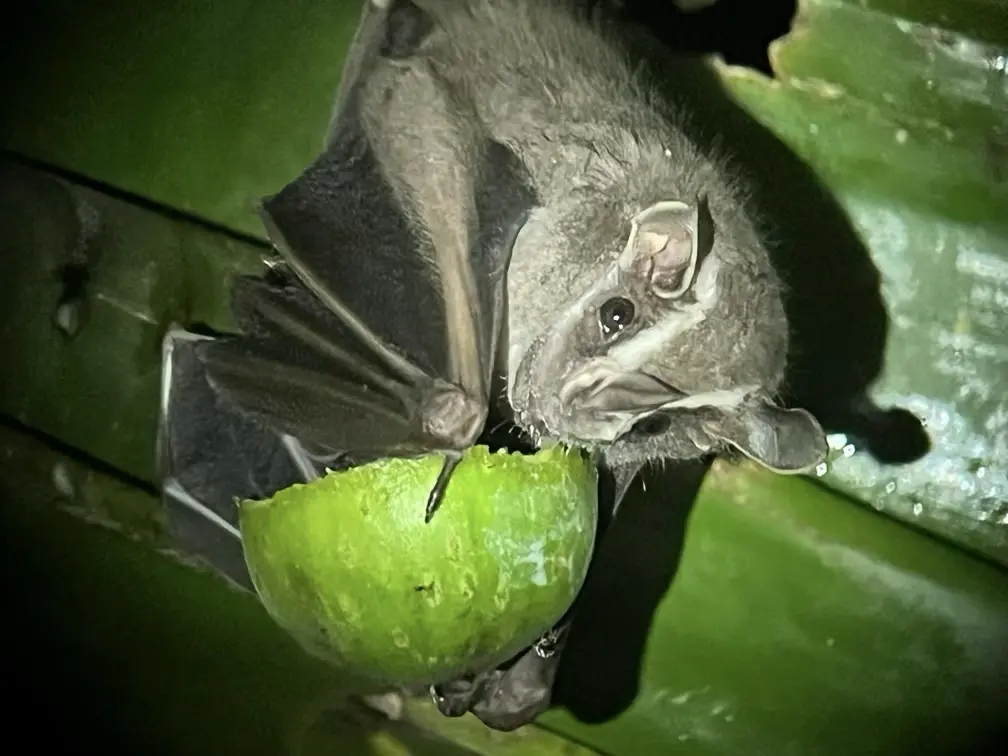
We had three nights in Manuel Antonio across two hotels, because our first was full on the third night. Two things stood out: our first proper heat and sunshine of the trip, and animals everywhere. Capuchin and squirrel monkeys visited our balcony at Hotel Costa Verde, and we finally saw toucans as well as hearing them.
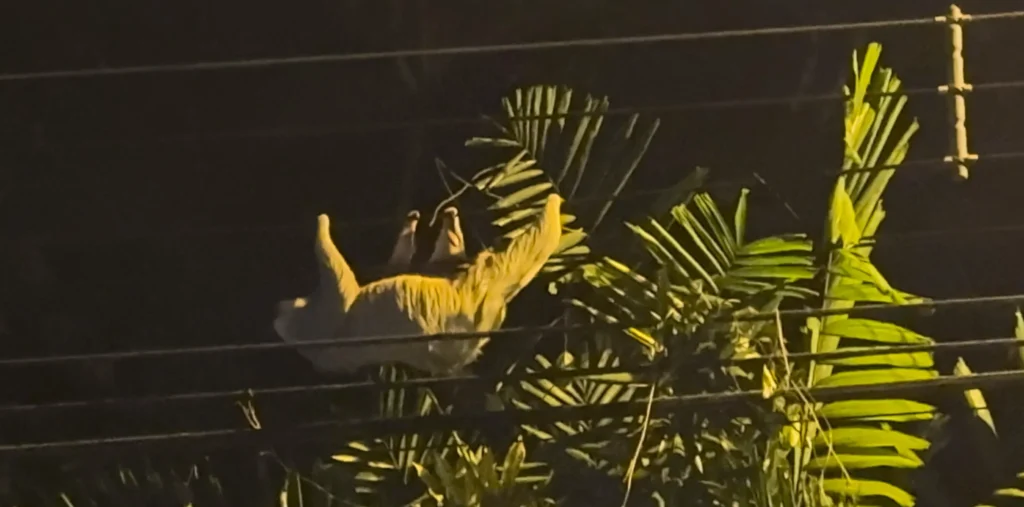
Walking back to the hotel after dinner one evening, we watched a large sloth working its way down the overhead cables. It’s easy to see how they mistake power lines for branches, and sadly many are electrocuted that way.
Manuel Antonio National Park: a zoo of people
Having seen so much wildlife around town, we found the national park a real disappointment. We were collected from the hotel at 7:30am and joined about 10 others with our guide. Inside, it was a zoo of people. Guides radioed each other whenever they spotted some poor creature, and 50 or so of us would scramble to look at a tiny frog or snake through a guide’s monopod viewfinder. That image will stay with me.
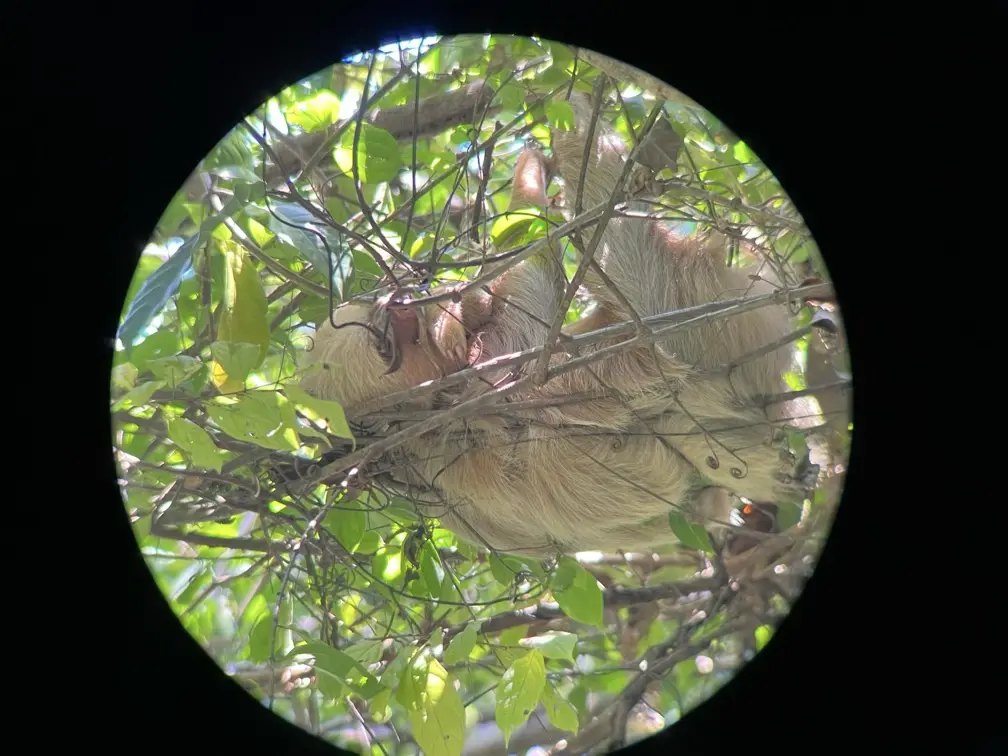
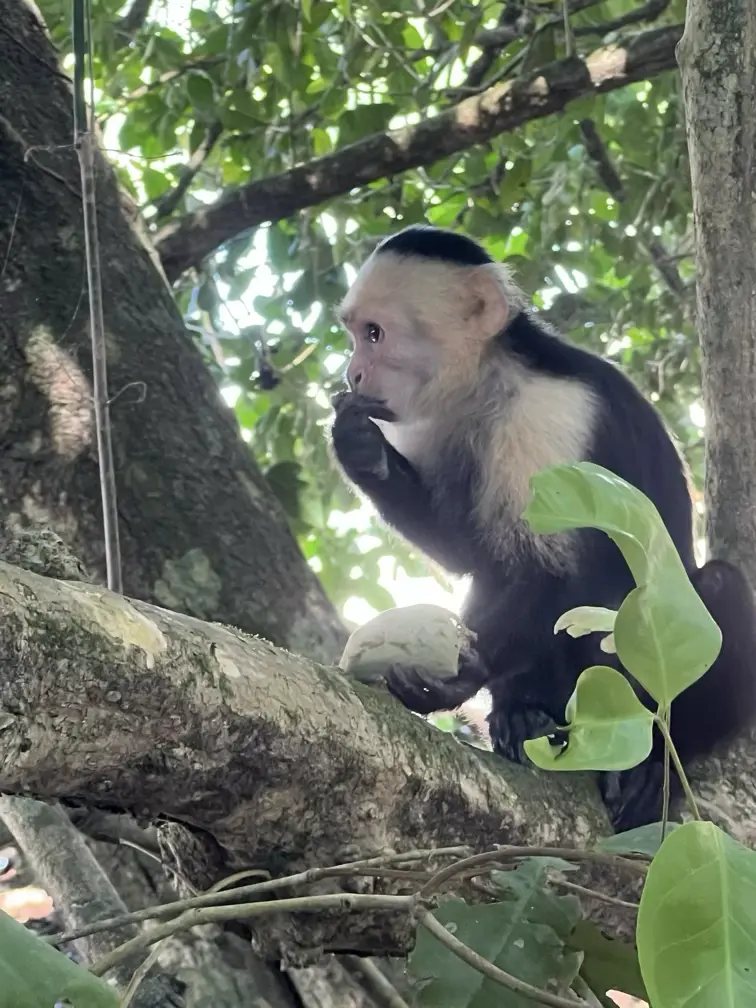
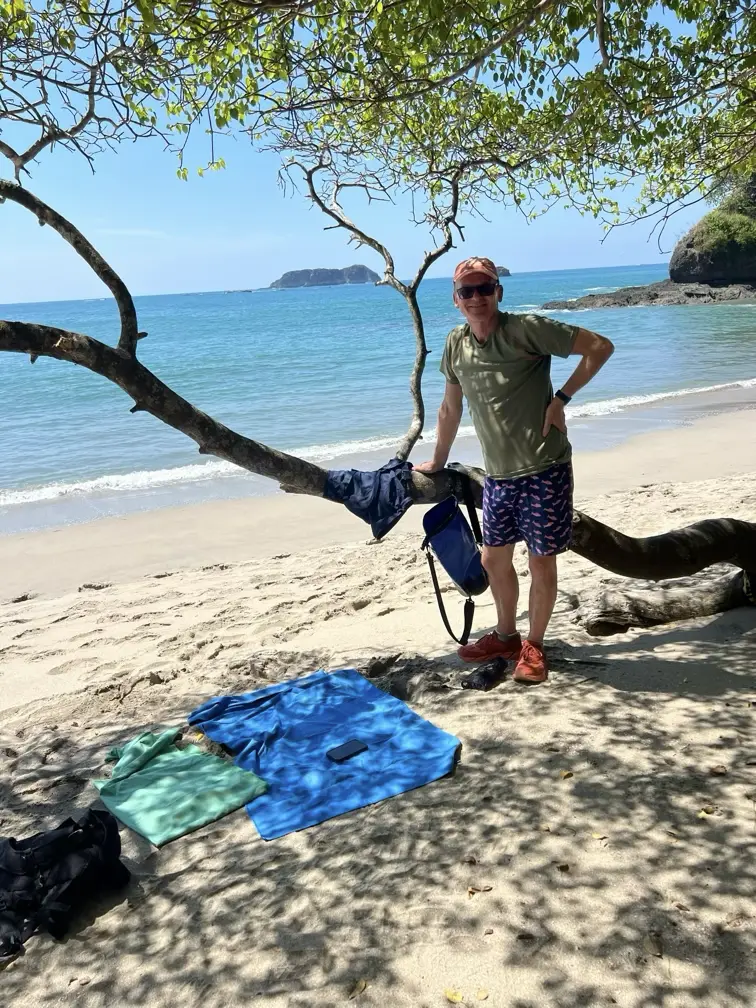
The best part came after the tour. We’d brought towels and a change of clothes, so we spent a few hours swimming and enjoying the view on the two beaches you can only reach through the park. On the way out we came face to face with capuchins and several sloths, and there wasn’t a photobombing tourist in sight.
- Cost: $63 each ($47 guided tour through Viator, $16 entry through SINAC)
- Time: easily half a day, especially if you stay for the beaches
- Guide? We’d skip it. The wildlife around town and on the walk out was better than anything on the tour.
- Tip: book entry ahead, because daily numbers are capped, and remember the park is closed on Tuesdays. Take swimwear and a towel.
Dominical and Ojochal
Dominical: wishing we were 30 years younger
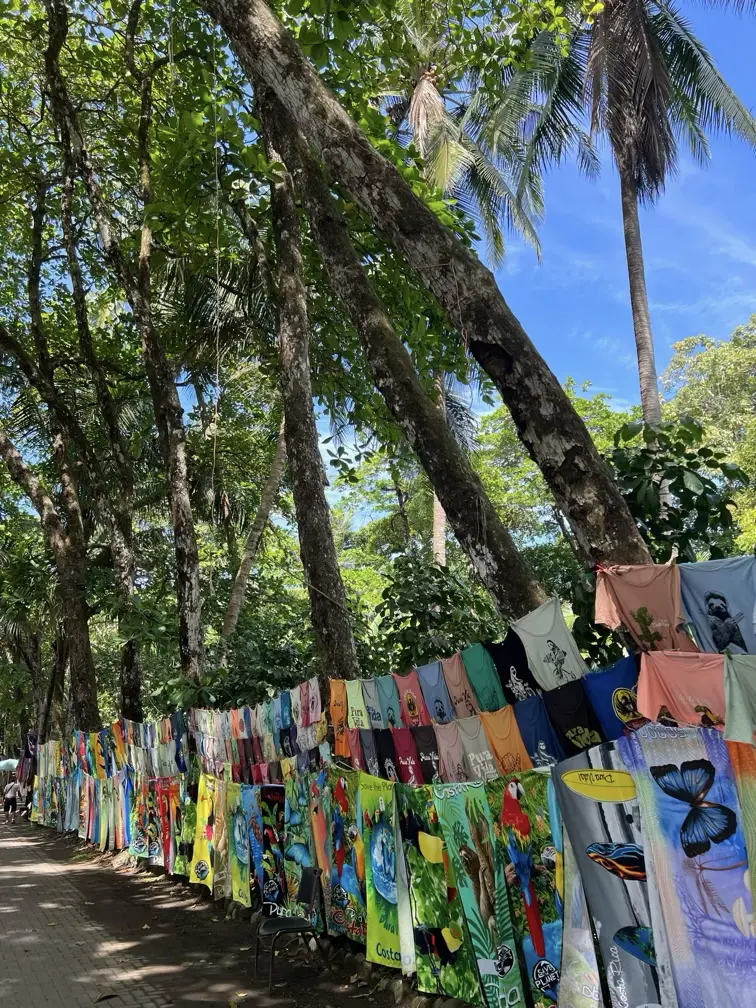
We broke the drive south with a stop in the surf town of Dominical. I said at the time that I wished we were 30 years younger. It looks like the kind of easy-going, slightly hedonistic place where you could lose a happy summer. The street under the palms is lined with stalls of sarongs, surf gear and souvenirs, though we didn’t see many places to eat.
- Cost: free
- Time: 45 minutes
- Tip: a coffee-and-stretch stop on the coast road, not a destination for us.
Ojochal: the surprise was dinner
Our overnight in Ojochal broke up the long drive to the Osa Peninsula. There’s honestly not much to see, and Alma de Ojochal was pleasant enough. The surprise was the restaurant next door, The Bamboo Room. We’d landed on entertainment night, with Phil Swain playing an unlikely mix of reggae, Latin, progressive and R&B grooves. It also turned out to be where the local French expats meet, so I made some new friends and we had a really fun evening.
The Osa Peninsula
The first thing you notice past Puerto Jiménez is the noise: a cacophony of insects and birds. For nearly an hour we drove down a rutted track, long after the tarmac and the mobile signal had given up. At first there was far more pasture than we expected, a sad sight where deep forest clearly once stood. Then the jungle closed in, with a stream to cross every so often. At one ford, having a 4×4, it felt obligatory to drive through rather than squeeze over the narrow bridge. Our self-drive SUV was a Ford Everest automatic. I’d asked for a manual, which I prefer off-road, but it was all they had.)
Bosque del Cabo: the tours were the highlight of the trip
Arriving at Bosque del Cabo felt like arriving in a dream. A winding drive leads up to lawns and palm trees, with animals everywhere: coatis on the ground, families of lanky, acrobatic spider monkeys in the trees, and toucans and macaws calling overhead. The owner built it over 20 years after arriving as a young surfer, and many guests come back year after year to the same cabins.
Two guided tours were free for guests. An early-morning walk showed us the birdlife. An evening walk in the dark was essentially a snake hunt: a fer-de-lance (terciopelo) had been seen in the grounds a few days earlier. We wished we’d worn thigh-high waders rather than trainers.
We also walked plenty of trails on our own, despite the nagging thought that something could kill you at any moment. The lodge has its own hanging bridges across the valleys. Watching a troop of spider monkeys, and hearing the terrifying roar of howler monkeys up close, will stay with me for a long time.
Pacific Beach Trail
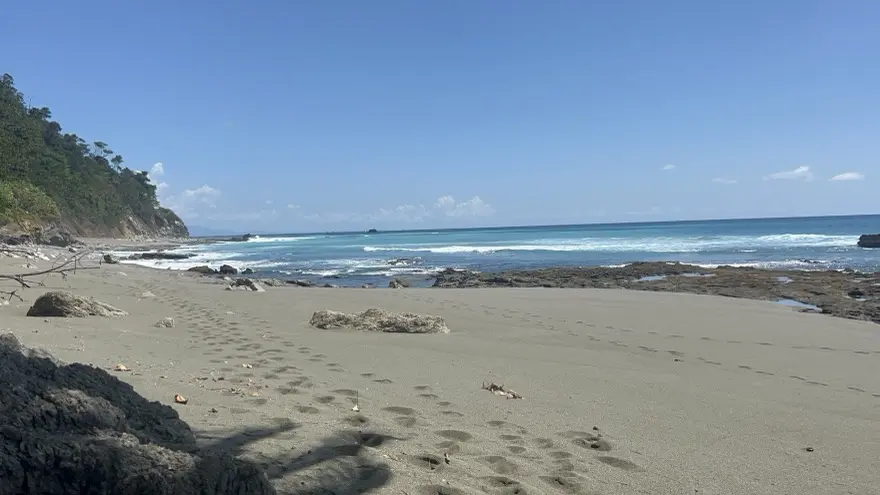
The big one was the Pacific Beach Trail down to the coast. Phil, the owner, drove us to the start in his jeep. From there it was a long march down until we came out on an empty beach. There was nothing between us and French Polynesia, and nobody else as far as we could see.
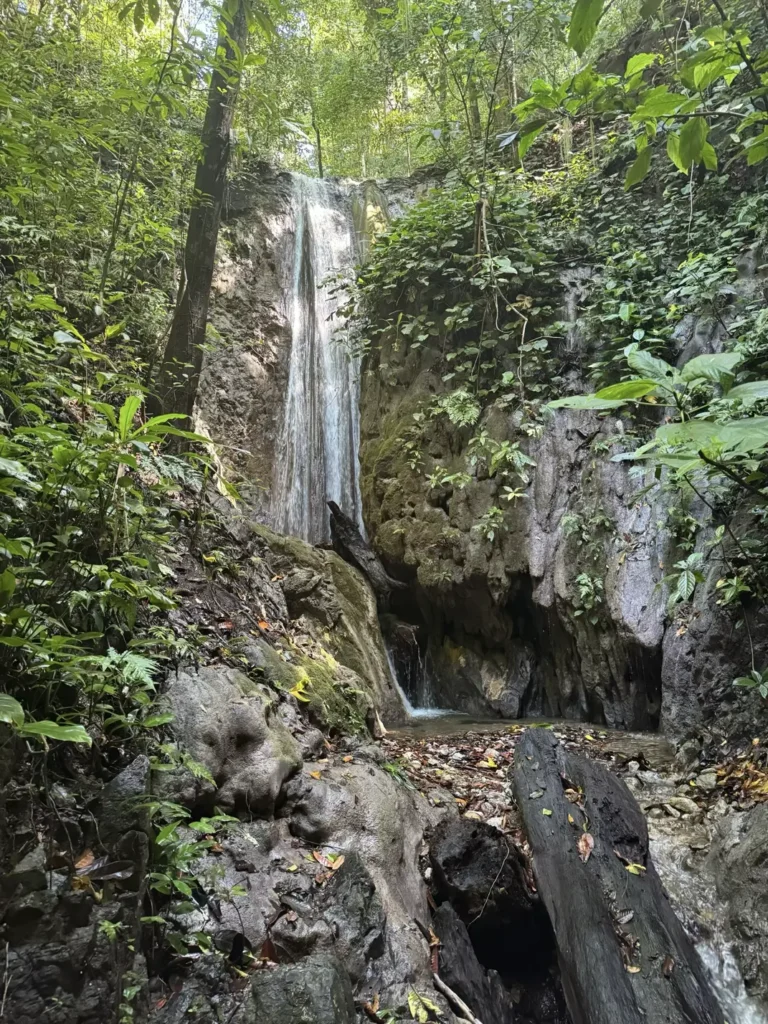
Phil had told us to walk about 1km along the beach to where a stream runs out across the sand, then follow it inland to a hidden waterfall. We put on our water shoes and waded a few hundred metres upstream until we heard it roaring. The final climb was too tricky for Mel, but I made it, and stood under the most powerful cold shower of my life.
The hike back was, in Mel’s words, hell. It was very hot, we’d run out of water, and there was a lot of scrambling over rocks. Mel needs a knee replacement at some point and had recently had a new left shoulder fitted, so she did brilliantly to get through one of the toughest hikes we’ve done.
- Cost: guided walks and trails included in our stay
- Time: an hour for the shorter walks, 3+ hours for the Pacific Trail
- Guide? Both. The free guided walks find what you’d miss; the trails are well mapped for doing alone.
- Tip: take more water than you think you need on the Pacific Trail, and water shoes for the waterfall. The lodge normally asks for a three-night minimum; we only got two nights because of a gap in their bookings, and it wasn’t enough.
What we’d do next time
Bosque del Cabo is expensive and justifies it. The service from Filipe, Mar, Glenda and Heylin was outstanding. If we went back to Costa Rica, we’d seriously consider returning. Puerto Jiménez airport, with direct flights to San José, is a 50-minute jeep ride away and the lodge can arrange it, so it’s no further in time than driving to Manuel Antonio or La Fortuna.
Puerto Jiménez: the boat can’t come soon enough
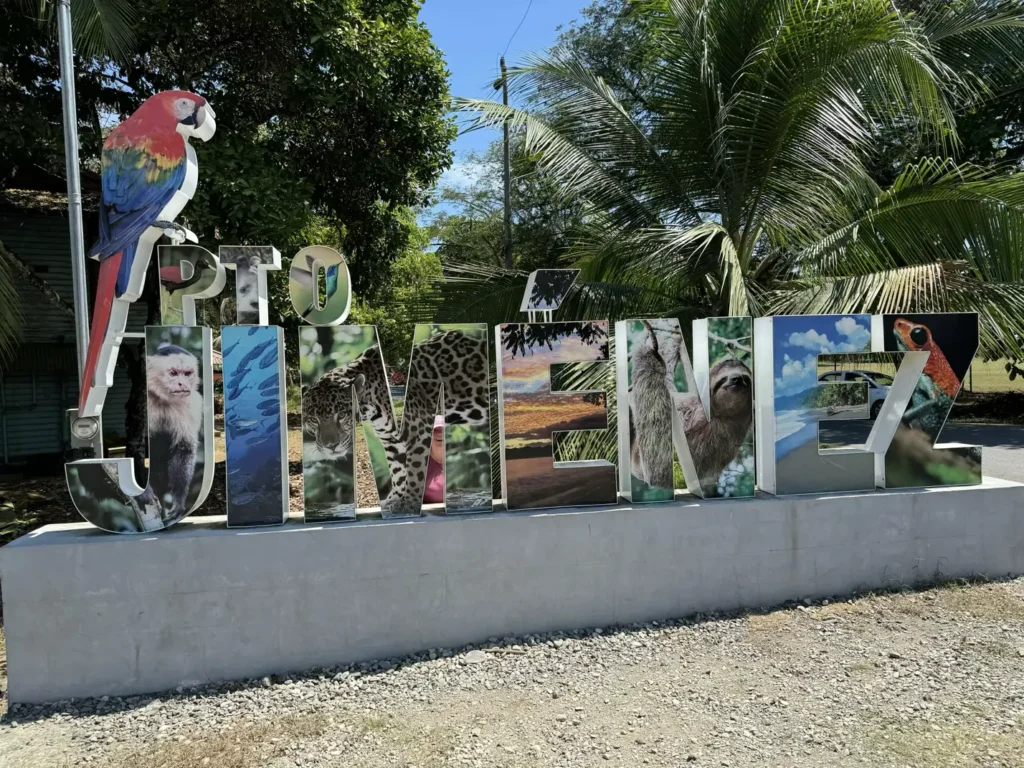
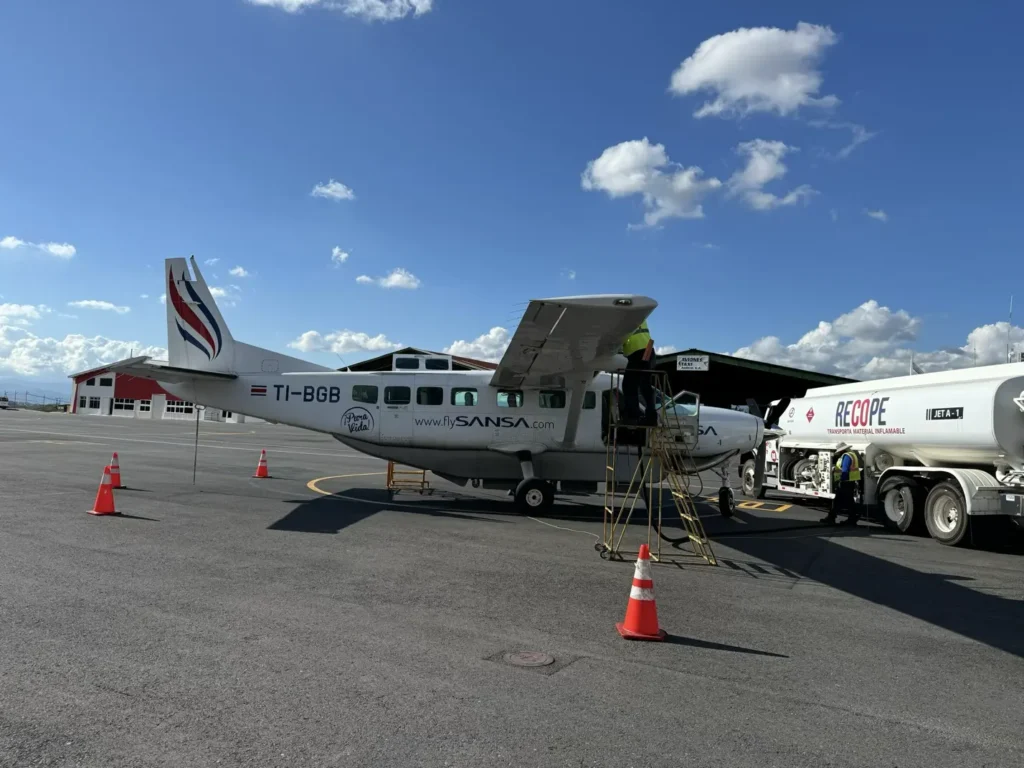
We dropped off the car in Puerto Jiménez and waited for our boat. The town feels a little unloved. An airstrip splits it in two: a high street with a few shops, a couple of very mediocre cafes and restaurants, and a lot of people hanging about. The “airport” is a couple of offices beside an unfenced runway that anyone could wander onto, next to the cemetery. Down by the harbour, the restaurants sit right under the flight path. A few planes almost took the roof tiles off as they landed.
We can’t recommend it as a town, and we were pleased when our private boat to Golfo Dulce Retreat finally arrived.
- Time: enough for a coffee or a beer
Golfo Dulce Retreat: monkeys, a giant tree and crocodile footprints
Golfo Dulce Retreat is much smaller than Bosque del Cabo, with just four villas. On our last night we were the only guests. You step off the boat into the water, your luggage goes up the beach in a wheelbarrow, and nature closes around you. Chantal and Simon have created something magical in the jungle, Sandra and Jennifer looked after us wonderfully, and the food was unbelievable for somewhere so remote.
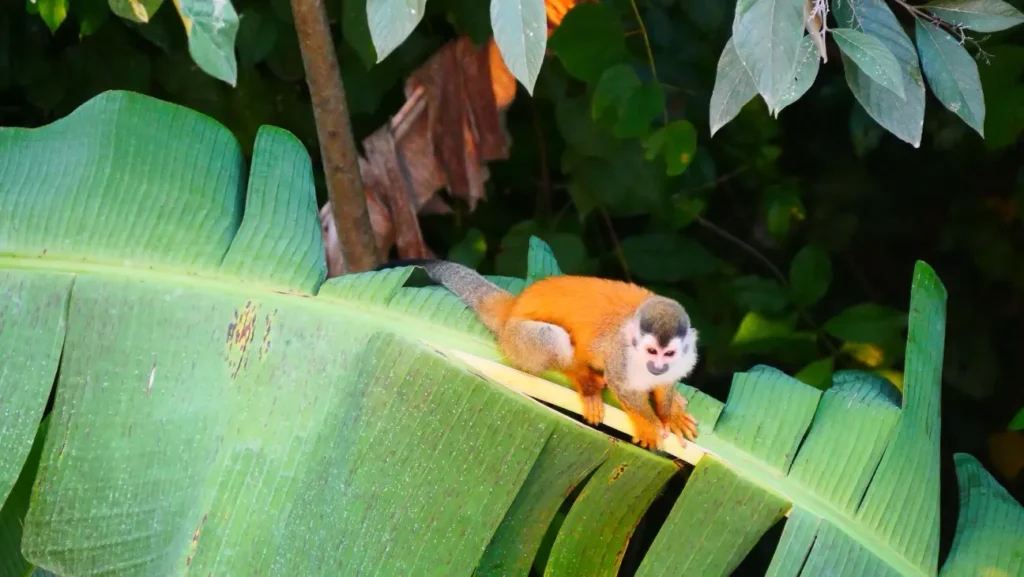
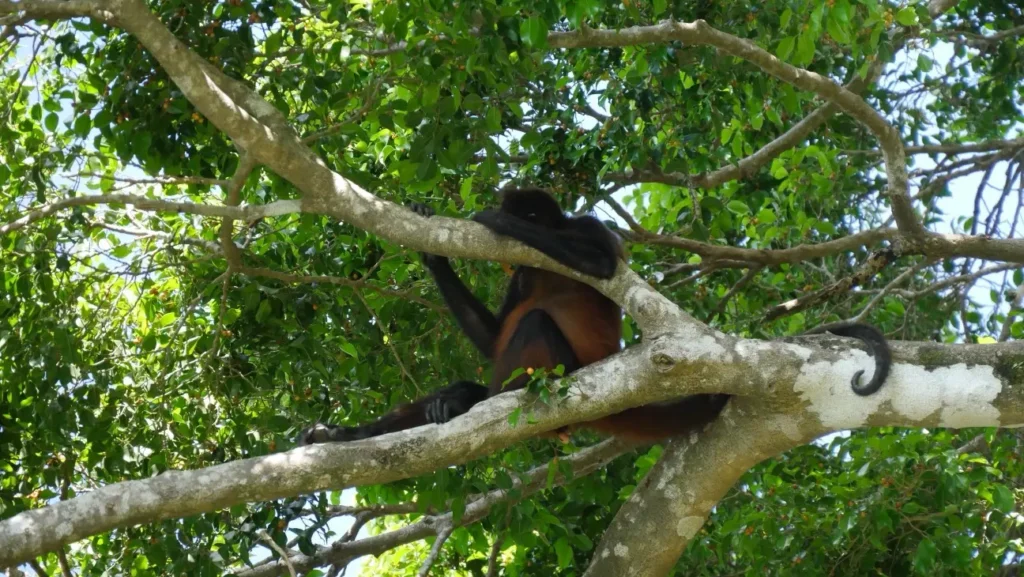
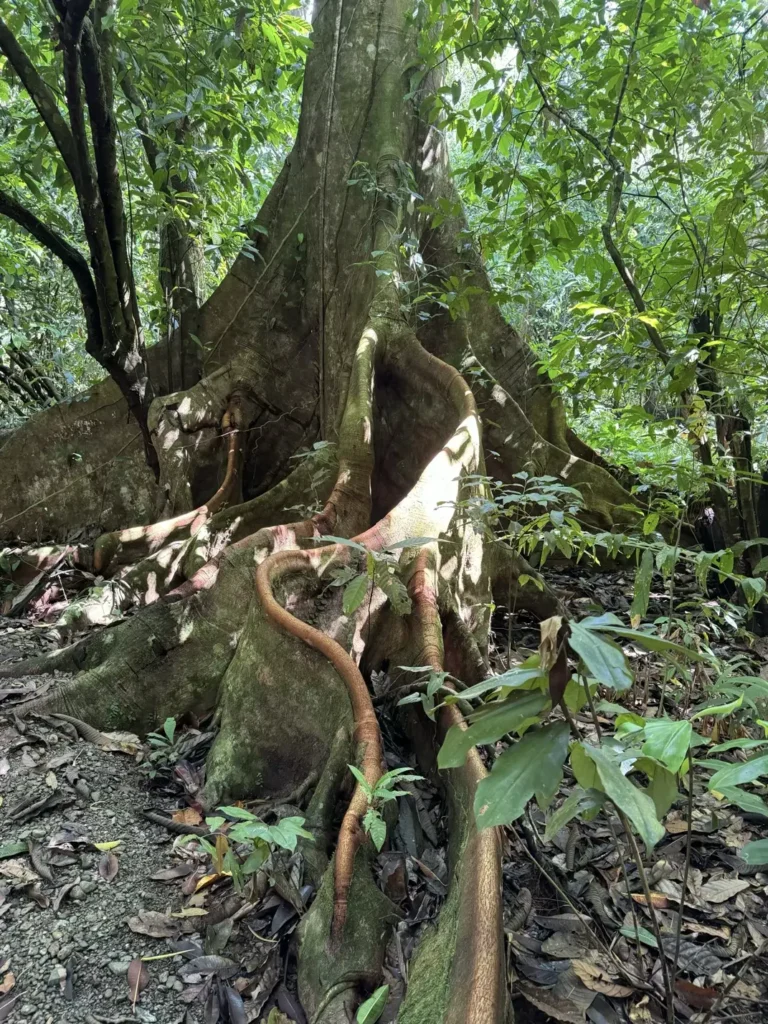
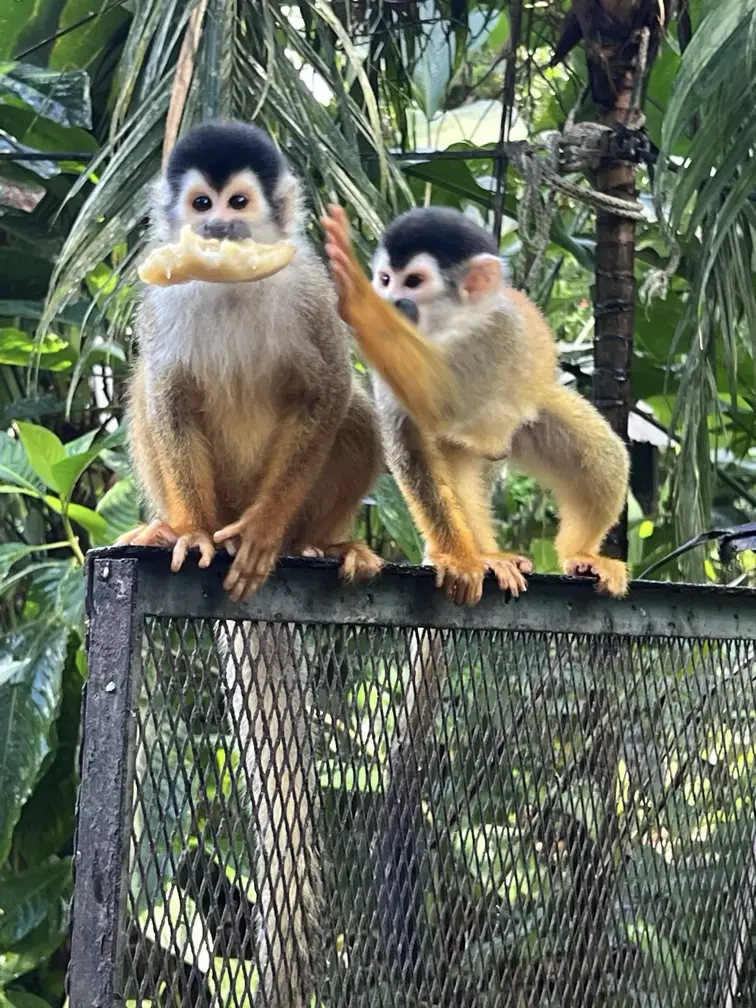
The Italian owners host young people with an interest in botany and wildlife, and two of them guide the extra activities. We walked the Ceiba Tree Trail on our own, this time in sturdy anti-snake wellies, and still managed to miss the giant tree on our first attempt. We’d missed a blind turning and had to go back. One morning Chantal took us behind the kitchens as a troop of squirrel monkeys came down from the trees. Rather than let them raid the kitchen, she feeds them bananas, and we were surrounded.
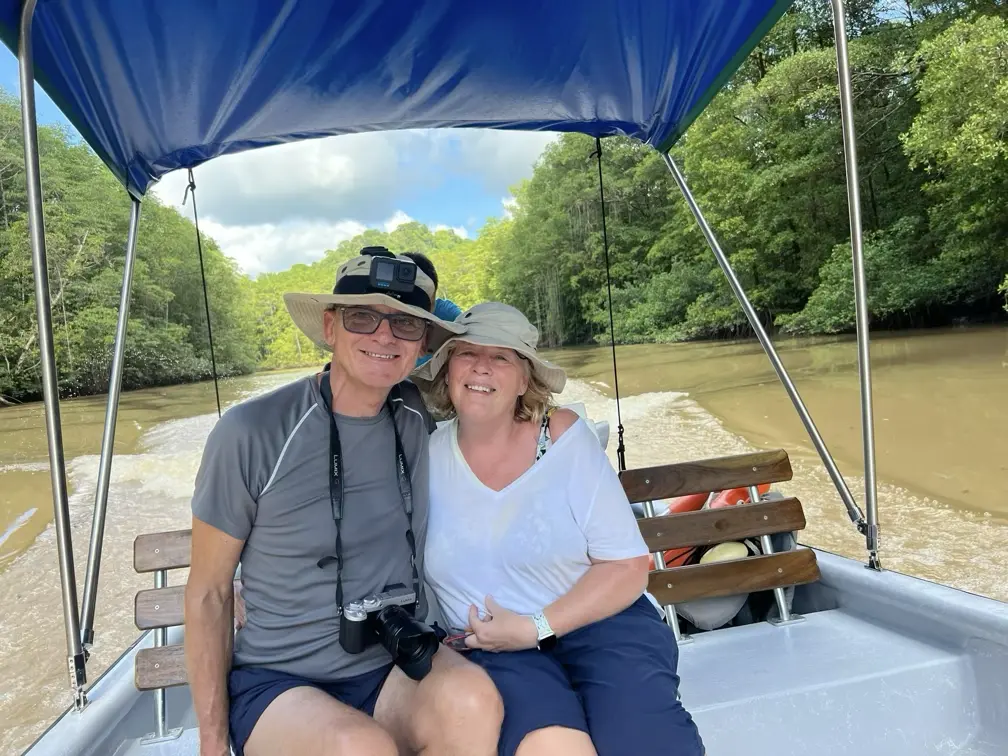
The one excursion we paid for was the mangrove and kayak tour. On the boat out, I caught a pregnant dolphin on camera underwater. Then came the adrenaline. We climbed from the boat into kayaks to paddle ourselves into the murky brown mangroves, just as the guide mentioned the crocodiles. Two minutes later, in a narrow creek, I spotted a fresh crocodile footprint in the mud. With the tide only just going out, it could only have been made in the last hour.
- Cost: mangrove and kayak tour $285 per suite (current excursions); the Ceiba Tree Trail is free and self-guided
- Time: about 3 hours for the mangrove tour
- Guide? Yes for the mangroves; no for the trail.
- Verdict: pricey, but thrilling and well worth it.
What we’d tell a friend
Pay for a guide when the wildlife is hiding: the sloth tour, Mistico, Monteverde and anything after dark. Keep your money for the big, obvious sights: Poás, La Fortuna Waterfall, Río Celeste. And think twice about the famous parks where every guide converges on the same frog.
- Check the operator’s own price before you pay anyone. Our Tripadvisor and Viator bookings came in close to the operators’ own prices; the sloth tour was even slightly cheaper. The one we overpaid for was La Paz, bought on impulse at the gate: $91 against an advertised $57 plus taxes.
- Book national parks on SINAC. Poás, Río Celeste and Manuel Antonio all use timed slots and capped numbers.
- Go early or late. Most of the wildlife is nocturnal or sheltering by midday.
- Let your lodge do the work. Our best wildlife came from free walks at Bosque del Cabo and bananas at Golfo Dulce, not from the tours we paid for.
- Pack for it: closed-toe non-slip shoes, water shoes, long trousers for evenings, a towel for the beaches, and walking poles if anyone in your party needs them.
That’s the self-guided joy of Costa Rica: with your own car, you can pull in at a chocolate farm on a whim or stop to watch a sloth on a power line. Pura vida.
Your turn: if you could only pay for one guided tour in Costa Rica, which would you choose, and which famous sight would you happily do on your own? Tell us in the comments.
Why Choose Costa Rica for a Self-Guided Adventure?
- Wildlife everywhere: Around 5% of the world’s species live here. Sloths, toucans, monkeys: you’ll see them without even trying. Or rather, they’ll see you! Long before you see them!
- Welcoming locals: Ticos (Costa Ricans) are famous for their warmth. A smile and a simple “Pura Vida” go a long way.
- Eco-friendly tourism: Sustainability isn’t a buzzword: it’s built into daily life.
- Accessibility: With two international airports and short distances between destinations, you can do a lot in a short trip.
Not only that, but add in Costa Rica’s political stability and strong safety record, and you’ve got the ideal destination for solo travellers, couples, or even families who want freedom without stress.
Where Can You Go?
Crucially, if you are on a self-guided tour, there is no limit to your adventures. Having a car meant we could nip out shopping, go to a restaurant or just explore where and when we wanted to.
Below you can zoom in and explore the self-guided tour we made using the map below:


💬 Share Your Thoughts
We love hearing from fellow travellers. Whether you have a question, a tip, or your own story to add, please jump in! We reply to every comment personally.