
A 16-night journey from San José to the Osa Peninsula, finishing with four nights beside Golfo Dulce. Travelled January–February 2024.
We hired a car in Costa Rica because we wanted the freedom to stop. At a waterfall we hadn’t planned to visit. At a roadside café. In a little surf town that made us wonder what life might have looked like if we’d found it thirty years earlier.
But one of the best decisions we made was knowing when to give the car back.
Our journey began near San José, took us through Arenal and Monteverde, then followed the Pacific coast south to the Osa Peninsula. After rainforest walks at Bosque del Cabo, we returned the car in Puerto Jiménez and boarded a boat to Golfo Dulce Retreat. The driving was over. For the final four nights, the itinerary became considerably less demanding.
This is the Costa Rica self-drive itinerary Mel and I actually followed: 16 nights, 17 calendar days and eight places to stay. It’s a comfort-led self-drive tour, combining volcanoes, cloud forest, wildlife and coastal stops with some deliberately indulgent hotels. Below are the route, the drive times, what the car and the hotels cost, and what I would change. You can also watch the first film of the trip: two of us, a 4×4 and no Spanish.
If you’ve been pricing self-drive tour packages, this is the same kind of route, booked on our own. Whether that was the right call is a separate question, and we’ve answered it in Costa Rica: travel agent or book it yourself?
Our Costa Rica itinerary at a glance
We travelled from 18 January to 3 February 2024. Before Costa Rica, we spent a week visiting family and travelling in Florida; those nights and costs are excluded here.
Route: San José airport → Alajuela → Poás and La Paz → La Fortuna/Arenal → Río Celeste → Monteverde → Manuel Antonio → Dominical and Ojochal → Bosque del Cabo → Puerto Jiménez → Golfo Dulce → Puerto Jiménez → San José airport.
| Days | Overnight stop | Nights | Where we stayed | Main focus |
|---|---|---|---|---|
| 1 | Alajuela, near San José airport | 1 | Buena Vista Chic Hotel | Arrive, collect car and settle in |
| 2–4 | La Fortuna / Arenal | 3 | The Springs Resort & Spa | Poás and La Paz en route; hot springs, sloths and hanging bridges |
| 5–6 | Monteverde | 2 | Monteverde Lodge & Gardens | Río Celeste en route; cloud forest and birdlife |
| 7–9 | Manuel Antonio | 3 | Hotel Costa Verde, then The Falls | National park, beaches and wildlife around the hotels |
| 10 | Ojochal | 1 | Alma de Ojochal | Dominical stop and a break in the journey south |
| 11–12 | Osa Peninsula | 2 | Bosque del Cabo Rain Forest Lodge | Rainforest trails and wildlife on the lodge grounds |
| 13–16 | Golfo Dulce | 4 | Golfo Dulce Retreat | Boat-access retreat, kayaking and time to slow down |
| 17 | Departure | — | — | Boat to Puerto Jiménez, domestic flight to San José and flight home |
The driving section ended on Day 13. This was a one-way road trip followed by a boat-access stay and a domestic flight, not a driving loop back to San José.
How long are the drives on this route?
These are the driving times from our planning sheet, before any stops. The right-hand column is what each leg actually became, and that’s the column worth planning around.
| Leg | Planned driving time | What it actually became |
|---|---|---|
| San José airport → Alajuela | Under an hour | A supplies stop, then an easy first evening |
| Alajuela → Poás Volcano | About 40 minutes | A booked crater visit, first thing; check it’s open before you visit as this volcano is still active! |
| Poás → La Fortuna, via La Paz | About 2.5 hours | A full day: several hours at La Paz (which we hadn’t planned to do) and a detour at the end as we switched to Waze from Google Maps. |
| Arenal → Río Celeste | About 1 hour 15 minutes | A proper walk to the waterfall, not a photo stop. Seeing the change in colours is pure chemistry. |
| Río Celeste → Monteverde | About 3 hours | Saw more volcanoes than at Arenal, but it’s a long slog up to Monteverde |
| Monteverde → Manuel Antonio | About 3.5 hours | Tárcoles crocodile bridge (watch out as there’s thieves about) and a long lunch |
| Manuel Antonio → Ojochal | About 1 hour 15 minutes | A wander around Dominical, wishing I was 30 years younger. Wished we’d stopped longer at Uvita to see the Whale’s Tail |
| Ojochal → Bosque del Cabo | About 3 hours | The road south, and the last stretch to the lodge. It’s wild and then the noise of nature hits you. |
| Bosque del Cabo → Puerto Jiménez | About an hour | Car returned at the Alamo airstrip office; they kindly dropped us off back at the quay with our luggage then a boat. |
None of these drives is long on paper. Every one of them took longer than planned, and that was mostly our choice, especially when you are free to stop and take photos when ever you want.
How long do you need for this route?
Our trip needed 16 nights to work at this pace. Even then, two nights at Bosque del Cabo felt short. Expensive, yes, but just an extraordinary experience too and when we booked, they only had a spare room for two nights.
There were busy days at the beginning: travelling between places, fitting in walks and joining guided tours. The four-night finish at Golfo Dulce provided a welcome change of rhythm. For us, the journey worked because it contained both.
If you have exactly two weeks, I would remove a stop or a substantial section before trying to squeeze the whole route into fewer nights. The forest walks, weather and spontaneous stops were part of why we came. I wouldn’t want every delay to feel like a problem.
This itinerary will particularly suit travellers who enjoy wildlife and independent exploring, but also want comfortable places to retreat to afterwards. Our hotel choices pushed the budget up considerably. They’re a record of our choices, not a minimum cost for visiting Costa Rica.
Holiday Goals:
When putting together this tailor-made self-guided tour , we had had a number of key things we wanted to experience in our adventure:
- Hanging Bridges
- Cloud Forests
- Nice beaches
- as well as animals in their natural habitat
We were not disappointed. The people were so friendly. It was safe, clean and welcoming. Some of the things we saw were out of this world. I would go back to Costa Rica in a heartbeat.
Our Self-Drive Tour Itinerary
Day 1: Arrive at San José and stay near the airport
18 January · 1 night · Buena Vista Chic Hotel
We flew into San José from Fort Lauderdale, collected our hire car and stayed in Alajuela rather than continuing straight to La Fortuna.
That was a useful decision. An arrival day already involves enough moving parts: immigration, luggage, the hire-car paperwork and getting used to unfamiliar roads. Before we drove off, we videoed the whole car, inside and out, boot included. More on why below. Then we stopped for supplies and headed to Buena Vista Chic Hotel.
Our balcony looked towards San José in the distance. There was time to settle in and enjoy the feeling that the trip had begun, without immediately turning it into a test of endurance.
What worked: keeping the first night close to our arrival point, with Poás positioned naturally for the following day’s journey.
Days 2–4: Poás, La Paz and three nights in Arenal
19–22 January · 3 nights · The Springs Resort & Spa
The journey to La Fortuna became part of the trip
We had booked our visit to Poás Volcano before arriving. Seeing the crater was a spectacular way to begin, and we were fortunate with the visibility.
La Paz Waterfall Gardens was the less planned stop. We spent time among the waterfalls and animal exhibits, and watched blue morpho butterflies drying their wings. It was our first proper reminder of why we had chosen to drive ourselves: when something caught our attention, we could stop.
It also meant this was a full sightseeing day with a drive attached. Our sheet said two and a half hours. I would plan it as a day.
The final approach wasn’t entirely smooth. Our navigation led us on an unexpected detour and eventually towards someone’s front yard. We did reach The Springs, but the incident gave us a healthy respect for checking the route before blindly following the next instruction.
Arenal without the volcano view
For much of our stay, Arenal was hidden by cloud and rain. The volcano finally revealed itself on our last morning.
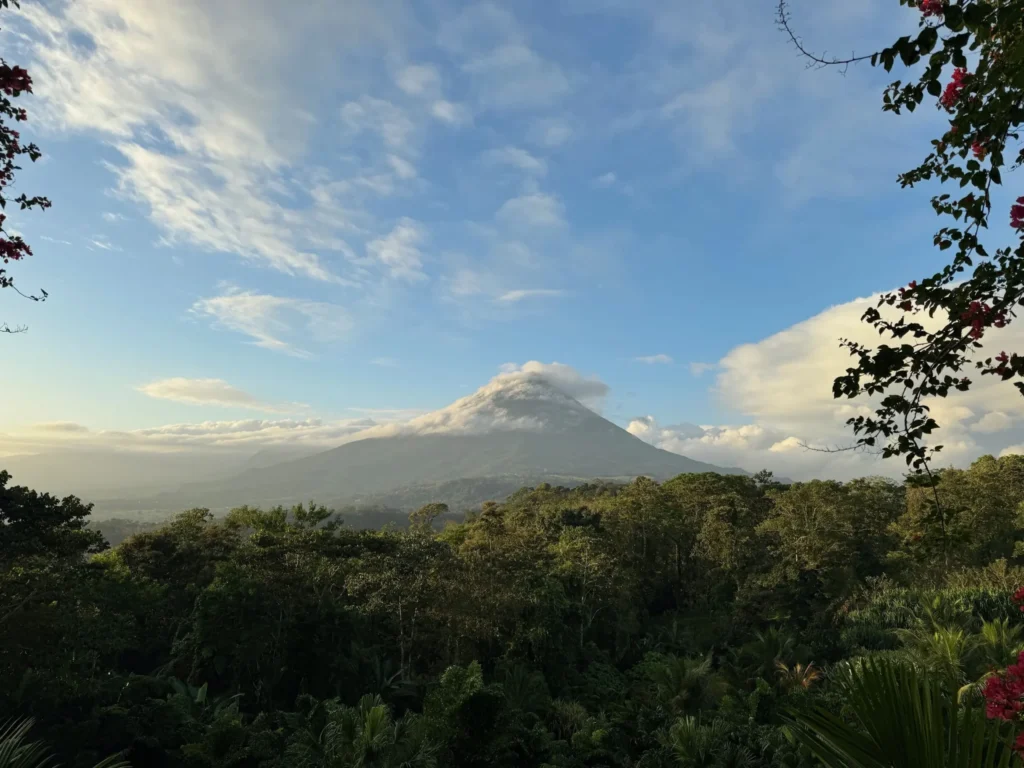
That would have been frustrating if the whole visit had depended on one view. Fortunately, there was plenty else to enjoy. The hot springs were a particular pleasure: rain matters much less when you’re already sitting in warm water.
Sloths and waterfalls
We explored La Fortuna Waterfall, took a guided sloth walk, joined a chocolate and night-walk experience, and visited the hanging bridges at Mistico. These were different ways of encountering the landscape, not four versions of the same forest walk.
At Sloth’s Territory, Daniela helped us find animals we could easily have missed. At Mistico, our guide Will brought the wet forest to life even when the wildlife seemed determined to shelter from the rain. On the chocolate and night walk, Alex introduced us to another side of the place after dark.
Self-driving didn’t mean doing everything without help. We organised the journey ourselves and paid for local knowledge where it added something. Our guide to self-guided tours in Costa Rica covers how we booked them.
What I would repeat: three nights in the area, a mix of daytime and after-dark experiences, and somewhere comfortable to return to when the weather changed.
What I would reconsider: how much of the budget to put into The Springs. It was our most expensive stay per night. For someone spending most of each day out exploring, a less expensive base might be a better fit.
Watch the beginning of our journey in this film
Days 5–6: Río Celeste and Monteverde’s cloud forest
22–24 January · 2 nights · Monteverde Lodge & Gardens
We visited Río Celeste on the journey from Arenal to Monteverde. The waterfall and the meeting of the rivers gave us another memorable stop, but it was a deliberate detour, not a quick roadside photograph.
This is one of the days I would plan carefully if repeating the trip: allow for the walk as well as the drive, and keep the rest of the day flexible.
Monteverde brought a different atmosphere. We stayed at Monteverde Lodge & Gardens and joined a guided reserve visit the following day. Seeing a quetzal was a highlight. Hummingbirds over breakfast at the sister property, Cloud Forest Lodge, were another.
Again, the guide mattered. There is a considerable difference between walking through a forest and having someone help you notice what is happening in it.
Two nights gave us a full day between arrival and departure. That was workable, but it wasn’t a leisurely stay. If cloud forest and birdwatching are the main reason for your trip, this is somewhere to give more time.
Watch this part of the journey: We Drove a 4×4 in Costa Rica Alone with No Spanish – Was It Worth It?
Days 7–9: Manuel Antonio – three nights, two hotels
24–27 January · 2 nights at Hotel Costa Verde; 1 night at The Falls
On the journey to Manuel Antonio, we stopped at the Tárcoles crocodile bridge and broke the drive for lunch. The landscape changed as we left the hills and reached the Pacific coast.
We spent three nights in Manuel Antonio, but split them between two properties. They were consecutive stays in the same area, not separate destinations on the route.
Was Manuel Antonio National Park worth it for us?
Not as much as we’d hoped. The park’s beaches were beautiful, but the crowds took the edge off the visit. Some of our best wildlife encounters in the area happened around the hotels instead.
That doesn’t make the Manuel Antonio stop a mistake. The experience we valued simply wasn’t confined to the attraction we had booked.
For park visits, use SINAC’s official booking information and check the current entry arrangements. National park admission and a guided tour are separate things to confirm when booking.
Costa Verde or The Falls?
The Falls. Hotel Costa Verde offered views and wildlife, but parts of the stay felt dated and service was mixed. The Falls was the better stay, at roughly half the nightly price.
I wouldn’t normally design a three-night stay around changing hotels within the same area. If repeating this stop, I would choose one property and settle in.
One other lesson from the local monkeys: keep food secure. A stolen piece of banana bread makes a memorable story, but encouraging animals to approach people for food is no favour to them.
We had also considered a Damas kayaking excursion. We didn’t do it because of Mel’s shoulder, so it isn’t included here as an experience we can recommend first-hand.
Watch: Manuel Antonio National Park: Why We Almost Skipped It
Day 10: Dominical and an overnight stop in Ojochal
27 January · 1 night · Alma de Ojochal
We continued south, stopping in Dominical along the way. Its surf-town atmosphere prompted one of those conversations about what we might have done if we’d arrived several decades earlier.
These smaller encounters were part of the pleasure of having our own car. We didn’t need an elaborate plan to enjoy a place; sometimes a wander and a pause were enough.
Passing through Uvita we tried to get a view of the Whale’s Tail on the ground. We later saw it from the air, which is a lovely memory but not the same as having explored it.
Our overnight stop was Alma de Ojochal, with an evening at the Bamboo Room. Ojochal broke up the journey between Manuel Antonio and the Osa Peninsula and gave this part of the coast a little breathing room.
One night made it a useful pause. It didn’t give us enough time to claim we had properly explored the surrounding area.
Days 11–12: Bosque del Cabo and the Osa Peninsula
28–30 January · 2 nights · Bosque del Cabo Rain Forest Lodge
From Ojochal, we drove south towards Puerto Jiménez and onwards to Bosque del Cabo.
The approach to the lodge felt different from the earlier road trip. This was the point where the journey became more about the forest immediately around us and less about getting in the car for the next attraction.
We stayed in a deluxe cabin on a full-board basis. There were trails through the grounds, monkeys, ocean views and a hanging bridge. The walk towards the beach and waterfall was hot and strenuous in places; this wasn’t all gentle strolling between viewpoints.
We barely needed the car once we arrived.
Two nights felt too short. With arrival and departure either side, the stay gave us only one complete day. If I were reallocating time within the same overall trip, Bosque del Cabo would be first in line for an extra night.
One important distinction: this was our experience of staying on the Osa Peninsula and exploring the lodge’s grounds. We didn’t go inside Corcovado National Park on this trip. If Corcovado is your priority, plan that visit explicitly rather than assuming an Osa lodge stay includes it.
Days 13–16: Return the car and slow down at Golfo Dulce
30 January–3 February · 4 nights · Golfo Dulce Retreat
We drove back to Puerto Jiménez, returned our Alamo hire car at the airstrip office and continued by boat to Golfo Dulce Retreat.
The handover was part of the change in pace. There was a wet landing, luggage travelling by wheelbarrow, and then no need to think about where we had parked or which road to take tomorrow.
Birds appeared around breakfast. We kayaked through mangroves, spent time beneath an enormous ceiba tree and enjoyed excellent meals. There was room for hammocks, and for Mel to record the sound of the rain rather than regard it as an interruption.
After the activity of the first part of the trip, four nights here felt purposeful. We had finally allowed ourselves enough time to stay still.
This was also a substantial part of the accommodation budget. For us, the place was the experience: we weren’t paying for a room simply to leave it each morning and return after dinner.
That is the distinction I now explore through TripWorthIt™: what do you need a stay to do for you? A convenient base and a destination in its own right deserve to be judged differently.
Watch our southern Costa Rica film: Osa Peninsula and Golfo Dulce
Day 17: Boat, domestic flight and home
3 February
We returned by boat to Puerto Jiménez and flew with Sansa to San José, before our international flight home to Gatwick.
The flight gave us another view of the coast we’d been exploring. It also completed the one-way structure of the journey: we didn’t drive all the way back to our starting point.
Our boat transfer, domestic flight and international departure were all on the same day. That’s what we did, not a connection template to copy. For a new booking, check the current timetable, transfer arrangements, luggage allowance and the consequences of a delay before deciding whether to add a final airport night.
What did our Costa Rica self-drive trip cost?
Booking it ourselves didn’t make the trip cheaper. It let us decide where the money went.
How much does car hire cost in Costa Rica?
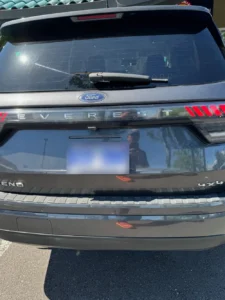
Ours cost US$1,864 for 12 days, about £1,470. That was an Alamo Premium SUV 4×4, collected at San José airport and returned in Puerto Jiménez.
| Item | US$ |
|---|---|
| 12 days at $117.45 | 1,409.40 |
| One-way drop-off fee | 50.00 |
| Airport fee (13%) | 189.72 |
| IVA sales tax (13%) | 214.39 |
| Total | 1,863.51 |
The one-way fee was just $50, far less than we’d feared. The surprise was the two 13% charges, which added almost 30% to the daily rate. Budget on about $155 a day all-in, not the headline figure. Collision and third-party cover were included, with a $1,500 excess on the damage cover.
What did the accommodation cost?
About £8,860 for 16 nights. That works out at roughly £550 a night, but the average hides how we really spent it. Bosque del Cabo and Golfo Dulce Retreat are on a Full Board basis, so three big meals a day.
| Nights | Per night | |
|---|---|---|
| The Springs, Bosque del Cabo, Golfo Dulce Retreat | 9 | £750+ (two of them full board) |
| Our other five stays | 7 | About £245 |
Over 80% of the accommodation budget went on three places. That was deliberate. They weren’t somewhere to sleep between drives; they were the trip. Elsewhere, a comfortable, convenient base was all we needed.
Looking back, Bosque del Cabo and Golfo Dulce earned it. The Springs is the one we’d reconsider. You are paying a premium to have access to hot springs without the crowds, but it’s very expensive.
What about activities and guides?
About US$870 for two. That covered park entries, the sloth and night walks, Mistico, Monteverde and Manuel Antonio. It was some of the best-value money we spent.
Not included: international flights, the Sansa flight back to San José, boat transfers, fuel and meals outside our stays. All prices are from January 2024.
What we learned about self-driving in Costa Rica
The car was useful where we used it
We collected the car on 18 January and returned it on 30 January: twelve days, billed as twelve days.
It gave us flexibility around Arenal, on the journey through Monteverde and along the Pacific coast. Once we reached the southern lodges, its usefulness diminished. Returning it before our four-night Golfo Dulce stay saved us days of hire we wouldn’t have used. We could have saved 2 extra days as we didn’t need it at Bosque del Cabo as there was so much to see on site and they do offer (paid) pickups from Puerto Jiménez.
Do you need a 4×4 in Costa Rica?
For our route, we were glad of one. We hired a substantial SUV, and it earned its keep on some of the more awkward approaches. That doesn’t mean every Costa Rica itinerary needs the same vehicle.
Ask the rental company and each lodge about the specific roads and access conditions for your travel dates, especially the final approach to remote properties. Ground clearance, route choice and weather all deserve attention. An unfamiliar river crossing is a reason to stop and seek local advice, not to test the vehicle.
What should you check when you collect a hire car in Costa Rica?
My planning sheet had three words against the pickup: check and photo everything. I’d read enough horror stories to take that seriously.
In travel forums and Facebook groups, other drivers describe being charged on return for damage they say was already there, or for kit “missing” from the boot: a jack, a wheel brace, a puncture repair kit. A few go further and claim items disappeared during the return check itself. We can’t verify those stories. But with one-way hires ending at small offices, they’re a good reason to do the dull bit properly.
So before leaving San José airport, we videoed everything. Our return at Alamo Puerto Jiménez was uneventful, they were so lovely too, and the final invoice matched the quote to the cent. This is what I’d recommend:
Film the rental car inside and our
- Film one continuous walk-round video before you drive off. Get the bumpers, the wheels and rims, the windscreen and the roof, and say the date and time out loud.
- Film the interior, including the seats, the dashboard, the fuel gauge and the mileage.
- Open the boot and film the spare tyre, jack, wheel brace and any puncture kit. Check the spare is inflated. If something’s missing, get it noted on the paperwork before you leave.
- Repeat the video at drop-off, ideally with the agent beside you, and ask for a signed return sheet.
- Keep the footage until the card deposit is released and any final charges have cleared.
It takes ten minutes. That’s a small price compared with an argument you can’t win without evidence.
Navigation needs some judgement
Our detour near Arenal is a good example. Before a remote arrival, get the property’s recommended approach and compare it with the navigation route. Keep offline directions available, and allow time to arrive without rushing. We often use Maps.me which works off GPS, so you don’t need a mobile signal for it to work. A useful app to download when you arrive, so you can always find a route.
Leave room around transfer days, too. Río Celeste was a walk, La Paz became several hours, and Dominical invited us to linger. Those stops were the point of having our own transport.
A self-drive holiday can still include guides
Some of the money I was happiest to spend was on people who helped us see more. We could manage the transport and bookings ourselves without pretending we could spot every bird, sloth or reptile unaided.
What would we change next time?
I would keep the broad shape: an airport-area first night, Arenal and Monteverde, the journey south, then a slower finish beside Golfo Dulce.
I would give Bosque del Cabo more time, avoid changing hotels within Manuel Antonio, and look harder at how much time we would actually spend enjoying an expensive resort before committing so much of the budget to it.
I’d also be clearer about what wasn’t on our route. We didn’t explore the Caribbean coast or Guanacaste, didn’t enter Corcovado, and didn’t visit every attraction in the planning sheet. This was one journey through Costa Rica, shaped around what interested us.
The memories that stayed with us weren’t always the headline sights. Arenal emerging after days of cloud. A guide finding something we’d walked past. Birds at breakfast. The sound of rain when there was finally nowhere else we needed to be.
The car helped us reach those places. Giving it back helped us enjoy the last one.
Costa Rica self-drive: your questions answered
For this route, from San José through Arenal, Monteverde and the Pacific coast to the Osa Peninsula, we needed 16 nights, and one more at Bosque del Cabo would have been better. With two weeks, drop a section rather than rushing the whole thing.
Yes. We collected our car at San José airport and returned it at Puerto Jiménez on the Osa Peninsula. The one-way drop-off fee was only US$50 in 2024. Check the current fee and the return office’s opening hours when you book, as smaller offices keep shorter hours.
Our Premium SUV (Ford Explorer) 4×4 came to US$1,864 for 12 days in January 2024, about $155 a day. The headline rate was $117 a day; a 13% airport fee and 13% IVA made up most of the difference. Always compare all-in totals, not daily rates.
Not for every route, but we were glad of ours on the approaches to the southern lodges. Ask each lodge about its access road for your dates before you choose the car.
Yes. Film a continuous walk-round of the outside, the interior and the boot, including the spare tyre, jack and puncture kit. We did, and our return went smoothly. Other travellers report being charged for damage or “missing” kit they couldn’t prove was absent at the start.
By boat from Puerto Jiménez. We returned our hire car there and took the boat across, with a wet landing at the other end. On the way home, we took the boat back to Puerto Jiménez and flew to San José with Sansa.
Not necessarily. For us, booking it ourselves didn’t save money, but it let us choose small owner-run lodges that weren’t on any agent’s list. We compared three agent quotes in Costa Rica: travel agent or book it yourself?
More stories from our travels are in Been & Scene.
Looking for Tours to do?
We’ve detailed all the tours, what they cost, how much time, whether you need a guide or can you DIY, how we booked it and our verdicts. Check out this detailed guide to Costa Rica Tours.

💬 Share Your Thoughts
We love hearing from fellow travellers. Whether you have a question, a tip, or your own story to add, please jump in! We reply to every comment personally.