
We thought we were planning a Sri Lanka itinerary.
Essentially, what we actually planned was a checklist.
Leopards. The famous train. Sigiriya. Tea plantations. South coast beaches. Then home.
But Sri Lanka had other ideas. First, a cyclone destroyed half our route. Then, the train everyone talks about turned out not to be our favourite one. Additionally: just when we thought the journey was over, a global crisis stranded us for another 17 days.
Somewhere in the middle of all that, the trip stopped being about “seeing Sri Lanka”.
And became about learning how to travel differently.
The film tells the story. This blog is about what the story changed.
1. Wildlife Doesn’t Owe You Anything
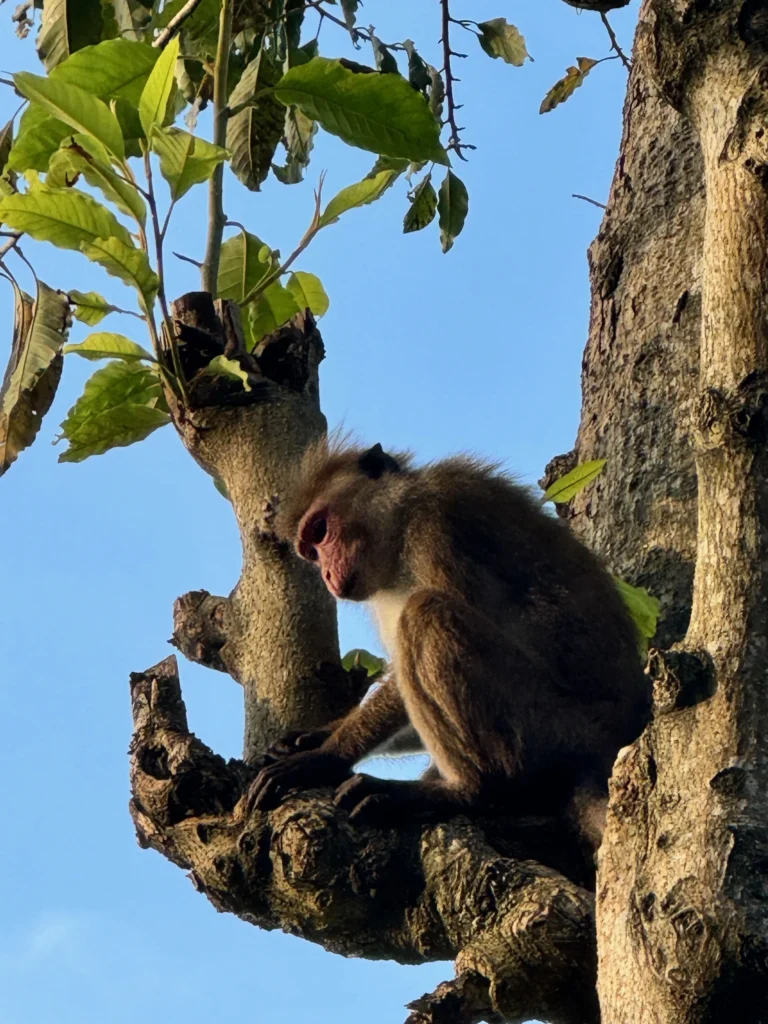
For example, we went to Wilpattu National Park specifically for the leopard. Sri Lanka has one of the highest leopard densities on earth. Besides, we did multiple drives across three parks. A sloth bear disappearing into bushes. Indeed, we saw an incredible lone bull elephant, briefly, before our guide raced us back to beat the gate closure. Likewise, we saw the evidence of cyclone damage everywhere: collapsed hillsides, broken and flooded roads, collapsed vegetation, a park still recovering.
We did not see a leopard.
And here is what that taught us: the wildlife experience we’d been treating as a product – something you could purchase by arriving at the right park with the right guide – was never a product at all. It was an ecosystem indifferent to our schedule.
HindlesWorld Tip
This isn’t a Sri Lanka itinerary built around the crowds. It’s what happens when you go further, stay longer, and let a country genuinely surprise you.
This is classic HindlesWorld Travel Smarter, Explore Deeper, Discover More!
Six drives in. Nothing. And yet the hunt became the spine of the entire film, the thread that runs through every chapter, the line that closes the whole documentary. A guaranteed leopard sighting would have given us content. The absence gave us a story.
Gal Oya reinforced this. A national park that barely features in most Sri Lanka guides. Specifically, no luxury lodges on its shores, difficult to reach, far fewer visitors than Yala. We watched 25 elephants stranded on islands from a small boat, engine off, drifting. No jeeps. Few people. Ad hoc schedule. Just the lake and the herd and the sound of water.
Some of the best wildlife moments are the ones you can’t book.
2. The Famous Version Is Rarely The Best Version
Cyclone Ditwah destroyed many sections of the Kandy-to-Ella train line in late 2025. Fortunately, the famous viaduct at Ella [the section of the Ella train that every travel photographer has on their wall] was not impacted. 4 trains are stranded between Ambewela and Badulla and now run a shuttle service twice a day. Unfortunately, it won’t reopen until 2027 at the earliest.
Instead, we decided to catch this shuttle service from Ambewela, but it was nothing like what we hoped it would be.
Instead, later in our journey, we decided to catch another train. It was completely different.
What we found was a coastal train running south of Colombo on a Sunday afternoon, was crammed with local passengers, no tourist surcharge, open doors, the sea flashing past between stations. The same island, a completely different Sri Lanka.
We are glad the famous version was closed.
Tourist Traps
The same logic applied everywhere. Specifically, Sigiriya, the iconic Lion’s rock fortress, had a queue that stretched back to the car park when we arrived. We looked at it, looked at each other, and drove to Pidurangala instead. In particular, this is a rock that’s an hour’s walk away, but gives you a better view of Sigiriya than Sigiriya gives you of itself, with a fraction of the visitors and a Buddhist monastery at the top. I flew my drone from the top and all the way round Lion’s Rock over a kilometre away.
Mirissa, probably the most photographed beach on Sri Lanka’s south coast, was our least favourite stop. Overcrowded, overhyped, optimised for Instagram rather than for an actual day at the beach.
Kalametiya, an hour to the east, had a harbour full of working fishing boats, an almost-empty stretch of coast, and nobody trying to sell us a whale-watching tour.
The South Coast Train Tip
“The alternative experience was almost always richer than the famous one. That is not a coincidence.”
3. The Greatest Luxury in Travel is Time
We keep coming back to one sentence from the film: ‘We had the luxury of time.’
Accordingly, it comes up during Anuradhapura – a city of ancient stupas in Sri Lanka’s north that doesn’t appear on most 10-day itineraries because it’s too far, too slow, too much effort for the time it takes. Indeed, we spent two nights there. Especially when we saw it by night when we shouldn’t have been there! Wrong clothes, wrong direction, wrong everything. Nevertheless, we went back the following morning and saw it properly.
Fundamentally, we got to make the mistake and then correct it.
That only happens when you have time.
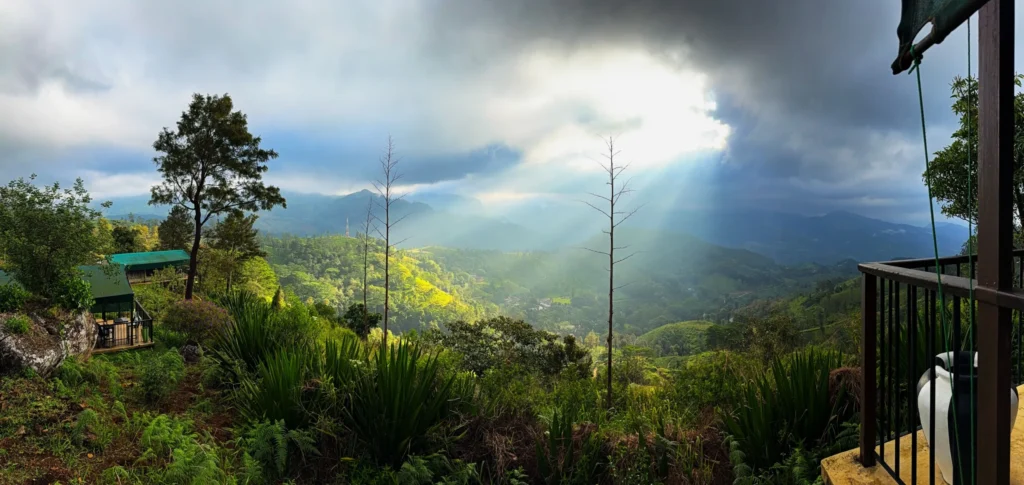
At Madulkelle Tea and Eco Lodge in the Knuckles Mountains, we woke at dawn and walked directly into a working tea estate with no plan and no guide. The pickers were already there. The light was extraordinary. It was the kind of accidental encounter that can’t be scheduled into a 10-day itinerary.
Knuckles Mountains
Indeed, this is the argument we find ourselves making now when anyone asks about Sri Lanka. Certainly not: ‘book this property’ or ‘don’t miss this beach.’ Just: give it more time than you think you need. The country rewards the extra days disproportionately. The best things we found were in the gaps.
4. A Crisis Reveals What the Journey Was Actually About
On the night we were supposed to fly home, a BBC News alert appeared on Jez’s phone in the departure lounge. The Middle East crisis had grounded half the world’s connecting flights. Ours included.
Eventually, what followed was three weeks of cancelled re-bookings, a hotel room with a view of the runway we couldn’t use, and the gradual realisation that we were not going home any time soon.
The first few days were genuinely difficult. Not dangerous — we were in a comfortable hotel with kind hosts. But the not-knowing was relentless. Every morning: is today the day? Every evening: apparently not.
Essentially, around day nine of the stranding, something changed. We stopped trying to fix what we couldn’t fix. We had a confirmed flight on March 15th. That was eleven days away. We made a decision that sounds simple and wasn’t: we went back to the coast and just lived it.
Negombo “Strandees”
“Being stranded stopped us trying to ‘complete’ Sri Lanka. And that was the best thing that could have happened.”
The itinerary had been our armour. A stranding stripped it away. Accordingly, what replaced it was something much closer to genuine travel — one day decided the night before, bags never fully unpacked, nowhere to be until we wanted to be somewhere.
We’ve written about the stranding in full detail separately — and the 17 extra days get their own film, The Revelation, which is coming soon. But the short version is this: the crisis changed what the first 35 days meant. It reframed the whole trip. Without it, we’d have gone home with a completed checklist. Instead, we went home with a different way of thinking about why we travel.
5. Sri Lanka Is Not One Country
Fifty-four days. Here is a partial list of the Sri Lankas we found inside the one on the map.
The dry-zone north: ancient stupas, Cyclone Ditwah damage still raw, leopard country, Buddhist pilgrimage sites that have been sacred for two thousand years.
The hill country: single-track mountain roads, tea pickers at dawn, cloud forests, the most dramatic driving either of us has done outside of the Alps.
The cultural triangle: Sigiriya, Ritigala Forest Monastery — an 8th-century ruin that barely makes any list and should be on all of them — Anuradhapura by candlelight, a silence in the jungle that feels genuinely ancient.
The east coast: Gal Oya, Ahu Bay, beaches that the south-coast crowds haven’t found yet.
The south coast: surf culture, colonial Galle Fort, Hikkaduwa’s turtles at dusk, the boutique hotel strip beyond Mirissa that quietly outperforms everything on the famous circuit.These are not the same destination with different scenery. They are different countries sharing a border. The mistake most itineraries make is trying to see all of them in the same pace. The hill country asks for slow mornings. The south coast asks for afternoon swims and late dinners. The cultural sites ask for early starts before the coach parties
Sri Lanka Is Small AND Big
“Sri Lanka doesn’t reward the traveller who wants to see everything. It rewards the one who is willing to stay long enough to understand one thing.”
6. The Places We Still Think About Most
Not the best. Not the most famous. The ones that stayed.
The North
Twin Waters Resort in Chilaw was where we stayed for our first night. When you compare that to somewhere that’s five times the price, you’d be surprised what you’ll find. This movie tells the story and hints at the secret we found. Read more here: Twin Waters
Ritigala Forest Monastery — an 8th-century ruin an hour from Habarana, barely signposted, almost no visitors on the day we were there. A specific kind of silence that exists only in places abandoned by time rather than by people. It is not on most itineraries. It should be on yours.
Anuradhapura at night: which we stumbled into accidentally, wrongly dressed, carrying beer, walking the wrong way around the sacred site. Forgiven the next morning when we went back properly. Seen from the drone, the scale of what was built here two thousand years ago is almost incomprehensible.
The Hills
Madulkelle at dawn: the view from a tent above the clouds, tea pickers already at work, peacocks complaining about nothing in particular, the mist sitting in the valleys below.
The East
Gal Oya on the lake: engine off, the boat drifting, 25 elephants moving between the islands, nobody speaking.
The South
Kalametiya harbour: a working fishing port with no tourist infrastructure whatsoever, the catch coming in, nets spread on the sand, total indifference to the fact that we were there.
Haritha Villas, Hikkaduwa: the last two nights of the trip. Found at 11pm on a phone in a hotel room when we needed somewhere to land. The best villa of the entire journey. The one we would never have found if the flights had gone home on time.
To illustrate what these places have in common: none of them are on the standard 10-day circuit. All of them require either time or a willingness to go slightly off-route. Most of them rewarded us more than the famous stops did.
7. So Was Sri Lanka Worth It?
In summary, some of it was overcrowded. Notably, some of it was overhyped. The weather fought us for the first two weeks. The leopard never showed. Our flights home collapsed.
Sri Lanka was not perfect.
Above all, here is what we’ve worked out: the trips that change you rarely go to plan. The plan is the container. What fills it is everything you couldn’t anticipate — the wrong turn into the right place, the cancelled train that put you on a better one, the 17 days you didn’t ask for that turned out to be the most important ones.
Sri Lanka rewarded flexibility more than preparation. Curiosity more than box-ticking. Time more than speed. And boutique more than big: but that’s a story for The Revelation.
Sri Lanka Worth It?
“We arrived with an itinerary. We left with a completely different way of thinking about travel.”
Having stayed at all four of TripAdvisor’s number-one all-inclusive hotels in the world across the last eight years, we are not easily changed by a single trip. In addition, we have visited 55 countries between us.
Sri Lanka changed us.
Yes. It was worth it.
Watch The Film
Specifically, the 40-minute documentary covers the full 35-day journey: the leopard hunt, the rebuilt itinerary, the tea country, Gal Oya, and the moment the departure board went red. Everything above is the reflection. The film is the experience.
In summary, the 17 extra days and everything they changed are covered in The Revelation, our companion film coming soon. Subscribe so you don’t miss it. And check the description for every hotel, route, and TripWorthIt™ score from the full trip.
Frequently Asked Questions (FAQs)
Our honest answer is yes — and the longer the better. The standard 10 to 14-day circuit is well worth doing. But the places that stayed with us most were all off that circuit: Anuradhapura, Ritigala, Gal Oya, Kalametiya. They require time to reach and time to appreciate. If you can stretch to three weeks, the country rewards you disproportionately.
Cyclone Ditwah in late 2025 destroyed parts of the Kandy-to-Ella train line, so trains now start at Ambewela and run over the most photographed section of the journey to Badulla twice a day. Huge infrastructure project for Sri Lanka, and it probably won’t reopen until 2027/8. u003cbru003eWe cover the alternative we found in the documentary, including a local coastal train that turned out to be a more authentic experience.
Gal Oya is a remote national park in eastern Sri Lanka, rarely featured in standard itineraries. It’s the only park in the country where you watch wildlife from a boat on the reservoir: which means no jeeps, no crowds, and a fundamentally different atmosphere to Yala. We watched 25 elephants stranded on an island on Valentine’s Day. If you’re lucky, you will be there when they swim between islands. It’s non-negotiable if you have 21 days or more.u003cimg class=u0022wp-image-8283u0022 alt=u0022Elephants in Gal Oya National Parku0022 src=u0022https://hindlesworld.com/wp-content/uploads/2026/05/Elephants-in-Gal-Oya-National-Park.webpu0022 style=u0022max-width:100%u0022/u003e
Watch the film. The leopard is the through-line of the entire documentary, and the final line tells you what we did about it.
TripWorthIt™ is HindlesWorld’s hotel evaluation framework: a five-pillar scoring system covering Accommodation Excellence, Property and Grounds, Food and Beverage, Wellness and Service, and Value and Inclusions. Scores are weighted by travel persona. You can use the interactive tool and read our full Sri Lanka hotel reviews on the site. www.tripworthit.com
Jez & Mel
HindlesWorld
Been & Scene
Related HindlesWorld content:
- Was Sri Lanka Worth It? The Hub Film: the full 54-day Sri Lanka story
- Sri Lanka Adventure Planning Guide: logistics, drivers, routes, and itinerary planning
- Sri Lanka Travel Documentary: the companion post to the main series
- Stranded in Paradise: what happened when our plans fell apart
- Haritha Villas & Spa, Hikkaduwa: another Sri Lanka accommodation review
- TripWorthIt™: our persona-specific hotel evaluation tool
- We Came For The Tea Train | But That’s Not The Story: Our voyage on the iconic blue train to Ella.

💬 Share Your Thoughts
We love hearing from fellow travellers. Whether you have a question, a tip, or your own story to add, please jump in! We reply to every comment personally.