
Fifty-four days in Sri Lanka. And the most famous thing we did was the thing I’d thought about least.
The Kandy to Ella train is the most photographed rail journey in Asia. We’d built three months of planning around making sure we didn’t miss it. What we didn’t plan for was the part that came after: the days off the train, higher up, that turned out to be the real trip. You can watch the full film here. This is the part the film doesn’t have room for.
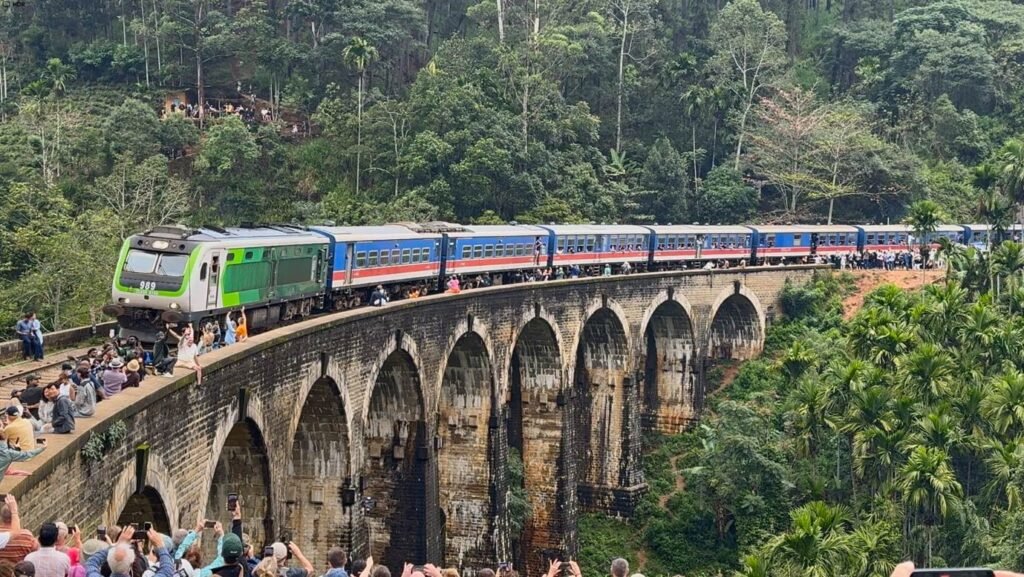
But the story doesn’t start on the train. It starts at first light, before the train, with the people the postcard never shows you.
Before the Train: Walking Out at Dawn
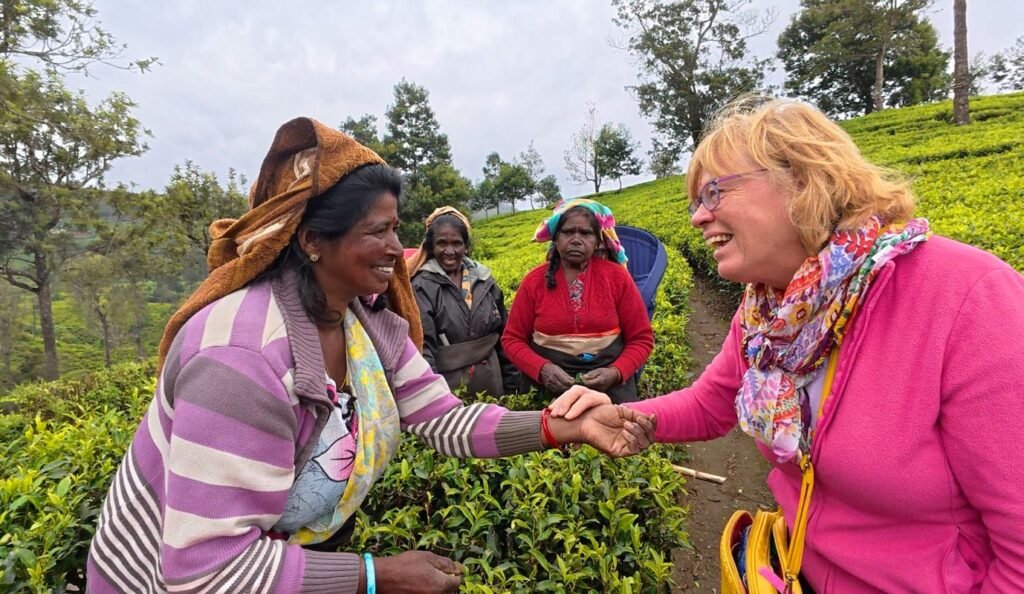
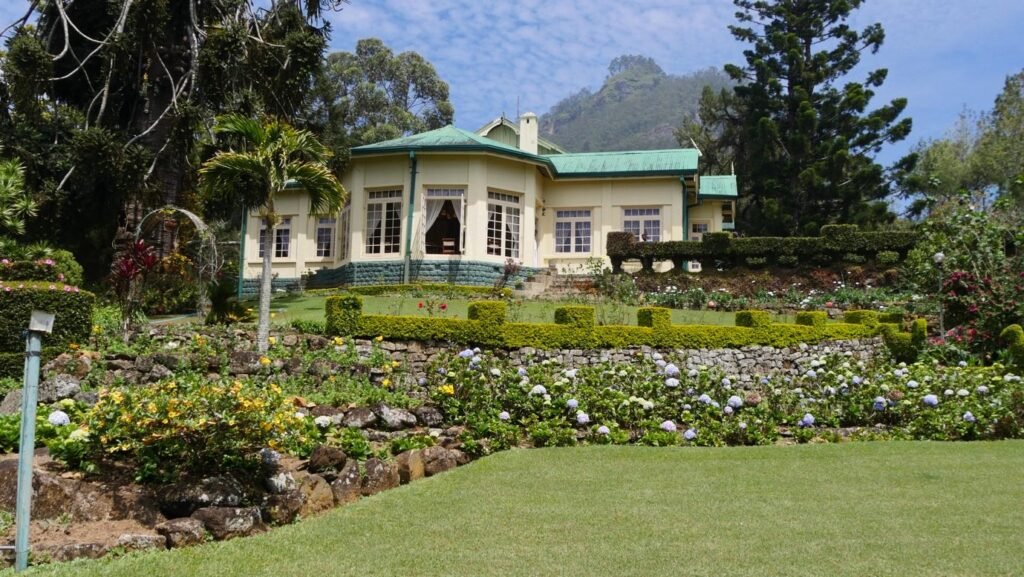
We based our first days at Madulkelle Tea & Eco Lodge, under the Knuckles Mountain Range. And before sunrise on our first morning, we walked out into the fields with the pluckers.
You hear them before you see them. Voices carrying across the hillside in the half-light, women moving up between the rows with baskets already on their backs, working before the sun is properly up. It isn’t performance. There’s no audience out here at that hour. There’s just the work, starting the way it starts every day, whether anyone films it or not.
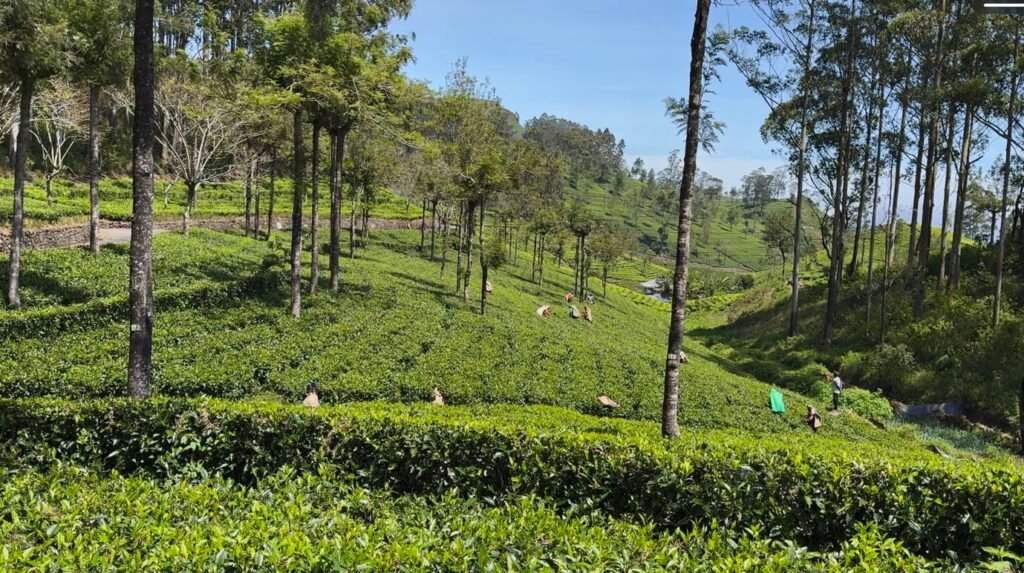
That was the first thing that didn’t fit. We’d come for a landscape. What we’d walked into was a workplace, and the shift had already begun.
The Train Everyone Rides
Then came the train.
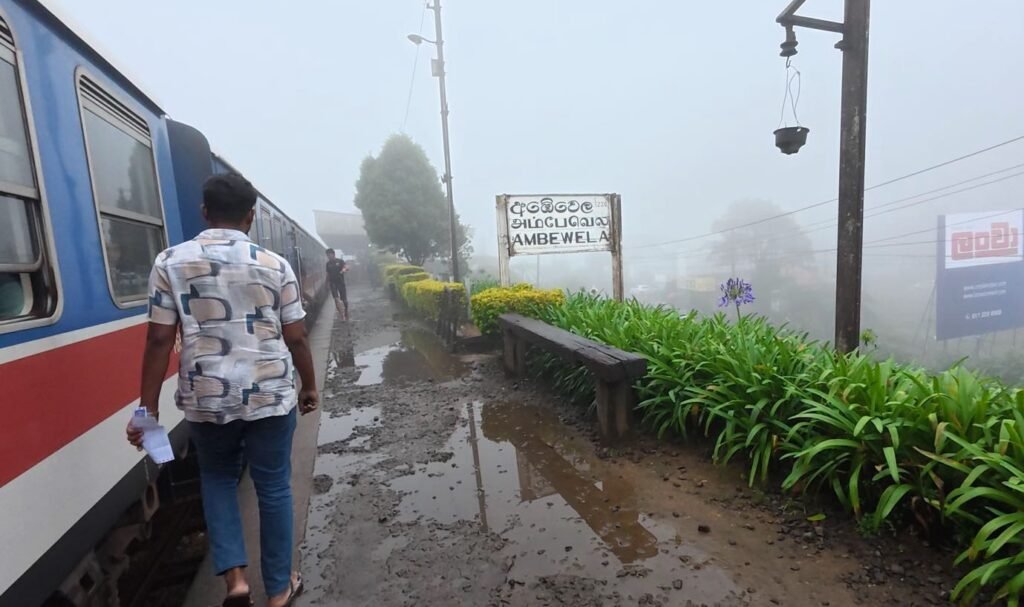
For three hours, it delivered exactly what it promises. Green terraces falling away on both sides. Tunnels punching through granite. Viaducts spanning valleys so deep you stop looking down after the first one. The wind caught your breath as you leaned from the open doorway, and the light shifted every few minutes as we climbed, from golden lowland haze into cool mountain air that tasted of damp earth and eucalyptus. Even the mist and rain didn’t take the thrill out of hanging from the doors.
The Missing Ingredient
But something didn’t fit here either.
There wasn’t a single Sri Lankan on it. Not one. Every seat, every doorway, every photograph: tourists, photographing tourists, photographing the same view. Selfie sticks jostled for position at every bend. Someone’s elbow caught Mel’s shoulder as they lunged for a shot of the bridge we’d just crossed. The train felt less like transport and more like a slow-moving viewing platform that happened to run on rails.
And then, between the elbows and the camera phones, I noticed something through the window. Below the tracks, a woman was working her way along a row of tea bushes. Hands moving steadily. Basket on her back. She didn’t look up at the train. Not once.
The people who actually live in this landscape aren’t on it.
That observation sat with me for days. Because once you see it, you can’t stop seeing it: the most famous landscape in Sri Lanka wasn’t designed to be looked at. It was designed to produce something. And the railway that carries a million tourists a year through these hills wasn’t built for them at all.
It was built for tea.
How did the Kandy to Ella train change what we saw?
We’d expected the train to be the highlight. In a way, it was. Just not the way we’d imagined. It was the moment that made us want to understand what we were actually looking at. So instead of staying in Ella like most travellers, we went higher. Up to Haputale and beyond.
| Location | Altitude | |
| Lipton’s Seat | 1,970m | 6,463ft |
| Nuwara Eliya | 1,868m | 6,128ft |
| Dambatenne (Factory) | 1,560m | 5,118ft |
| Haputale | 1,431m | 4,695ft |
| Ella | 1,041m | 3,415ft |
The difference between Ella and Lipton’s Seat is nearly a kilometre of altitude. Most tourists stop at the bottom of that list. We worked our way to the top.
Going Higher
To see what lay behind those tea fields, we had to leave the trail everyone follows. The roads narrowed. The drops got worse. At some point, Shan the driver’s clutch started making sounds that suggested it had opinions about the gradient; and that was in an automatic, on a steep incline, surrounded by goats, a serious drop on one side, and a TukTuk trying to pass.
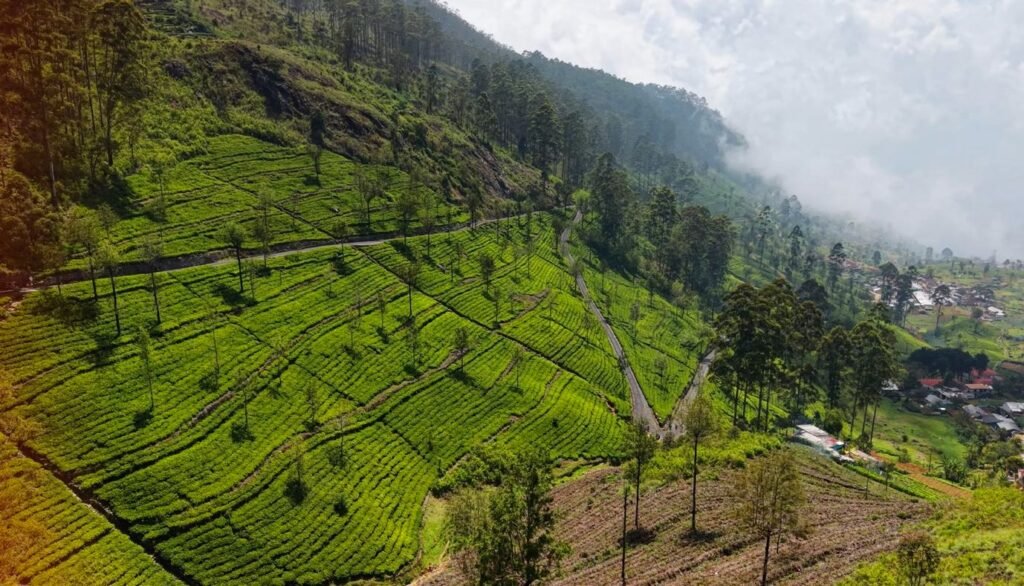
But when the mist cleared, the scale of what we were looking at began to register. Not a patchwork of fields. A single, continuous, engineered landscape that stretched to every horizon.
Rows of tea bushes cut into the hillside with the precision of contour lines on a map. Dirt tracks linking estate to estate to estate. And workers moving through the rows so slowly they were almost invisible from the road.
Beyond the tourist trail in Sri Lanka’s tea country?
What happens when you leave the tourist trail? You meet people.
That sounds obvious, but it isn’t. The tourist circuit through the hill country runs on a very specific loop: train, Ella, Nine Arches Bridge, maybe a quick factory visit, move on.
Step off that loop and the landscape opens up. The pace changes. People talk to you because they’re curious, not because you’re a customer.
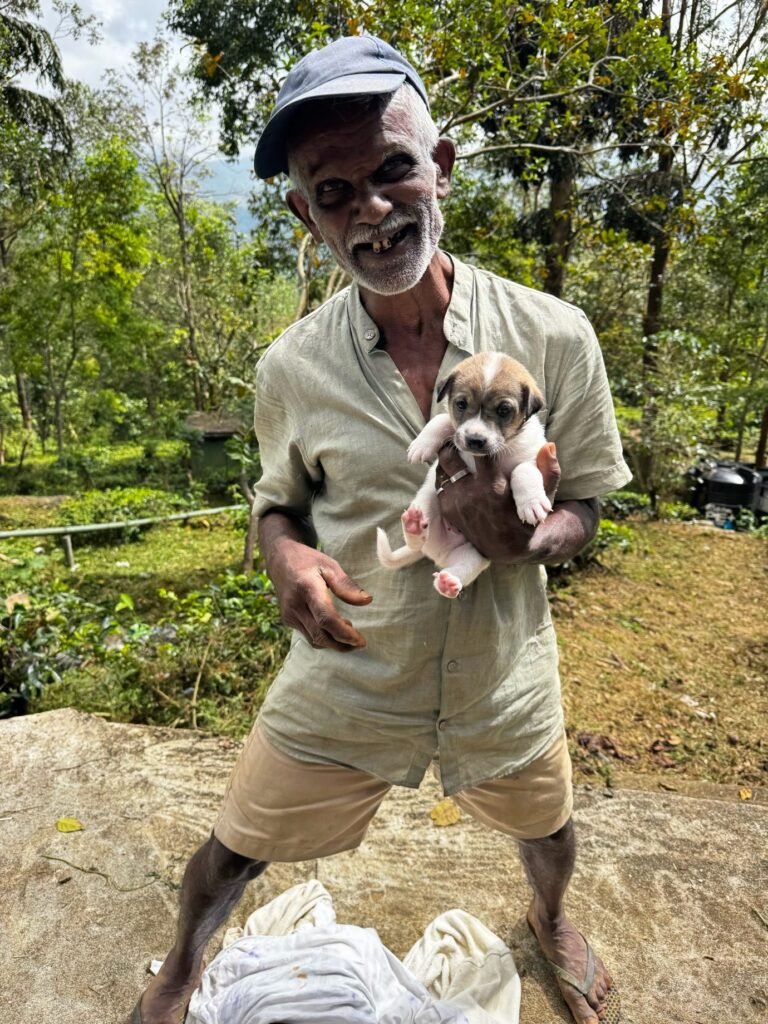
I met a man on a hillside path who wanted to show me his chickens. And his turkeys. And his rabbits. We had a conversation neither of us fully understood, conducted mostly through pointing and laughing. Then he walked me back to the road and waved me off like we’d known each other for years.
You Will Thank Me
Further up the hill, I met Mr Subramaniyam, an estate manager heading home for the day. He asked my name, laughed and said Jez was easier, told me his wife couldn’t walk far these days because of her knee. Then he pointed up the road to a junction where, he promised, you could see clear across to the next valley. “Go and have a big walk,” he said, “then come back and tell me what you did.”
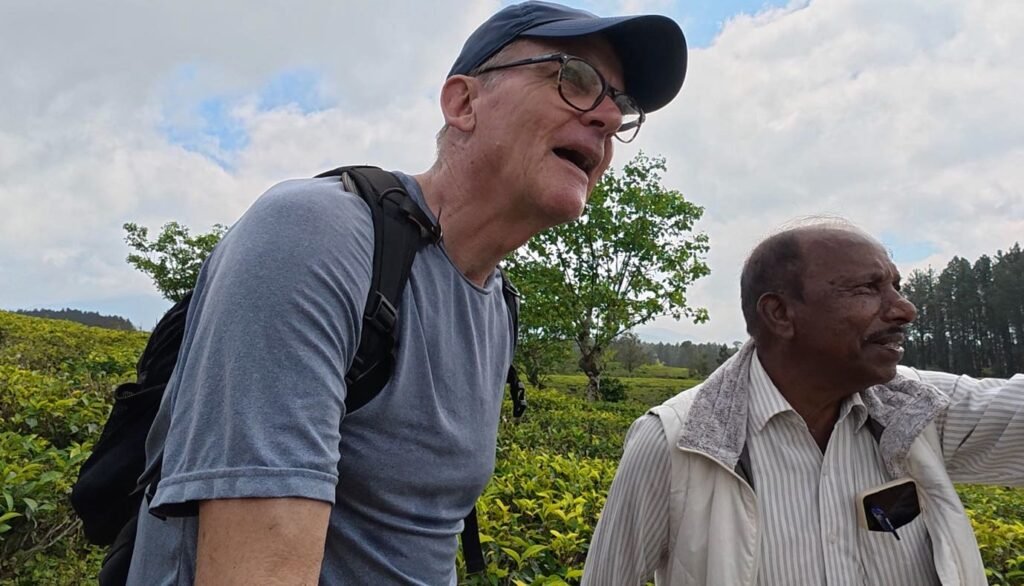
And when I did, he was right. The view was there, exactly where he’d said it would be.
Before I left, he said something I didn’t fully understand at the time. That if I came back this way, I might want to thank him. And then, half laughing, that he’d thank me too. We shook hands on a thank-you neither of us had earned yet.
I’m saying my half now.
Because he was right about more than the view.
Somewhere on that walk, looking out from his junction, I stopped seeing scenery.
I started seeing work.
Two Factories. Two Different Silences.
If the train shows you the postcard, the tea factories show you the machinery behind it. We visited two. They told entirely different stories.
What is Pedro’s Tea Factory like to visit?
Pedro’s Tea Factory sits outside Nuwara Eliya, and when we arrived it was the day after Independence Day. No leaves had been plucked over the holiday, and the pickers had only started again that morning. The machines were idle. A few workers moved through the building: cleaning rollers, sweeping floors, preparing for a shift that hadn’t arrived yet.
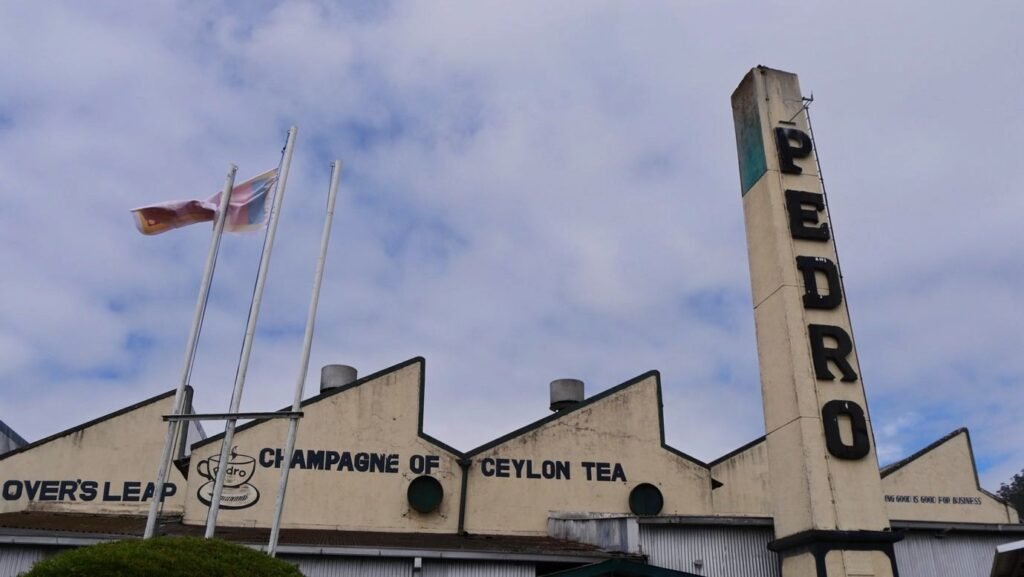
The silence was the point. Standing on the upper gallery, looking down at the scale of the equipment below, you could feel how many hands it takes. How many hours. How many thousands of leaves, just to fill a single sack. The building held the weight of that process even when nothing was running.
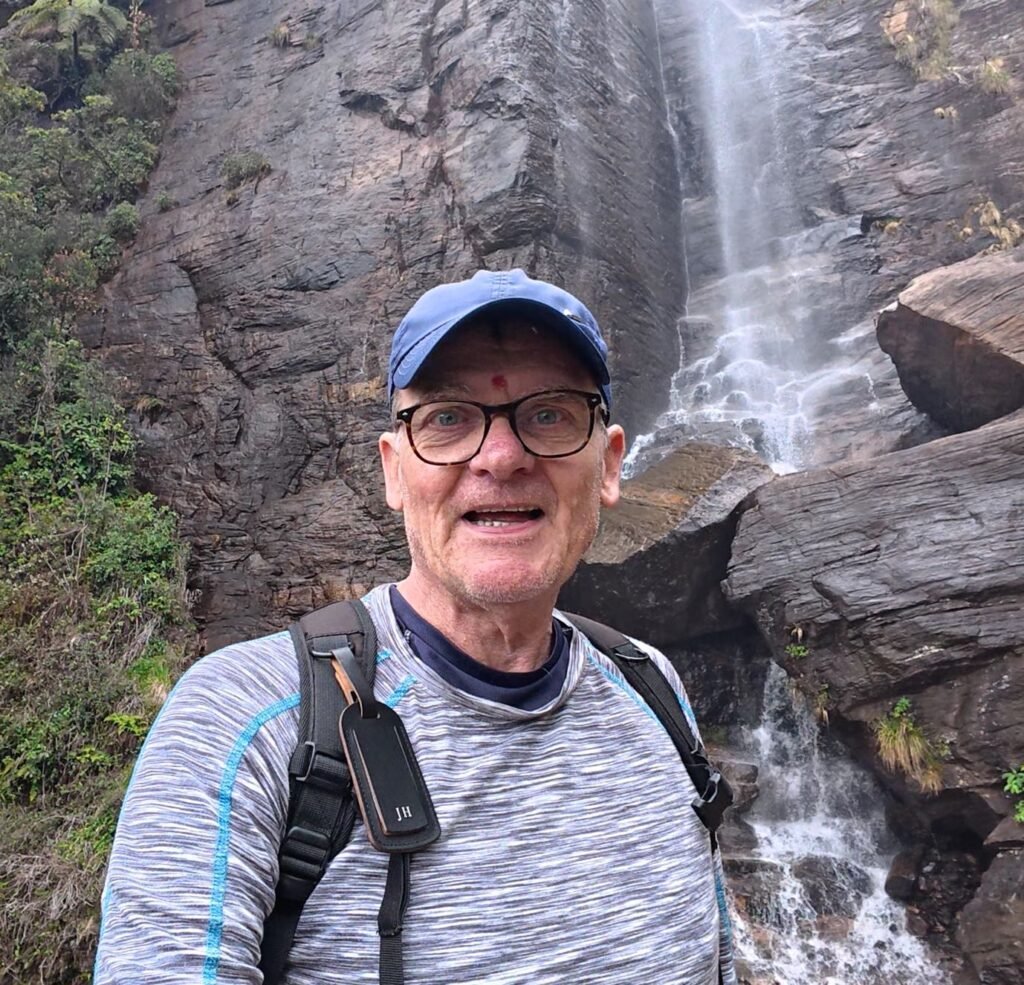
Just behind the factory, up a steep path most visitors seem to skip, there’s a waterfall called Lover’s Leap. The legend goes that a prince and a young woman fell in love, and the king forbade it. Chased by soldiers to the edge of the cliff, they chose the fall over the separation. Even the beautiful places here hold a story nobody tells you.
What is Dambatenne Tea Factory really like?
A different day. Ninety minutes by tuk-tuk into the mountains from Haputale. And we walked into the factory that Sir Thomas Lipton built in 1890.
The sound hit first. A deep mechanical grind you felt through the floor before your ears fully processed it. Peering through the dirty windows was like going back in time. The place is practically unchanged in almost 150 years, and the roar of the engines seemed to make the walls vibrate.
The leaves had arrived at two in the morning. By the time we got there, they’d been withered, dried, ground, graded and sorted. Some of the machines are over a hundred years old. They haven’t stopped.
Guiding by Touch
Our guide was a man called Savi Kumar, and he knew every machine in the building. He could tell by touch which grade of tea was passing through the rollers. Watching him scoop a handful of leaves from a conveyor belt, hold them to the light, and explain the difference between a golden tip and a broken orange pekoe, you were watching someone who loved his work. Not performing it. Living it.
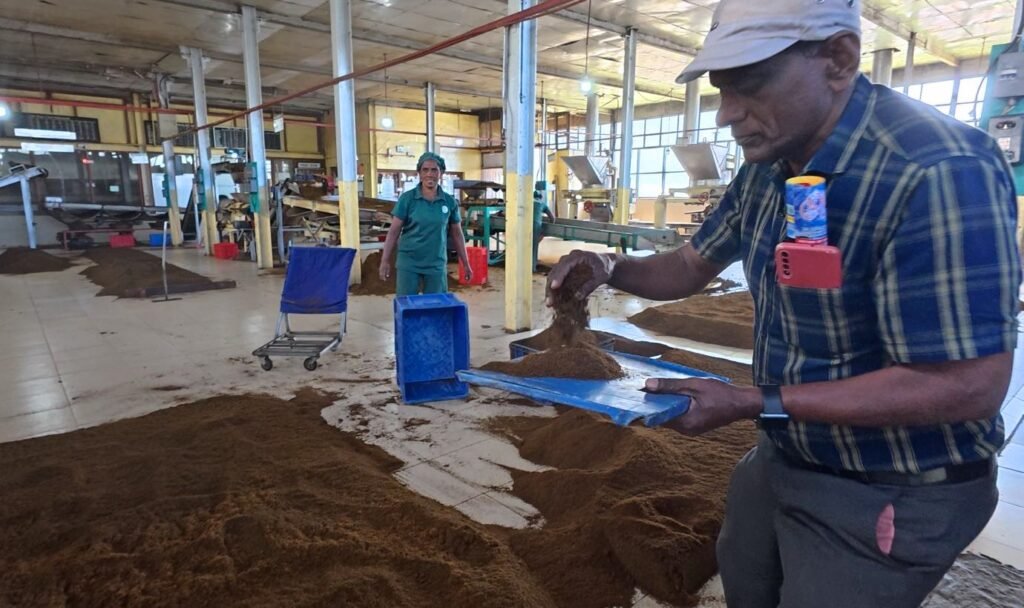
The same sequence, the same purpose, since Lipton first cleared these hills and planted tea where forest had been. Withering. Rolling. Oxidising. Drying. A hundred and thirty-four years of it.
But there was a quieter thing running underneath every conversation we had about the industry, with guides, with managers, with the people who’ve given their lives to these fields. The young aren’t coming back. Not to the fields, not to the factories. It came up again and again, never as a complaint, always as a fact. Nobody we spoke to seemed sure what the hills look like in a generation.
The View from Below
After weeks of moving, we stopped. Villa Vista, a tiny eco lodge across the valley from Haputale: three rooms, no other guests, no alcohol licence. Just a valley, a fire pit, and the kind of quiet that makes your ears ring because they’ve forgotten what silence sounds like.
We needed it. The train had given us both a cold that followed us up into the mountains. The mountains gave us somewhere to sit with it.
Lipton’s Seat
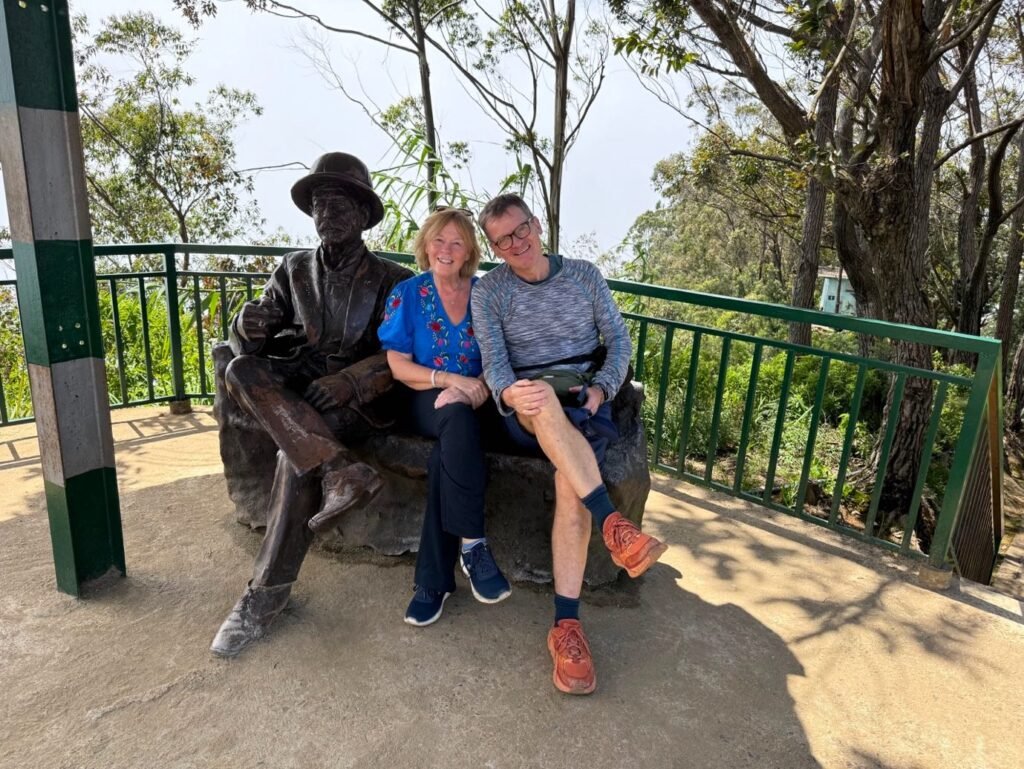
From our room, you could see Lipton’s Seat: the viewpoint where Sir Thomas Lipton reportedly sat each morning to survey his empire of tea. Tourists queue for hours to reach it. From down here, it looked smaller.
The Better View
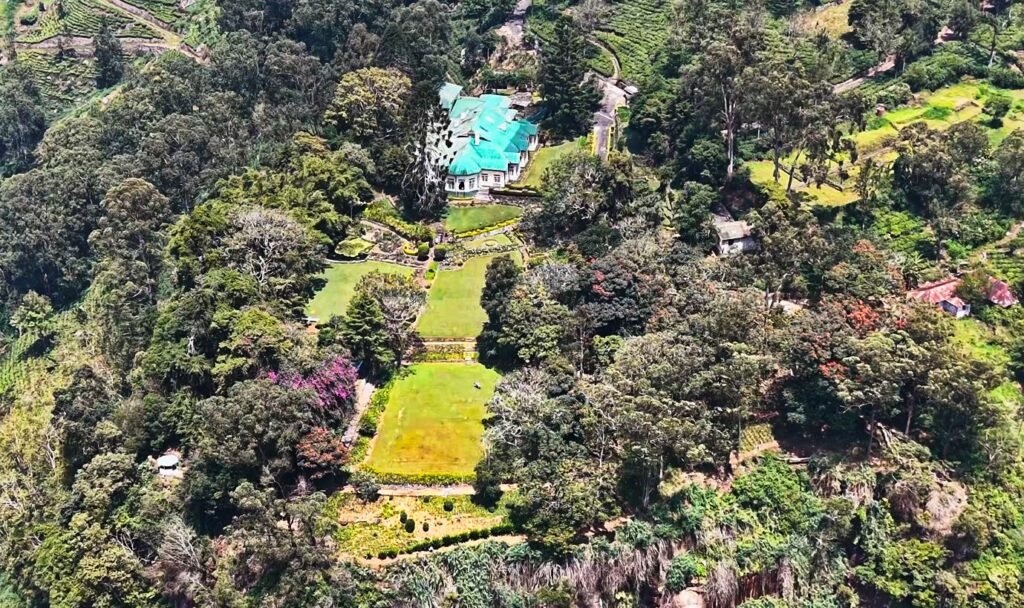
Lipton didn’t build his house at the summit. He needed to be near the factory, so the bungalow sits lower on the estate. The view from there is arguably better: less prone to the mist that rises from the valley and swallows Lipton’s Seat by mid-morning. When he wanted to see everything he owned, he’d climb the extra 400 metres to the top.
I sat on that terrace in Haputale with a cup of tea and tried to hold two things at once. The beauty of this place is real. The light through the valley at dawn. The cool air. The green so vivid it doesn’t look natural. All of it, undeniably real.
But none of it is accidental. These hills looked completely different before Lipton arrived. The railway, the terraces, the estates, the workforce: all of it built for a purpose that had nothing to do with the view from a train window.
We came here to look at a landscape. We left understanding it was never a landscape at all. It’s a workplace that happens to be beautiful, and once you’ve seen who it’s for, you can’t unsee it from the doorway of a train.
There’s more to that last part than a blog can hold. That belongs to the film.
Is Sri Lanka’s tea country worth visiting beyond the train?
Yes. Without question. But go with your eyes open. The train is worth doing; it genuinely is one of the great rail journeys. Just don’t let it be the only thing you do. Get off the tourist loop. Visit a working factory, not just a museum. Talk to the people who live in these hills. The landscape becomes a completely different place once you understand what built it.
If you’re planning a route, our Sri Lanka Adventure Planning Guide covers the full itinerary. And if you want to know what happened when we tried to fly home afterwards, that’s a story in itself.
What We Took Away
We thought this was a story about a train. A famous journey through a famous landscape. Tick it off, move on.
Instead, we spent days walking through estates, standing in factories, and meeting people whose lives are tied to a chain of decisions made over a century ago. The train is the thing everyone comes for. It should be. But the real story of Sri Lanka’s tea country isn’t on the train. It’s in the fields beside it. And it’s still being written.
We made a film about this. When you’re ready, it’ll show you what these words can only describe.
Frequently Asked Questions – The Train
Partly. When we filmed in February 2026, Cyclone Ditwah had severed the line above Nanu Oya and only the Ambewela to Badulla stretch was running. As of July 2026, Nanu Oya to Badulla has reopened on a special timetable, so Nuwara Eliya, Haputale and Ella are back on the map. Repairs are still ongoing between Rambukkana and Nanu Oya, which means the full Kandy to Ella run isn’t possible yet. Check Sri Lanka Railways before you plan, because the situation is still moving.
Our tip, whichever section is open: start at Ella and ride down to Badulla rather than the other way. It’s more scenic, there are fewer tourists, and you’re travelling against the flow of the crowd that pours off the Kandy end. Book reserved seats if you can (second class is comfortable enough). And build in time beyond the train itself; the ride is the start of the hill country, not the whole of it.
The classic route is by train from Colombo to Kandy, then up into the hills. Kandy sits on a branch off Peradeniya Junction, which is why every “Kandy to Ella” journey actually begins by heading in the opposite direction before it starts climbing. You can also drive, which gives you far more flexibility to stop at estates and factories along the way. We used a mix of both across our 54-day Sri Lanka trip.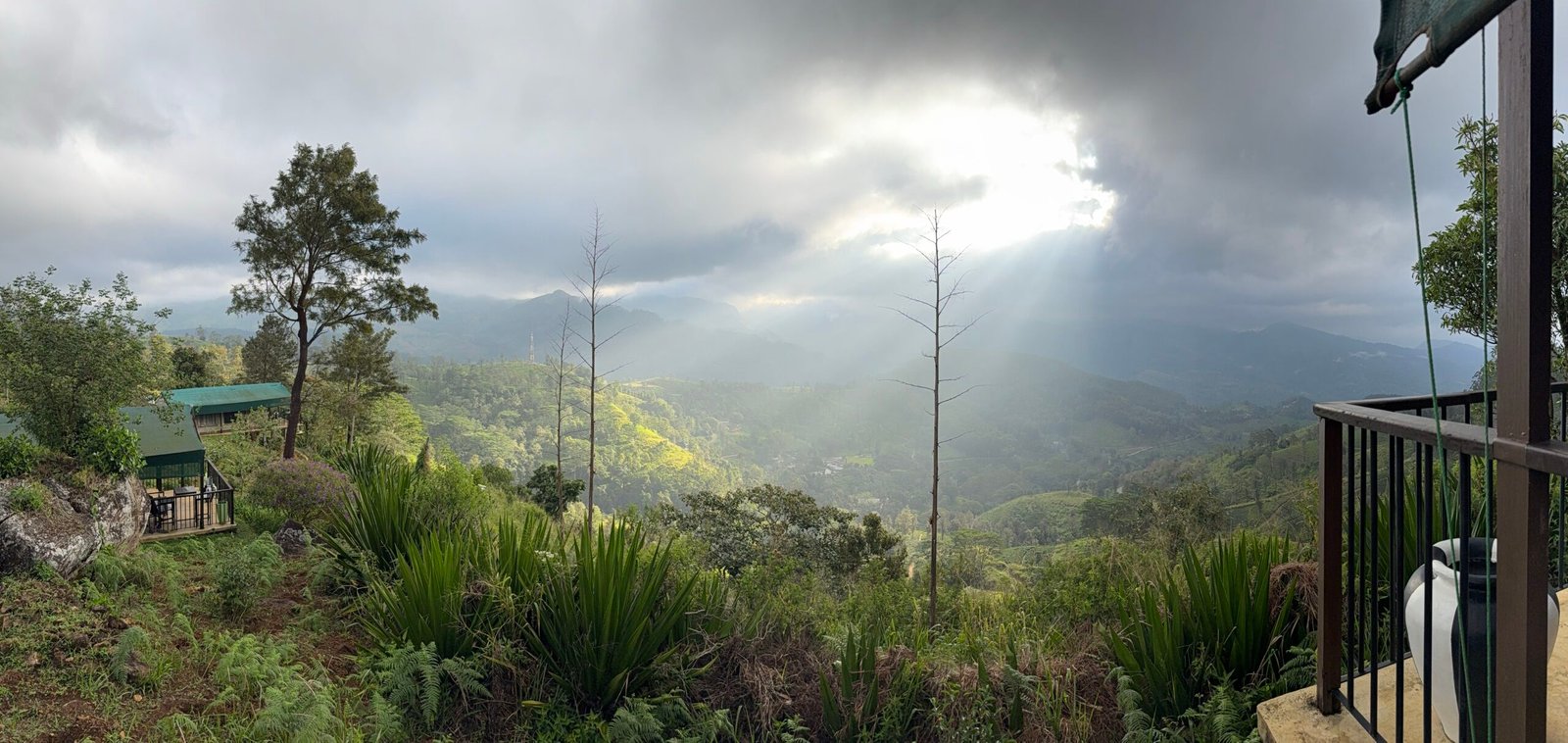
Yes. Dambatenne is a working factory that accepts visitors, and tours run most days. It’s about 90 minutes from Haputale by TukTuk; negotiate the price before you set off. We paid roughly 3,000-4,000 LKR return including waiting time in Feb 2026. The factory was built by Sir Thomas Lipton in 1890 and much of the original machinery still runs. Go when it’s processing (mornings are best, and avoid national holidays when the lines may sit idle).
Pedro’s is closer to Nuwara Eliya and gets more day-trip traffic; it’s well-organised and informative. Dambatenne is further into the mountains near Haputale, less visited, and built by Lipton himself. The machinery is older, the scale is larger, the experience feels rawer. If you can only visit one, Dambatenne left the deeper impression on us. If you can do both, the contrast is part of the story: we caught one silent between shifts and the other roaring at full capacity, and seeing them side by side changed how we understood the industry.
We stayed at Villa Vista, a small eco lodge across the valley from Haputale: three rooms, a valley view that stopped us in our tracks, no alcohol licence, no restaurant to speak of. Just peace and one of the best vantage points in the region. You can see Lipton’s Seat from the terrace. For something more established, there are options in Haputale town and along the road toward Ella. If you’re weighing accommodation across Sri Lanka, our TripWorthIt™ tool is built to help you judge what actually matters to the way you travel. You can also see how we scored two very different Sri Lankan stays in Twin Waters vs Vil Uyana.
Behind Pedro’s there’s a steep walk up to Lover’s Leap waterfall, which most visitors miss entirely. Near Haputale, the hike to Lipton’s Seat is the famous draw; get there early before the cloud rolls in. But some of our best moments came from simply walking through the estates: following paths between the tea rows, talking to workers, and letting the landscape unfold at walking pace rather than train speed. Our Sri Lanka travel documentary covers the wider trip, including Sigiriya, safari and the southern coast.

💬 Share Your Thoughts
We love hearing from fellow travellers. Whether you have a question, a tip, or your own story to add, please jump in! We reply to every comment personally.